 뒤로
Inside the Cell: Structure, Function, and Diversity
스터디 가이드 - 스마트 노트
 자료에 맞춘 맞춤형 노트, 핵심 정의, 예시, 맥락을 확장해 제공합니다.
Inside the Cell
Cell Theory
The cell theory is a foundational concept in biology, describing the properties and significance of cells in living organisms. It was developed through the work of several scientists:
Theodor Schwann & Matthias Jakob Schleiden (1839): Proposed that the cell is the most basic unit of life and that all living organisms are composed of one or more cells.
Rudolf Virchow (1855): Added that all cells arise from pre-existing cells (Omnis cellula e cellula).
Modern cell theory expands on these ideas:
Cells are the fundamental unit of life.
All living things are comprised of one or more cells.
All cells come from pre-existing cells.
The activity of a living thing is a result of the total activity of its cells.
Energy flow occurs within cells.
Hereditary information is passed from cell to cell.
All cells have the same basic molecular composition.
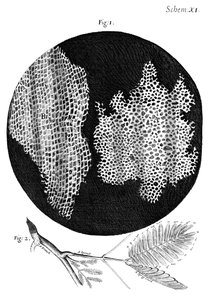
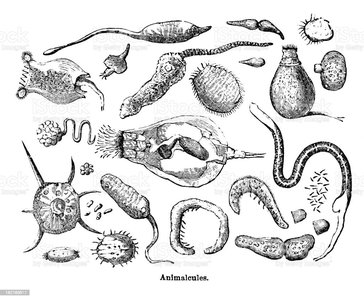
Example: The discovery of cells by Robert Hooke and the observation of "animalcules" by Anton van Leeuwenhoek were pivotal in the development of cell theory.
Tree of Life: Domains & Cell Types
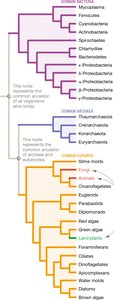
All life is classified into three domains based on cellular characteristics and molecular evidence:
Bacteria: Prokaryotic cells with unique ribosome and membrane biochemistry.
Archaea: Prokaryotic cells with distinct molecular features, often found in extreme environments.
Eukarya: Eukaryotic cells with complex internal organization and membrane-bound organelles.
Cell types are differentiated by their internal organization:
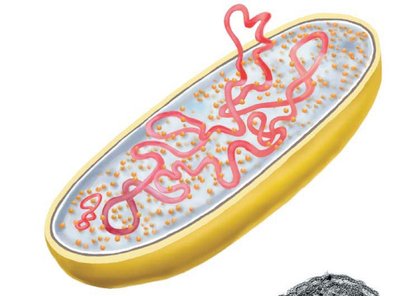
Prokaryotes: Lack a membrane-bound nucleus; DNA is stored in a nucleoid region.
Eukaryotes: Have a membrane-bound nucleus and numerous organelles.
Example: The phylogenetic tree illustrates the evolutionary relationships among the domains.
Major Differences Between Prokaryotic and Eukaryotic Cells
Feature | Prokaryotes | Eukaryotes |
|---|---|---|
DNA Storage | Nucleoid (not membrane bound) | Nucleus (membrane bound) |
Chromosomes | Singular, circular | Several, linear |
Organelles | Generally none, some may have a few | Numerous |
Size (diameter) | 1-10 µm | 10-100 µm |
Cell number | Only unicellular | Both unicellular & multicellular |
Example: Generalized diagrams of animal, plant, and prokaryotic cells highlight these differences.
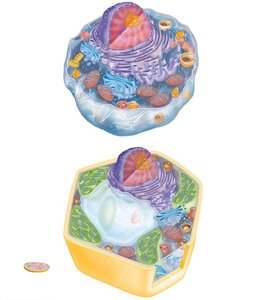
Cell Structures Found in All Organisms
Despite their diversity, all cells share certain fundamental structures:
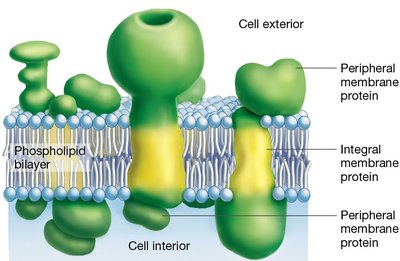
Plasma (cell) membrane: A phospholipid bilayer that encloses the cell, controlling the movement of substances in and out.
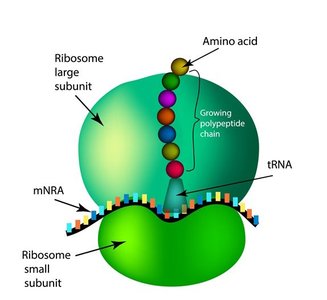
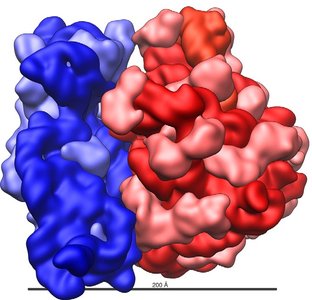
Ribosomes: Sites of protein synthesis, composed of protein and RNA, and not membrane-bound.
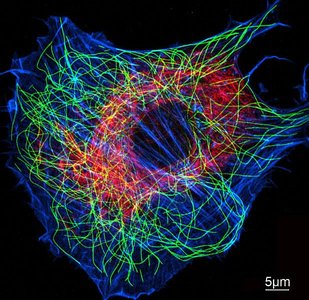
Cytoskeleton: A network of protein filaments that provides structural support and facilitates movement.
Example: The plasma membrane's structure and function are essential for cell viability.
Ribosomes: Translate mRNA into polypeptides, consisting of two subunits.
Cytoskeleton: Provides cell shape, organization, and movement.
Structures Found in Some Prokaryotes
Some prokaryotes possess specialized structures:
Photosynthetic membranes (thylakoids): Internal membranes for photosynthesis.
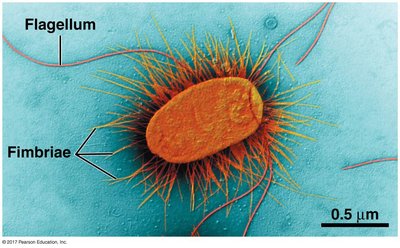
Fimbriae: Hair-like appendages for attachment.
Flagella: Whip-like structures for movement.
Example: Electron micrographs show fimbriae and flagella on bacterial cells.
Structures Found in Some Prokaryotes & Some Eukaryotes
Cell walls are present in many organisms, providing structural support and protection:
Plants: Cell wall made of cellulose.
Fungi: Cell wall made of chitin.
Bacteria: Cell wall made of peptidoglycan.
Diatoms: Cell wall made of silica.
Example: Comparative diagrams of cell walls in different organisms.
Structures Found in All Eukaryotes
Eukaryotic cells contain several essential organelles:
Nucleus: Enclosed by a double membrane, contains DNA, site of transcription, and ribosome assembly in the nucleolus.
Endomembrane System: Includes the endoplasmic reticulum (ER), Golgi apparatus, and transport vesicles, responsible for synthesis, modification, and transport of molecules.
Mitochondria: Site of aerobic cellular respiration, converts energy in organic molecules to ATP, contains its own DNA and ribosomes.
Example: Diagrams of the nucleus and endomembrane system.
Mitochondria: Double membrane structure, inner membrane highly folded for increased surface area.
Structures Found in Some Eukaryotes
Certain organelles are found only in specific eukaryotic groups:
Vacuoles: Large storage organelles in plants and fungi.
Lysosomes: Digestive organelles in animals.
Chloroplasts: Site of photosynthesis in plants and some protists, contains its own DNA and ribosomes.
Example: Diagram of chloroplast structure.
Endosymbiotic Theory: Origin of Mitochondria and Chloroplasts
The endosymbiotic theory explains the origin of mitochondria and chloroplasts as formerly free-living prokaryotes engulfed by ancestral eukaryotic cells. Evidence includes:
Both organelles have double membranes.
Both contain their own circular DNA and ribosomes similar to those of bacteria.
Both replicate independently within the cell.
Example: Diagrams and micrographs illustrating the structure and evidence for endosymbiosis.
