 뒤로
Macroevolution: Speciation and Extinction – Study Guide
스터디 가이드 - 스마트 노트
 자료에 맞춘 맞춤형 노트, 핵심 정의, 예시, 맥락을 확장해 제공합니다.
Macroevolution: Speciation & Extinction
Speciation: Definition and Types
Speciation is a fundamental process in evolutionary biology, referring to the lineage-splitting event that produces two or more distinct species from a single ancestral population. Understanding the mechanisms and patterns of speciation is crucial for explaining biodiversity.
Speciation: The process by which new species arise, typically through genetic divergence and reproductive isolation.
Types of Speciation:
Allopatric Speciation: New species form from geographically isolated populations.
Peripatric Speciation: New species form from a small population isolated at the edge of a larger population.
Parapatric Speciation: New species form from a continuously distributed population with limited overlap.
Sympatric Speciation: New species form within the same geographic area, often due to ecological or genetic factors.
Patterns and Mechanisms of Speciation
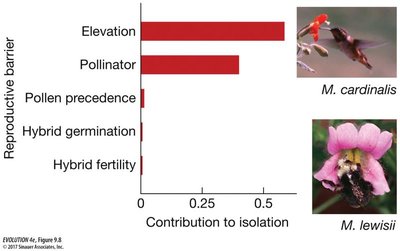
Speciation can occur through various patterns and mechanisms, each contributing to the diversity of life. These include ecological speciation, genetic conflict, sexual selection, reinforcement of reproductive isolation, polyploidy, hybrid speciation, and genetic drift.
Ecological Speciation: Divergence due to adaptation to different ecological niches.
Genetic Conflict: Speciation driven by genetic incompatibilities.
Sexual Selection: Divergence due to mate choice and reproductive behaviors.
Reinforcement: Strengthening of reproductive barriers to prevent hybridization.
Polyploidy: Speciation through chromosome duplication, common in plants.
Hybrid Speciation: Formation of new species through hybridization between distinct lineages.
Genetic Drift: Random changes in allele frequencies, especially in small populations.
Allopatric Speciation
Allopatric speciation occurs when populations are separated by geographic barriers, leading to genetic divergence and the formation of new species. This is the most common mode of speciation.
Geographic Isolation: Physical separation prevents gene flow.
Divergence: Populations evolve independently.
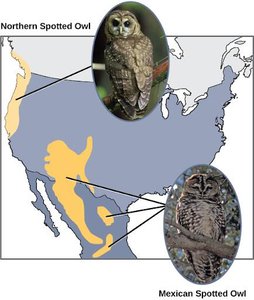
Example: Spotted owls in North America show distinct ranges and divergence.
Peripatric Speciation
Peripatric speciation involves the formation of new species from small, isolated populations at the periphery of a larger population. Genetic drift and founder effects play significant roles.
Small Population Size: Increases the impact of genetic drift.
Founder Effect: New population starts with limited genetic diversity.
Parapatric Speciation
Parapatric speciation occurs in populations that are adjacent but not completely isolated. Limited gene flow and environmental gradients drive divergence.
Continuous Distribution: Populations occupy neighboring habitats.
Hybrid Zones: Overlapping regions where hybrids may form.
Sympatric Speciation
Sympatric speciation happens within a single geographic area, often due to ecological specialization or genetic changes such as polyploidy.
Ecological Isolation: Adaptation to different niches within the same area.
Polyploidy: Chromosome duplication leading to reproductive isolation.
Polyploidy and Hybrid Speciation
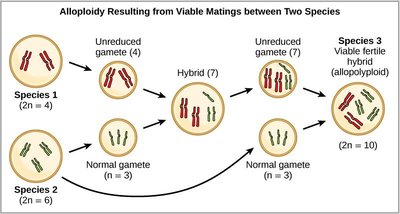
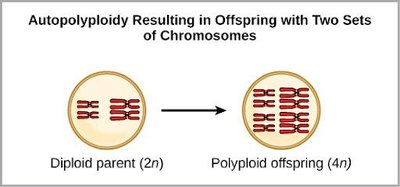
Polyploidy is a major mechanism of speciation in plants, involving the duplication of chromosome sets. Hybrid speciation occurs when hybrids between species become reproductively isolated and form new species.
Allopolyploidy: Hybridization between species followed by chromosome doubling.
Autopolyploidy: Chromosome doubling within a single species.
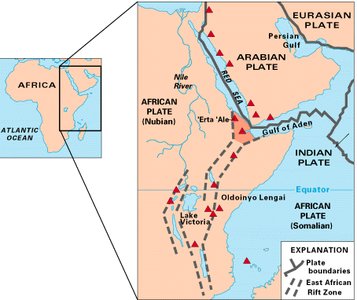
Adaptive Radiation
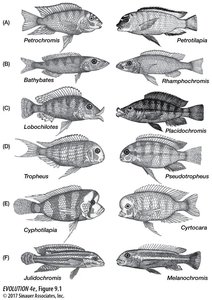
Adaptive radiation is the rapid evolution of multiple species from a common ancestor, often following colonization of new habitats or ecological opportunities. This process is evident in the cichlid fishes of East African Rift Lakes.
Rapid Speciation: Many species arise in a short time.
Ecological Niches: Adaptation to different food sources and habitats.
Example: Cichlid species diversity in Lake Victoria, Lake Tanganyika, and Lake Malawi.
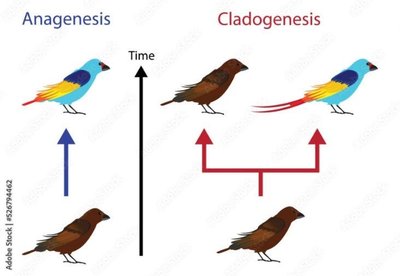
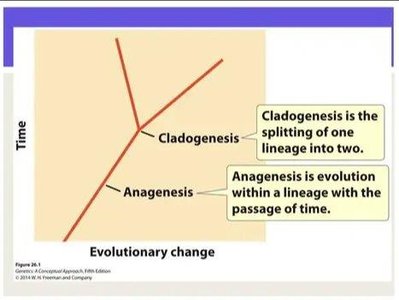
Anagenesis vs. Cladogenesis
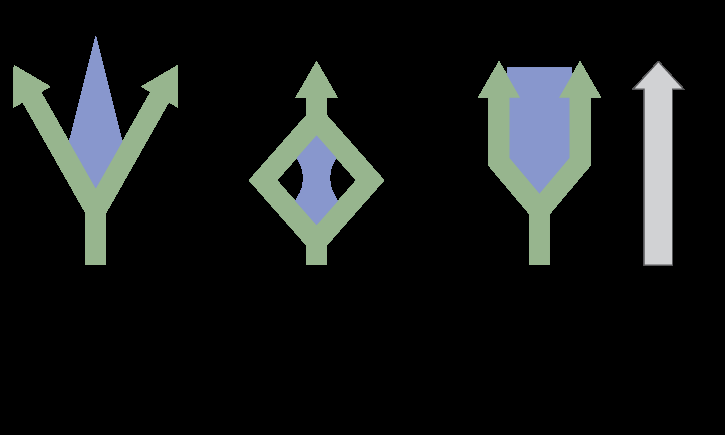
Evolutionary change can occur through anagenesis (gradual change within a lineage) or cladogenesis (splitting of a lineage into two or more distinct lineages).
Anagenesis: Evolution within a single lineage over time.
Cladogenesis: Lineage splitting, leading to increased biodiversity.
Species Concepts
What is a Species?
Defining a species is complex and involves multiple concepts. The three main species concepts are morphological, biological, and phylogenetic.
Morphological Species Concept: Species are defined by physical similarities.
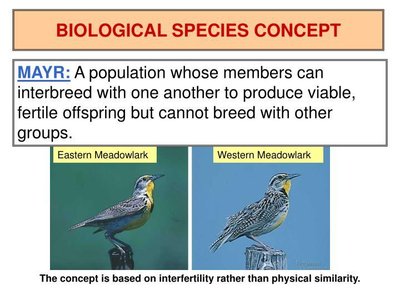
Biological Species Concept: Species are groups that can interbreed and produce fertile offspring.
Phylogenetic Species Concept: Species are the smallest monophyletic groups on a phylogenetic tree.
Morphological Species Concept
This concept classifies species based on observable traits. However, it can be problematic when a single species shows multiple morphologies or when different species appear similar.
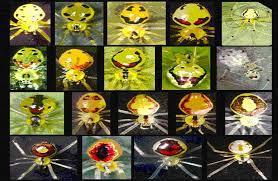
Example: Theridion grallator spiders exhibit diverse morphologies within a single species.
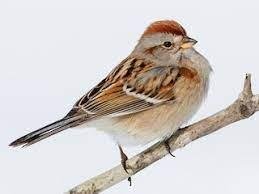
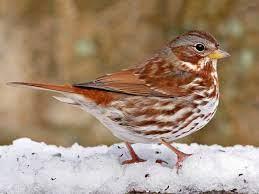
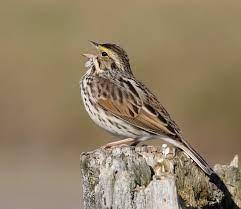
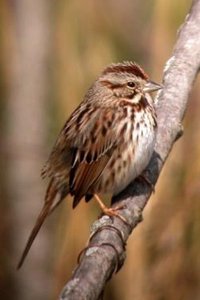
Example: Several sparrow species have similar appearances.


Biological Species Concept (BSC)
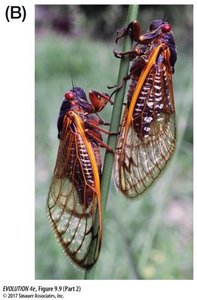
The BSC, formalized by Ernst Mayr, defines species as groups of interbreeding populations that are reproductively isolated from others. It is widely used but has limitations, especially for asexual organisms and allopatric populations.
Reproductive Isolation: Key criterion for species boundaries.
Hybridization: Occasional genetic exchange between species.
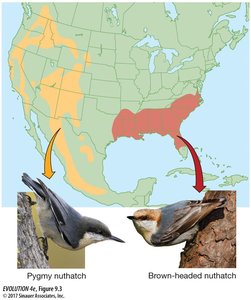
Limitations: Difficult to apply to allopatric populations and asexual organisms.
Phylogenetic Species Concept (PSC)
The PSC defines species as the smallest monophyletic groups on a phylogenetic tree, emphasizing evolutionary independence and lack of gene flow. It is useful for identifying species in cases of allopatric speciation.
Monophyly: All members share a common ancestor.
Gene Flow: Absence of gene flow maintains distinct lineages.
Reproductive Isolation Mechanisms
Prezygotic Barriers
Prezygotic barriers prevent mating or fertilization between species, maintaining reproductive isolation.
Temporal Isolation: Differences in breeding times.
Ecological Isolation: Occupation of different habitats or niches.
Behavioral Isolation: Differences in mating behaviors or signals.
Mechanical Isolation: Incompatible reproductive structures.
Gametic Isolation: Incompatibility of gametes.
Postzygotic Barriers
Postzygotic barriers occur after fertilization, reducing the viability or fertility of hybrids.
Reduced Hybrid Viability: Hybrids may not survive or may have reduced fitness.
Reduced Hybrid Fertility: Hybrids may be sterile.
Hybrid Breakdown: Subsequent generations may have reduced fitness.
Hybridization and Hybrid Zones
Hybridization
Hybridization is the process of producing offspring by mating individuals from different species or varieties. Hybrid zones are regions where hybridization occurs, often with intermediate morphologies or genetic profiles.
Example: Red wolves are hybrids between coyotes and grey wolves.
Example: Hybridization in ground squirrels.
Extinction
Definition and Types
Extinction is the complete loss of a species, reducing global biodiversity. It can occur naturally or be driven by human activities.
Background Extinction Rate: The natural pace of species disappearance.
Mass Extinction: Periods when large numbers of species die out rapidly.
Coextinction: Loss of one species leads to the extinction of another dependent species.
The Big Five Mass Extinctions
End Ordovician Extinction
Late Devonian Extinction
End Permian Extinction
Triassic Extinction
Cretaceous Extinction (KT)
Causes of Modern Extinction
Habitat Loss: Destruction of natural environments.
Human Impact: Pollution, overhunting, and illegal trade.
Invasive Species: Competition from non-native species.
Climate Change: Alteration of habitats due to global warming.
