 뒤로
뒤로Macromolecules: Structure and Function of Large Biological Molecules
스터디 가이드 - 스마트 노트
 자료에 맞춘 맞춤형 노트, 핵심 정의, 예시, 맥락을 확장해 제공합니다.
Macromolecules: Structure and Function of Large Biological Molecules
Introduction to Macromolecules
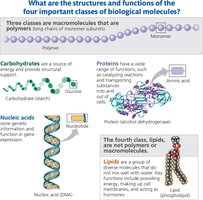
Macromolecules are large, complex molecules essential for life. They are primarily polymers, which are long chains of repeating subunits called monomers. The four major classes of macromolecules in biology are carbohydrates, lipids, proteins, and nucleic acids. Each class has unique structures and functions that are critical for cellular processes.
Polymerization: Building and Breaking Macromolecules
Dehydration Synthesis and Hydrolysis
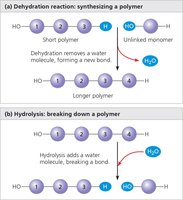
Polymers are formed by linking monomers through dehydration synthesis reactions, which remove a water molecule to form a new bond. Conversely, polymers are broken down into monomers by hydrolysis reactions, which add a water molecule to break a bond.
Dehydration Synthesis: Joins monomers by removing H2O, forming covalent bonds.
Hydrolysis: Breaks covalent bonds by adding H2O, releasing monomers.
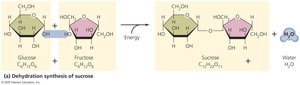
Example: Formation and breakdown of disaccharides such as sucrose and lactose.
Carbohydrates
Structure and Types
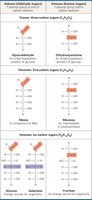
Carbohydrates are organic molecules composed of carbon, hydrogen, and oxygen, typically with a 1:2:1 ratio. They serve as energy sources and structural materials. The basic unit is the monosaccharide (simple sugar), which can combine to form disaccharides and polysaccharides.
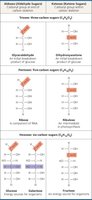
Monosaccharides: Simple sugars (e.g., glucose, fructose) that serve as monomers.
Disaccharides: Two monosaccharides joined by a glycosidic bond (e.g., sucrose, lactose).
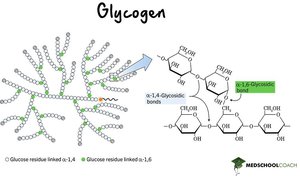
Polysaccharides: Long chains of monosaccharides; can be for energy storage (starch, glycogen) or structure (cellulose, chitin).
Energy Storage and Structural Roles
Starch: Energy storage in plants; composed of amylose and amylopectin.
Glycogen: Energy storage in animals; highly branched structure for rapid glucose release.
Cellulose: Structural component of plant cell walls; indigestible by humans (dietary fiber).
Chitin: Structural polysaccharide in arthropod exoskeletons and fungal cell walls.
Examples of Carbohydrate Polymers
Sucrose: Glucose + Fructose (disaccharide)
Lactose: Galactose + Glucose (disaccharide)
Lipids
Structure and Types
Lipids are hydrophobic molecules that include fats, phospholipids, and steroids. Unlike other macromolecules, lipids are not true polymers. They are important for energy storage, membrane structure, and signaling.
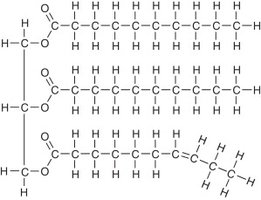
Fats (Triglycerides): Composed of glycerol and three fatty acids, formed by dehydration synthesis.
Saturated Fats: Fatty acids with only single bonds; solid at room temperature.
Unsaturated Fats: Fatty acids with one or more double bonds; liquid at room temperature.
Phospholipids: Major component of cell membranes; amphipathic with hydrophilic head and hydrophobic tails.
Steroids: Four fused carbon rings; function as hormones and signaling molecules.
Proteins
Structure and Function
Proteins are polymers of amino acids, which are linked by peptide bonds. They perform a vast array of functions, including catalysis (enzymes), structure, transport, signaling, and defense. The sequence and chemical properties of amino acids determine protein structure and function.
Amino Acids: 20 different types, each with a unique side chain (R group).
Levels of Protein Structure: Primary (sequence), secondary (alpha helices, beta sheets), tertiary (3D folding), quaternary (multiple polypeptides).
Examples: Hemoglobin (oxygen transport), enzymes (catalysis), structural proteins (collagen).
Chemical Properties of Amino Acids
Nonpolar Side Chains: Hydrophobic, often found in the interior of proteins.
Polar Side Chains: Hydrophilic, can form hydrogen bonds.
Acidic and Basic Side Chains: Can form ionic bonds and participate in active sites of enzymes.
Nucleic Acids
Structure and Function
Nucleic acids store and transmit genetic information. They are polymers of nucleotides, each consisting of a sugar, phosphate group, and nitrogenous base. The two main types are DNA (deoxyribonucleic acid) and RNA (ribonucleic acid).
DNA: Stores genetic information; double helix structure.
RNA: Involved in protein synthesis and gene regulation; usually single-stranded.
Nucleotide: Monomer unit of nucleic acids.
Summary Table: Major Classes of Biological Macromolecules
Macromolecule | Monomer | Bond Type | Function | Example |
|---|---|---|---|---|
Carbohydrate | Monosaccharide | Glycosidic linkage | Energy storage, structure | Starch, cellulose, glycogen |
Lipid | Fatty acid, glycerol | Ester bond | Energy storage, membranes, signaling | Triglyceride, phospholipid, steroid |
Protein | Amino acid | Peptide bond | Catalysis, structure, transport | Enzyme, hemoglobin, collagen |
Nucleic Acid | Nucleotide | Phosphodiester bond | Genetic information, protein synthesis | DNA, RNA |
Key Equations
Dehydration Synthesis (General):
Hydrolysis (General):
Additional info: This guide expands on the original notes by providing definitions, examples, and a summary table for clarity and exam preparation.
