 뒤로
Meiosis and Sexual Life Cycles: Principles of Genetic Variation
스터디 가이드 - 스마트 노트
 자료에 맞춘 맞춤형 노트, 핵심 정의, 예시, 맥락을 확장해 제공합니다.
Meiosis and Sexual Life Cycles
Heredity, Variation, and Genetics
Heredity is the process by which traits are passed from one generation to the next, while variation refers to the differences in appearance and traits among offspring, parents, and siblings. Genetics is the scientific study of heredity and variation, forming the foundation for understanding biological inheritance.
Heredity: Transmission of traits from parents to offspring.
Variation: Differences in traits among individuals.
Genetics: Study of heredity and variation.

Genes, Chromosomes, and Inheritance
Genes are the fundamental units of heredity, composed of DNA segments. They are inherited via gametes (sperm and eggs). Most DNA is organized into chromosomes, and the specific location of a gene on a chromosome is called its locus.
Gene: Segment of DNA coding for a trait.
Chromosome: Structure containing DNA and genes.
Locus: Specific position of a gene on a chromosome.
Gametes: Reproductive cells (sperm and eggs).
Asexual vs. Sexual Reproduction
Asexual reproduction involves a single parent and produces genetically identical offspring (clones), while sexual reproduction involves two parents and results in offspring with unique genetic combinations.
Asexual reproduction: Offspring are clones of the parent.
Sexual reproduction: Offspring inherit a mix of genes from both parents.
Chromosome Sets and Karyotypes
Human somatic cells contain 23 pairs of chromosomes, including autosomes and sex chromosomes. A karyotype is an ordered display of these chromosome pairs. Homologous chromosomes are pairs that carry genes for the same traits.
Somatic cells: All body cells except gametes.
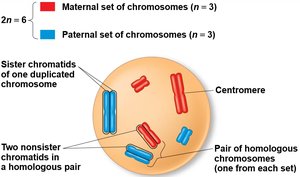
Homologous chromosomes: Chromosome pairs with the same length, shape, and gene content.
Karyotype: Visual representation of chromosome pairs.
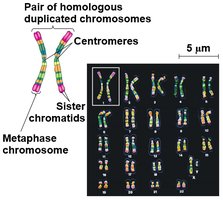
Sets of Chromosomes in Human Cells
Humans have two types of chromosomes: autosomes and sex chromosomes (X and Y). Females have XX, males have XY. Each homologous pair consists of one chromosome from each parent.
Autosomes: Non-sex chromosomes (22 pairs).
Sex chromosomes: X and Y, determine biological sex.
Diploid (2n): Two sets of chromosomes (46 in humans).
Haploid (n): One set of chromosomes (23 in humans).
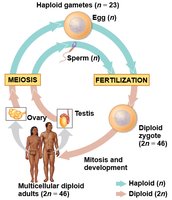
Human Life Cycle: Fertilization and Meiosis
The human life cycle alternates between diploid and haploid stages. Fertilization unites gametes to form a diploid zygote, which develops into an adult through mitosis. Meiosis produces haploid gametes from diploid cells.
Fertilization: Union of sperm and egg to form a zygote.
Zygote: Fertilized egg with two sets of chromosomes.
Meiosis: Process reducing chromosome number from diploid to haploid.
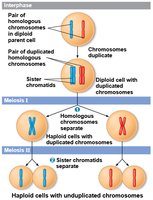
Meiosis: Reducing Chromosome Number
Meiosis consists of two consecutive divisions: meiosis I and meiosis II. It results in four haploid daughter cells, each with half the chromosome number of the parent cell. This reduction is essential for maintaining chromosome number across generations.
Meiosis I: Separates homologous chromosomes.
Meiosis II: Separates sister chromatids.
Result: Four haploid cells from one diploid cell.
Meiosis I: Separating Homologous Chromosomes
Meiosis I involves the separation of homologous chromosomes, resulting in two haploid cells with duplicated chromosomes. Key stages include prophase I, metaphase I, anaphase I, and telophase I.
Prophase I: Homologs pair and crossing over occurs.
Metaphase I: Homologous pairs align at the metaphase plate.
Anaphase I: Homologs separate.
Telophase I: Two haploid cells form.
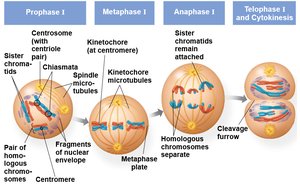
Meiosis II: Separating Sister Chromatids
Meiosis II resembles mitosis, where sister chromatids are separated, resulting in four haploid cells with unduplicated chromosomes.
Prophase II: Chromosomes condense.
Metaphase II: Chromosomes align at the metaphase plate.
Anaphase II: Sister chromatids separate.
Telophase II: Four haploid cells form.
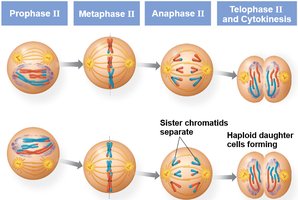
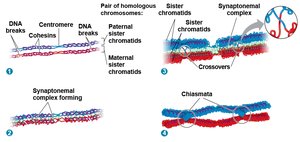
Crossing Over and Synapsis During Prophase I
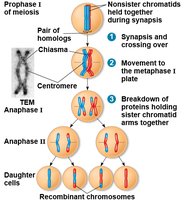
During prophase I, homologous chromosomes undergo synapsis, forming a synaptonemal complex. Crossing over occurs, exchanging genetic material between nonsister chromatids, increasing genetic variation.
Synapsis: Homologs pair tightly.
Crossing over: Exchange of DNA between nonsister chromatids.
Chiasmata: Sites of crossover.
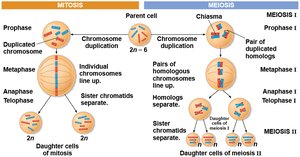
Comparison of Mitosis and Meiosis
Mitosis and meiosis are both processes of cell division, but they differ in their outcomes and roles. Mitosis produces two genetically identical diploid cells, while meiosis produces four genetically unique haploid cells.
Mitosis: One division, two diploid cells, no genetic variation.
Meiosis: Two divisions, four haploid cells, genetic variation.
Genetic Variation in Sexual Life Cycles
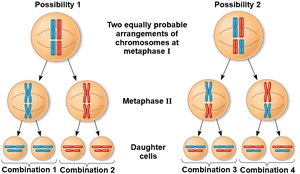
Genetic variation arises from the behavior of chromosomes during meiosis and fertilization. Three main mechanisms contribute: independent assortment, crossing over, and random fertilization.
Independent assortment: Chromosomes sort independently into gametes.
Crossing over: Recombinant chromosomes are formed.
Random fertilization: Any sperm can fuse with any egg.
Independent Assortment of Chromosomes
During meiosis, each pair of chromosomes sorts independently, creating numerous possible combinations in gametes. For humans, with n = 23, there are over 8 million possible combinations.
Formula: Number of combinations =
Example: For humans,
Crossing Over
Crossing over produces recombinant chromosomes, combining DNA from both parents. This process increases genetic diversity, with one to three crossover events per chromosome in humans.
Recombinant chromosomes: Chromosomes with mixed parental DNA.
Chiasmata: Physical sites of crossing over.
Random Fertilization
Random fertilization further increases genetic variation, as any sperm can fuse with any egg. The combination of independent assortment and crossing over results in a zygote with a unique genetic identity.
Possible combinations: Over 70 trillion diploid combinations in humans.
Genetic uniqueness: Each zygote is genetically distinct.
Summary Table: Comparison of Mitosis and Meiosis
Feature | Mitosis | Meiosis |
|---|---|---|
Number of divisions | 1 | 2 |
Number of daughter cells | 2 | 4 |
Chromosome number | Diploid (2n) | Haploid (n) |
Genetic variation | None (identical) | High (unique) |
Role | Growth, repair | Gamete production |
