 뒤로
Meiosis and Sexual Life Cycles: Study Notes for General Biology
스터디 가이드 - 스마트 노트
 자료에 맞춘 맞춤형 노트, 핵심 정의, 예시, 맥락을 확장해 제공합니다.
Meiosis and Sexual Life Cycles
Introduction to Reproduction
Reproduction is a fundamental biological process that enables organisms to produce offspring. It can occur in two main forms: asexual reproduction and sexual reproduction. Each mode has distinct mechanisms and evolutionary implications.
Asexual Reproduction
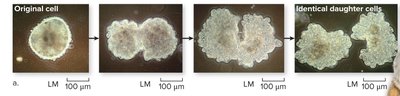
Asexual reproduction involves a single parent organism replicating its DNA and dividing to produce genetically identical offspring.
Offspring produced this way are called clones.
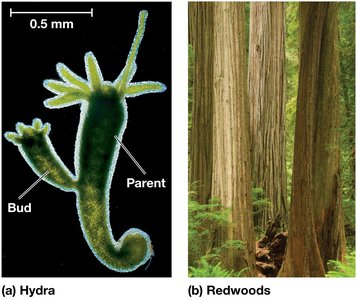
Common in unicellular organisms and some multicellular organisms (e.g., hydra, redwoods).
Advantages: rapid population growth, no need for a mate.
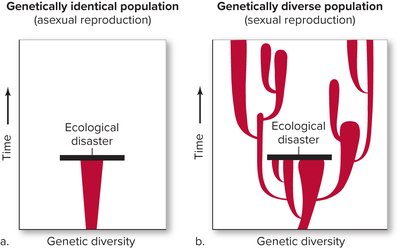
Disadvantages: lack of genetic diversity, making populations vulnerable to environmental changes.
Sexual Reproduction
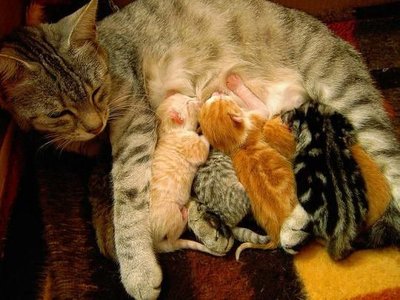
Sexual reproduction involves the fusion of gametes (egg and sperm) from two parents, resulting in genetically diverse offspring.
Genetic diversity increases the likelihood of survival in changing environments.
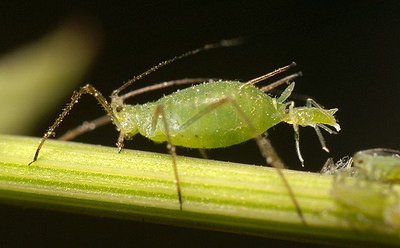
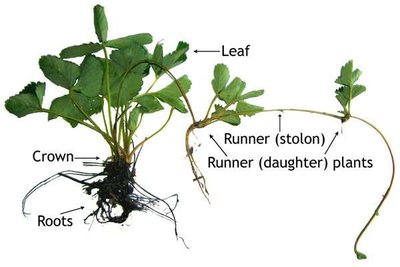
Some organisms can reproduce both sexually and asexually (e.g., aphids, strawberries).
Genetic Diversity and Evolutionary Advantage
Sexual reproduction produces genetic diversity among offspring, which is a key evolutionary advantage. Diverse populations are more resilient to ecological disasters and environmental changes.
Genetic diversity arises from the combination of genes from two parents.
Populations with high genetic diversity are less likely to be wiped out by a single event.
Types of Cells in Eukaryotes
Eukaryotic organisms have two main types of cells: gametes and somatic cells.
Gametes: Reproductive cells (sperm and egg), haploid (n), contain a single set of chromosomes.
Somatic cells: All other cells, diploid (2n), contain two sets of chromosomes.
Some organisms are polyploid (more than two sets of chromosomes), common in plants.
Chromosome numbers vary by species (e.g., humans: 46, elephants: 56, cabbage: 18).

Life Cycles: Alternation of Meiosis and Fertilization
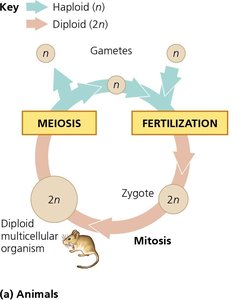
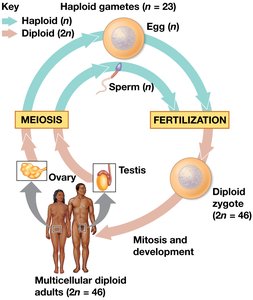
The life cycle of sexually reproducing organisms alternates between meiosis and fertilization, maintaining a constant chromosome number across generations.
Meiosis reduces chromosome number from diploid (2n) to haploid (n).
Fertilization restores diploid number by fusing two haploid gametes.
This alternation ensures genetic continuity and variation.
Chromosome Structure and Homologous Chromosomes
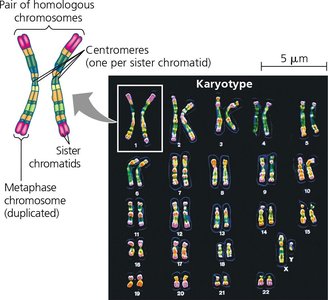
Chromosomes are structures that carry genetic information. Diploid cells have pairs of homologous chromosomes, which are similar in length and gene content.
Homologous chromosomes: Pairs that carry the same genes but may have different alleles.
Autosomes: Numbered chromosomes, same in both sexes.
Sex chromosomes: Denoted by letters (e.g., X, Y), determine sex.
Backup mechanism: If one gene is lost, the homologous chromosome provides a backup copy.

Meiosis: Process and Stages
Meiosis is a specialized cell division that reduces the chromosome number by half, producing four genetically unique haploid cells from one diploid cell. It consists of two consecutive divisions: Meiosis I and Meiosis II.
Meiosis I: Homologous chromosomes separate, reducing chromosome number.
Meiosis II: Sister chromatids separate, similar to mitosis.
Key stages: Prophase I, Metaphase I, Anaphase I, Telophase I & Cytokinesis; Prophase II, Metaphase II, Anaphase II, Telophase II & Cytokinesis.
Prophase I
Homologous chromosomes pair up and form a synapse (tetrad).
Crossing over occurs, exchanging genetic material between non-sister chromatids.
Chiasmata form at crossover points.
Metaphase I
Homologous pairs align at the metaphase plate.
Independent assortment occurs, increasing genetic variation.
Anaphase I
Homologous chromosomes separate and move to opposite poles.
Sister chromatids remain attached.
Telophase I and Cytokinesis
Chromosome movement is complete.
Cell divides, resulting in two haploid cells.
Meiosis II
Similar to mitosis; sister chromatids separate.
Results in four genetically unique haploid cells.
Mechanisms Generating Genetic Variation
Three main mechanisms during meiosis and fertilization contribute to genetic variation among offspring:
Independent assortment: Random orientation of chromosome pairs during Metaphase I.
Crossing over: Exchange of genetic material between homologous chromosomes during Prophase I.
Random fertilization: Any sperm can fuse with any egg, creating numerous possible combinations.
Mutations: Changes in DNA sequence create new alleles, further increasing diversity.
Equation for Chromosome Combinations
The number of possible combinations due to independent assortment is given by:
where n is the haploid number of chromosomes.
Comparison of Mitosis and Meiosis
Mitosis and meiosis are distinct processes:
Mitosis: Produces two genetically identical diploid cells for growth and repair.
Meiosis: Produces four genetically unique haploid cells for sexual reproduction.
Summary Table: Differences Between Mitosis and Meiosis
Feature | Mitosis | Meiosis |
|---|---|---|
Number of divisions | 1 | 2 |
Number of daughter cells | 2 | 4 |
Chromosome number | Diploid (2n) | Haploid (n) |
Genetic identity | Identical | Unique |
Function | Growth, repair | Sexual reproduction |
Evolutionary Significance of Sexual Reproduction
Variation among offspring is a potential evolutionary advantage, allowing populations to adapt to changing environments and survive ecological challenges.
Key Point: Genetic diversity is essential for the long-term survival and evolution of species.
