 뒤로
Membrane Structure and Function: Study Notes for General Biology
스터디 가이드 - 스마트 노트
 자료에 맞춘 맞춤형 노트, 핵심 정의, 예시, 맥락을 확장해 제공합니다.
Membrane Structure and Function
Biological Membranes and Cells
Biological membranes are essential for cellular life, forming the boundary between the cell and its environment. They regulate the passage of materials, protect the cell, and facilitate communication. - Cell: The smallest unit capable of all life activities. - Plasma membrane: Surrounds every cell, separating internal and external environments. - Functions: Gatekeeper (regulates passage), protector (excludes harmful substances), message carrier (cell communication). 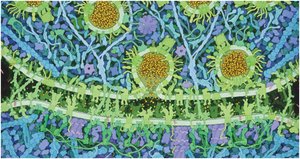
Structure of the Plasma Membrane
The plasma membrane is a thin, fluid, lipid-based structure, continually remodeled as materials move in and out. Most components are synthesized in the endoplasmic reticulum (ER). - Phospholipids: Form a bilayer, major component. - Cholesterol: Nestled between phospholipids, modulates fluidity. - Proteins: Embedded or attached, perform various functions. - Glycoproteins & Glycolipids: Involved in cell recognition and signaling. 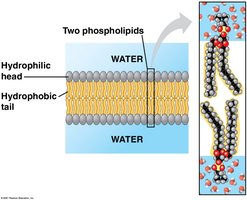
Phospholipid Bilayer
Phospholipids spontaneously arrange into a double layer due to their amphipathic nature: - Hydrophilic heads: Face outward toward water. - Hydrophobic tails: Face inward, away from water. - Amphipathic: Both hydrophilic and hydrophobic regions.
Membrane Fluidity
Membrane fluidity is crucial for function and is influenced by several factors: - Temperature: Low temperatures cause solidification; high temperatures increase fluidity. - Lipid composition: Saturated fatty acids decrease fluidity; unsaturated fatty acids (with double bonds) increase fluidity by preventing tight packing. - Cholesterol: Maintains optimal fluidity, restricts movement at high temperatures, prevents solidification at low temperatures. 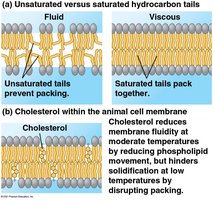
Cholesterol in Membranes
Cholesterol is slightly amphipathic and strengthens the membrane. - Warm temperatures: Restricts phospholipid movement. - Cool temperatures: Prevents tight packing, maintains fluidity.
Membrane Proteins
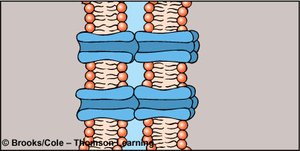
Membranes contain a diverse array of proteins, often clustered in groups. These proteins are essential for many cellular activities and can move within the bilayer or be anchored by filaments.
Types of Membrane Proteins
- Integral proteins: Firmly bound, often transmembrane, amphipathic. - Lipid-anchored proteins: Covalently attached to lipids. - Peripheral proteins: Located on inner or outer surfaces, usually bound to exposed regions of integral proteins.
Membrane Properties and Permeability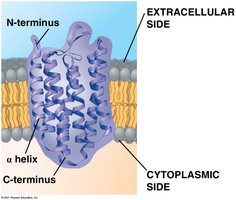
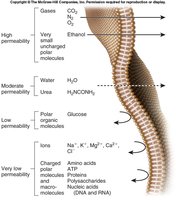
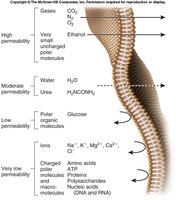
Biological membranes are selectively permeable, allowing some substances to pass while blocking others. - Selective permeability: Regulates chemical traffic, controls cell volume and composition. - Concentration gradient: Difference in solute concentration across a membrane; drives movement.
Permeability Table
Permeability | Examples |
|---|---|
High | Gases (CO2, O2), small uncharged polar molecules (ethanol) |
Moderate | Water, urea |
Low | Polar organic molecules (glucose) |
Very low | Ions (Na+, K+, Ca2+), charged polar molecules (ATP, amino acids, nucleic acids) |
Osmosis and Water Balance
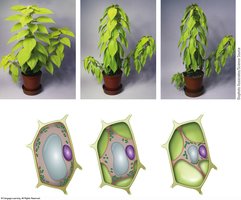
Osmosis is the net movement of water across a selectively permeable membrane, crucial for biological systems. - Isotonic solution: Equal solute concentration; no net water movement. - Hypertonic solution: Higher solute concentration outside; water exits cell, cell shrinks. - Hypotonic solution: Lower solute concentration outside; water enters cell, cell swells. 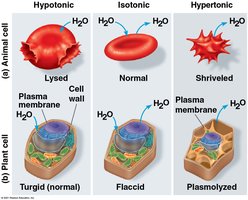
Protein Functions in Membranes
Membrane proteins perform a variety of functions: - Adhesion/Anchor: Stabilize cell, connect to extracellular matrix. 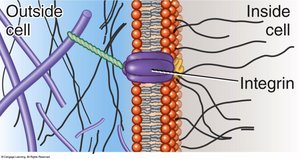 - Passive transport: Form channels for selective passage of ions/molecules.
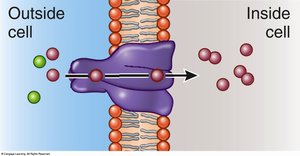 - Active transport: Pump solutes across membrane, requires energy (ATP).
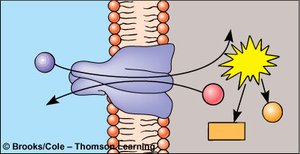 - Enzymatic activity: Catalyze reactions on membrane surface.
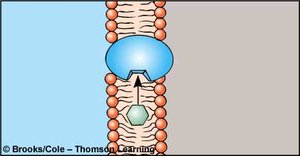 - Signal transduction: Receptors transmit information into cell.
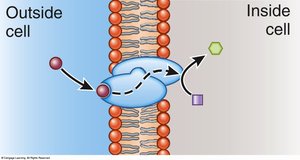 - Cell recognition: Identification tags, immune response.
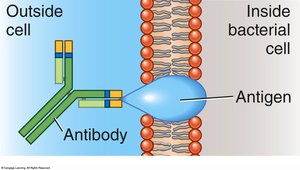 - Intercellular junction: Attach membranes of adjacent cells.
Cell Transport Mechanisms
Passive Transport
Passive transport involves movement down a concentration gradient without energy expenditure. - Diffusion: Movement from high to low concentration, continues until equilibrium. 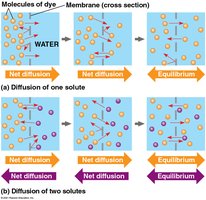
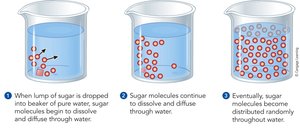 - Simple diffusion: Small nonpolar or very small uncharged polar molecules.
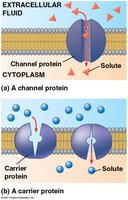
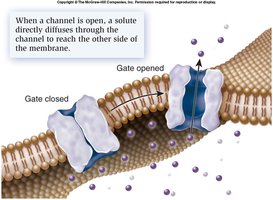
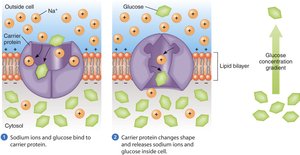
 - Facilitated diffusion: Channel and carrier proteins help specific ions or polar molecules cross.
Osmosis
Water moves from areas of lower solute concentration to higher solute concentration. 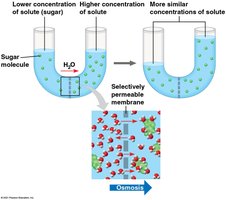
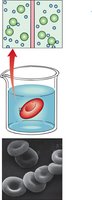
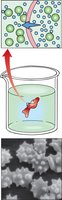
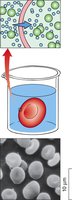
Active Transport
Active transport moves molecules against their concentration gradient, requiring ATP. - Carrier-mediated active transport: Specific pumps use ATP to transport substances. - Sodium-potassium pump: Maintains high K+ inside and high Na+ outside, crucial for nerve function. per ATP hydrolyzed. 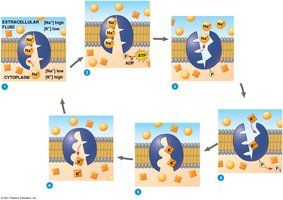 - Proton pump: Transports H+ out of cell, important in plants, fungi, bacteria.
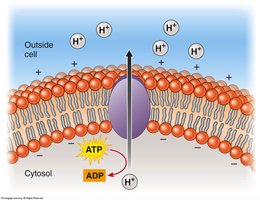 - Cotransport: One solute moves down its gradient, another against its gradient.
Bulk Transport Mechanisms
Exocytosis
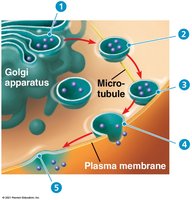
Movement of materials out of the cell via vesicle fusion with plasma membrane. - Examples: Protein secretion, hormone release, waste removal. 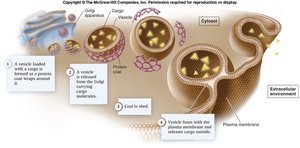
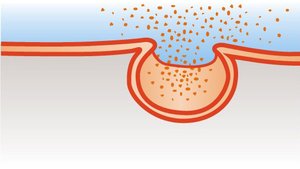
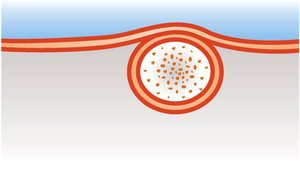
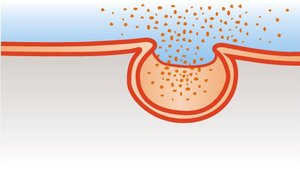
Endocytosis
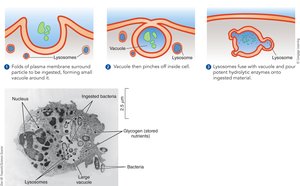
Movement of large materials into the cell by infolding of plasma membrane. - Pinocytosis: "Cell drinking," uptake of extracellular fluid and solutes. 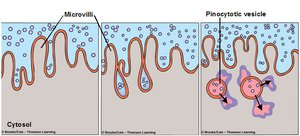 - Receptor-mediated endocytosis: Specific molecules bind to receptors, are internalized. - Phagocytosis: "Cell eating," uptake of large particles (e.g., bacteria).
Key Terms and Definitions
Solution: Homogeneous mixture of solvent and solute.
Solvent: Substance in which solute is dissolved (e.g., water).
Solute: Substance dissolved in solvent.
Hypertonic: Higher solute concentration relative to another solution.
Isotonic: Equal solute concentration relative to another solution.
Hypotonic: Lower solute concentration relative to another solution.
Summary Table: Membrane Transport Mechanisms
Transport Type | Energy Required | Direction | Example |
|---|---|---|---|
Simple Diffusion | No | Down gradient | O2, CO2 |
Facilitated Diffusion | No | Down gradient | Glucose, ions |
Osmosis | No | Down water gradient | Water |
Active Transport | Yes (ATP) | Against gradient | Na+/K+ pump |
Bulk Transport | Yes | Variable | Exocytosis, endocytosis |
Additional info:
Some explanations and tables were expanded for clarity and completeness, including definitions and summary tables for transport mechanisms and permeability.
