 뒤로
Mendel and the Gene Idea: Principles of Inheritance and Genetic Variation
스터디 가이드 - 스마트 노트
 자료에 맞춘 맞춤형 노트, 핵심 정의, 예시, 맥락을 확장해 제공합니다.
Mendel and the Gene Idea
Introduction to Heredity and Variation
Heredity is the process by which traits are passed from parents to offspring. Mendel's experiments with pea plants established the foundational principles of inheritance, demonstrating how genetic variation arises and is maintained in populations.
Offspring resemble their parents due to inherited genetic material.
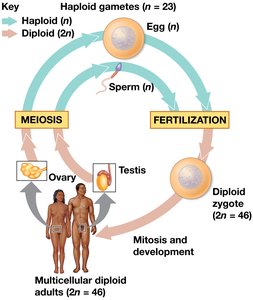
Sexual reproduction involves the formation of haploid gametes from diploid germ cells, followed by fertilization to produce a diploid zygote.
The zygote undergoes mitosis to form a multicellular organism, and germ cells are generated early in development.
Genetic Variation in Populations
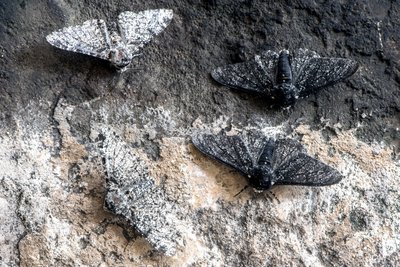
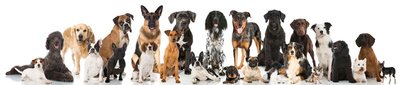
Variation among individuals in a population is primarily genetic and is essential for evolution by natural selection.
No two individuals are genetically identical (except identical twins).
Genetic variation provides a survival advantage under selective pressures.
Natural selection acts on variation, shifting allele frequencies over time.
Genes, Alleles, and Traits
Basic Genetic Concepts
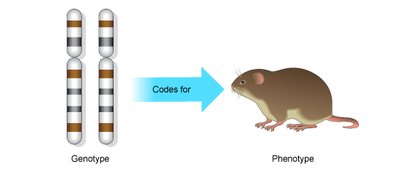
Genes are segments of DNA that code for proteins affecting specific traits. Alleles are different versions of a gene, and the combination of alleles determines an individual's genotype and phenotype.
Genotype: The genetic makeup of an individual (the alleles they possess).
Phenotype: The observable traits of an individual, influenced by genotype and environment.
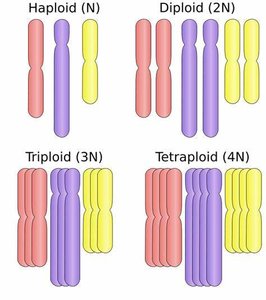
Animals are typically diploid, possessing two copies of each chromosome (one from each parent).
Gametes are haploid, containing one set of chromosomes.
Polyploidy (more than two sets of chromosomes) is common in plants.
Mechanisms Generating Genetic Variability
Several mechanisms contribute to genetic diversity within populations:
Crossing over during meiosis exchanges genetic material between homologous chromosomes.
Random segregation/alignment of chromosomes during meiosis.
Random fertilization of gametes.
Mutations create new alleles.
Mendel’s Laws of Inheritance
Mendel’s Experimental Approach
Gregor Mendel used garden peas to study inheritance, tracking characters with two distinct forms and using true-breeding varieties.
True-breeding plants produce offspring identical to themselves.
Hybrid crosses revealed patterns of inheritance and ratios of traits.
The Law of Segregation
Mendel’s first law states that two alleles for a heritable character separate during gamete formation, ensuring each gamete receives only one allele.
Dominant allele: Determines phenotype when present.
Recessive allele: Masked in presence of dominant allele but reappears in subsequent generations.
This law corresponds to the distribution of homologous chromosomes during meiosis.
The Law of Independent Assortment
Mendel’s second law states that alleles of different genes assort independently during gamete formation, provided the genes are on different chromosomes or far apart on the same chromosome.
Genes close together on the same chromosome are linked and tend to be inherited together.
Independent assortment increases genetic variation.
Genotype and Phenotype
Relationship Between Genotype and Phenotype
The genotype determines the phenotype, which is the physical expression of genetic traits. Environmental factors can also influence phenotype.
Punnett squares are used to predict genotype and phenotype ratios in offspring.
Uppercase letters represent dominant alleles; lowercase letters represent recessive alleles.
Testcrosses and Working Punnett Squares Backwards
A testcross is used to determine the genotype of an individual with a dominant phenotype by crossing it with a homozygous recessive individual.
If any offspring display the recessive phenotype, the parent is heterozygous.
Punnett squares can be used in reverse to deduce parental genotypes from offspring ratios.
Degrees of Dominance and Multiple Alleles
Complete, Incomplete, and Codominance
Dominance relationships between alleles can vary:
Complete dominance: Heterozygote and dominant homozygote are indistinguishable.
Incomplete dominance: Heterozygote displays an intermediate phenotype.
Codominance: Both alleles are fully expressed in the phenotype.
Multiple Alleles
Many genes have more than two allelic forms, resulting in multiple possible genotypes and phenotypes.
Example: ABO blood group in humans is determined by three alleles.
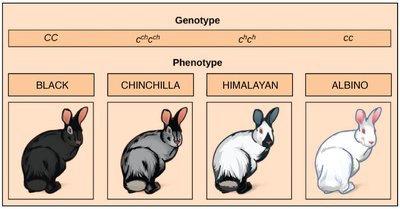
Rabbit coat color is determined by four alleles.
Genotype | Phenotype |
|---|---|
CC | Black |
cchcch | Chinchilla |
chch | Himalayan |
cc | Albino |
Pleiotropy, Epistasis, and Polygenic Traits
Pleiotropy
Pleiotropy occurs when one gene affects multiple phenotypic traits. For example, the gene responsible for sickle-cell disease affects multiple systems in the body.
Epistasis
Epistasis is when the expression of one gene depends on another gene. For example, in Labrador retrievers, one gene determines pigment color, while another gene determines pigment deposition.
Polygenic Inheritance
Polygenic traits are controlled by multiple genes, resulting in continuous variation. Human skin color is a classic example.
Inheritance Patterns and Human Disorders
Recessively Inherited Disorders
Recessive disorders appear only in individuals homozygous for the recessive allele. Carriers are heterozygous and phenotypically normal but can transmit the allele.
Example: Cystic fibrosis is caused by a malfunctioning CFTR protein.
Consanguineous matings increase the likelihood of recessive disorders.
Dominantly Inherited Disorders
Dominant alleles can cause disorders, but lethal dominant alleles are rare because affected individuals often die before reproducing. Some disorders, like Huntington’s disease, manifest after reproductive age.
Gene Linkage and Environmental Effects
Gene Linkage
Genes located close together on the same chromosome are linked and tend to be inherited together. The probability of crossover events is proportional to the distance between genes.
Environmental Impact on Phenotype
Phenotype can be influenced by environmental factors as well as genotype. For example, hydrangea flower color varies with soil acidity, and the Arctic fox changes color with the seasons.
Summary Table: Key Genetic Concepts
Concept | Definition | Example |
|---|---|---|
Gene | Segment of DNA coding for a trait | Flower color gene |
Allele | Variant of a gene | Purple vs. white flower allele |
Genotype | Genetic makeup | PP, Pp, pp |
Phenotype | Observable trait | Purple or white flowers |
Pleiotropy | One gene affects multiple traits | Sickle-cell disease |
Epistasis | Gene interaction affects trait | Labrador coat color |
Polygenic | Trait controlled by multiple genes | Skin color |
Additional info: Academic context was added to clarify mechanisms of genetic variation, dominance relationships, and inheritance patterns. Tables and diagrams were recreated for clarity and completeness.
