 뒤로
Mendel and the Gene Idea: Principles of Inheritance
스터디 가이드 - 스마트 노트
 자료에 맞춘 맞춤형 노트, 핵심 정의, 예시, 맥락을 확장해 제공합니다.
Chapter 14: Mendel and the Gene Idea
Introduction to Mendelian Genetics
Mendelian genetics forms the foundation of classical inheritance, describing how traits are passed from parents to offspring. Gregor Mendel's experiments with pea plants led to the discovery of fundamental laws governing heredity.
Character: A heritable feature that varies among individuals (e.g., flower color).
Trait: Each variant for a character (e.g., purple or white flowers).
True-breeding: Plants that produce offspring of the same variety when self-pollinated.
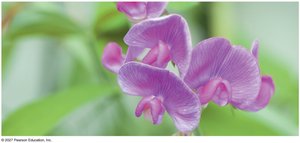
Mendel’s Experimental Approach
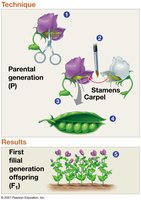
Mendel used pea plants for their distinct traits, short generation time, and ability to control mating. He tracked characters with two alternative forms and started with true-breeding varieties.
Hybridization: Mating two contrasting, true-breeding varieties.
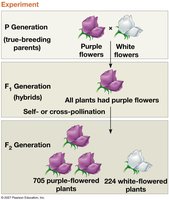
P generation: True-breeding parents.
F1 generation: Hybrid offspring of the P generation.
F2 generation: Offspring from self- or cross-pollination of F1 hybrids.
The Law of Segregation
Mendel’s experiments disproved the blending hypothesis. When crossing purple and white flowers, all F1 hybrids were purple. In the F2 generation, a 3:1 ratio of purple to white flowers appeared, showing that traits segregate independently.
Dominant trait: Trait that appears in the F1 generation (purple).
Recessive trait: Trait masked in the F1 but reappears in F2 (white).
Gene: Mendel’s “heritable factor” is now known as a gene.
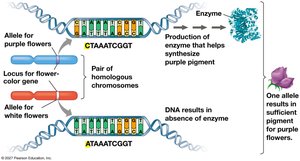
Mendel’s Model of Inheritance
Mendel proposed four concepts to explain the 3:1 ratio:
Alleles: Alternative versions of genes account for variations in inherited characters.
Inheritance: Each organism inherits two alleles, one from each parent.
Dominance: If alleles differ, the dominant allele determines appearance; the recessive allele is masked.
Law of Segregation: The two alleles for a character segregate during gamete formation.
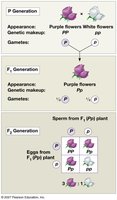
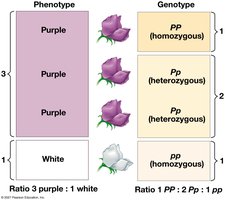
Genetic Vocabulary: Homozygous, Heterozygous, Phenotype, Genotype
Homozygote: Two identical alleles for a gene (e.g., PP or pp).
Heterozygote: Two different alleles for a gene (e.g., Pp).
Phenotype: Physical appearance (e.g., purple flowers).
Genotype: Genetic makeup (e.g., PP, Pp, or pp).
The Testcross
A testcross determines the genotype of an individual with a dominant phenotype by crossing it with a homozygous recessive individual. If any offspring display the recessive phenotype, the parent is heterozygous. 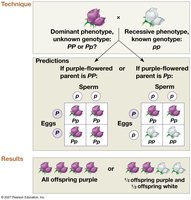
The Law of Independent Assortment
Mendel’s second law states that each pair of alleles segregates independently during gamete formation. This law applies to genes on different chromosomes or those far apart on the same chromosome.
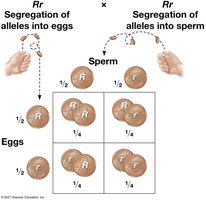
Monohybrid cross: Heterozygous for one character.
Dihybrid cross: Heterozygous for two characters.
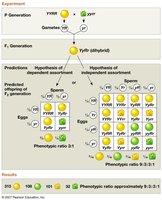
Probability Laws in Genetics
Mendelian inheritance follows the rules of probability.
Multiplication rule: Probability of two independent events occurring together is the product of their probabilities.
Addition rule: Probability of one of several mutually exclusive events is the sum of their probabilities.

Complex Patterns of Inheritance
Inheritance patterns can be more complex than simple Mendelian genetics.
Complete dominance: Heterozygote phenotype same as homozygous dominant.
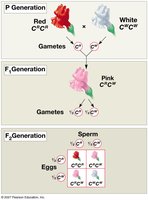
Incomplete dominance: Heterozygote phenotype intermediate between two homozygotes.
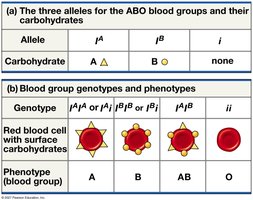
Codominance: Both alleles affect phenotype in separate ways.
Multiple alleles: More than two alleles exist for a gene.
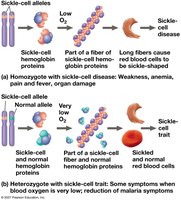
Pleiotropy: One gene affects multiple phenotypic characters.
Epistasis and Polygenic Inheritance
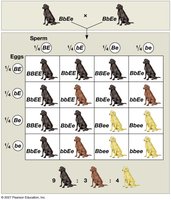
Epistasis: Expression of one gene alters the expression of another gene. Example: Labrador retriever coat color.
Polygenic inheritance: Multiple genes independently affect a single trait, such as height or skin color.
Environmental Impact on Phenotype
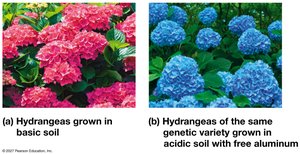
Phenotype can be influenced by environmental factors as well as genotype.
Phenotypic plasticity: Ability to produce different phenotypes under varying environmental conditions.
Multifactorial traits: Traits influenced by multiple genes and environmental factors.
Human Mendelian Genetics
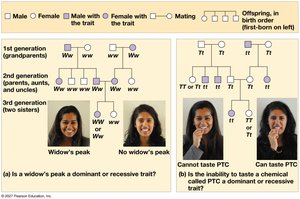
Many human traits follow Mendelian patterns, though humans are not ideal subjects for genetic research due to long generation times and ethical concerns.
Pedigree analysis: Family tree describing inheritance of traits across generations.
Recessive and Dominant Disorders
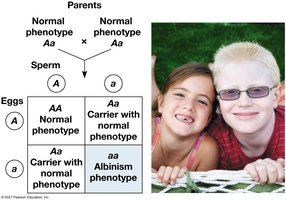
Recessive disorders: Show up only in individuals homozygous for the allele (e.g., albinism, cystic fibrosis).
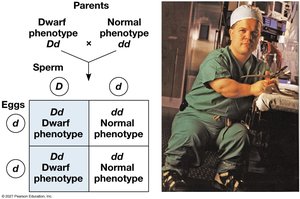
Dominant disorders: Caused by dominant alleles (e.g., achondroplasia, Huntington’s disease).
Multifactorial Disorders and Genetic Counseling
Many diseases have both genetic and environmental components. Genetic counseling and testing can provide information to prospective parents and detect genetic disorders in fetuses and newborns.
Summary Tables
Table: Mendel’s Crosses for Seven Characters
Character | Dominant Trait | Recessive Trait | Ratio |
|---|---|---|---|
Flower color | Purple | White | 3.15:1 |
Seed shape | Round | Wrinkled | 2.96:1 |
Seed color | Yellow | Green | 2.04:1 |
Pod shape | Inflated | Constricted | 2.91:1 |
Pod color | Green | Yellow | 2.82:1 |
Flower position | Axial | Terminal | 3.14:1 |
Stem length | Tall | Dwarf | 2.84:1 |
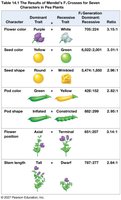
Table: Extensions of Mendelian Genetics for a Single Gene
Relationship | Description | Example |
|---|---|---|
Complete dominance | Heterozygous phenotype same as homozygous dominant | Purple flowers (Pp, PP) |
Incomplete dominance | Heterozygous phenotype intermediate | Pink snapdragons (CRCW) |
Codominance | Both phenotypes expressed | ABO blood group (IAIB) |
Multiple alleles | More than two alleles in population | ABO blood group alleles |
Pleiotropy | One gene affects multiple characters | Sickle-cell disease |
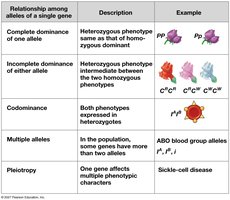
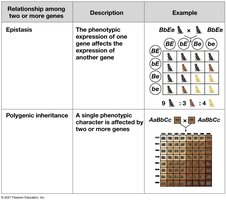
Table: Extensions of Mendelian Genetics for Two or More Genes
Relationship | Description | Example |
|---|---|---|
Epistasis | Phenotypic expression of one gene affects another | Labrador retriever coat color |
Polygenic inheritance | Single character affected by two or more genes | Human skin color |
Key Equations
Multiplication rule:
Addition rule:
Additional info: This study guide expands on brief points with academic context, definitions, and examples to ensure completeness and clarity for exam preparation.
