 뒤로
Mendelian Genetics and Early Theories of Heredity
스터디 가이드 - 스마트 노트
 자료에 맞춘 맞춤형 노트, 핵심 정의, 예시, 맥락을 확장해 제공합니다.
Mendelian Genetics and Early Theories of Heredity
Early Theories of Heredity
Before the discovery of Mendelian genetics, scientists proposed several theories to explain how traits are inherited from one generation to the next. Two prominent theories were the blending inheritance hypothesis and the theory of acquired characteristics.
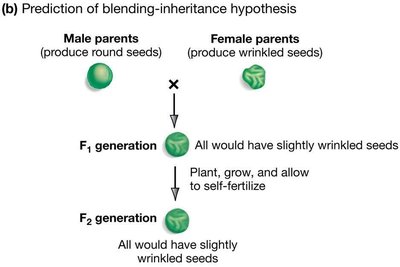
Blending Inheritance: This hypothesis suggested that offspring are a "blend" of their parents' traits, resulting in intermediate characteristics in each generation.
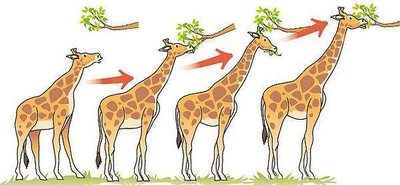
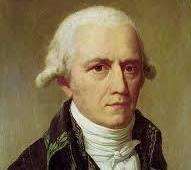
Theory of Acquired Characteristics: Proposed by Jean-Baptiste Lamarck, this theory stated that traits acquired during an organism's lifetime could be passed to offspring.
Example: Lamarck's famous example was the giraffe, which he believed developed longer necks by stretching to reach higher leaves, and then passed this trait to their offspring.
Gregor Mendel and the Foundations of Genetics
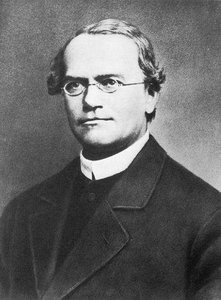
Gregor Mendel, an Austrian monk, conducted experiments with pea plants that laid the foundation for modern genetics. His work demonstrated that traits are inherited in discrete units, now known as genes, rather than blending together.
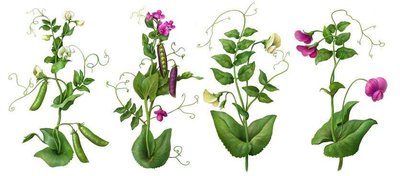
Pea Plant Experiments: Mendel chose pea plants (Pisum sativum) because they had easily observable traits and could be cross- or self-fertilized.
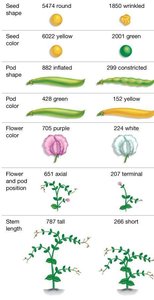
Traits Studied: Mendel examined traits such as seed shape, seed color, pod shape, pod color, flower color, flower position, and stem length.
Experimental Methods: Mendel used both self-fertilization and cross-fertilization to study inheritance patterns.
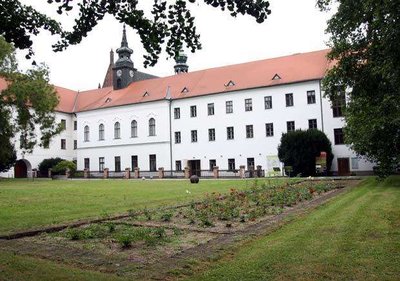
Example: Mendel's garden at the monastery was the site of his experiments.
Mendel's Experimental Design
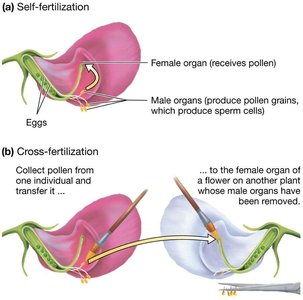
Mendel's experiments involved careful control of pollination to ensure accurate results. He compared self-fertilization and cross-fertilization to observe how traits were passed on.
Self-Fertilization: Pollen from a flower fertilizes the same flower's ovules.
Cross-Fertilization: Pollen from one plant is transferred to another plant whose male organs have been removed.
Controlled Crosses: Mendel removed the male organs from some flowers to prevent self-fertilization and ensure cross-pollination.
Traits and Phenotypes Studied by Mendel
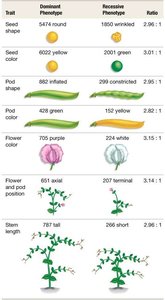
Mendel selected traits that had clear, contrasting phenotypes. He counted the number of plants showing each trait in successive generations to analyze inheritance patterns.
Dominant and Recessive Traits: Traits that appeared in the F1 generation were termed dominant, while those that reappeared in the F2 generation were termed recessive.
Quantitative Analysis: Mendel counted thousands of plants to determine ratios of dominant to recessive phenotypes.
Trait | Dominant Phenotype | Recessive Phenotype | Ratio |
|---|---|---|---|
Seed shape | Round (5474) | Wrinkled (1850) | 2.96 : 1 |
Seed color | Yellow (6022) | Green (2001) | 3.01 : 1 |
Pod shape | Inflated (882) | Constricted (299) | 2.95 : 1 |
Pod color | Green (428) | Yellow (152) | 2.82 : 1 |
Flower color | Purple (705) | White (224) | 3.15 : 1 |
Flower position | Axial (651) | Terminal (207) | 3.14 : 1 |
Stem length | Tall (787) | Short (266) | 2.96 : 1 |
Blending Inheritance vs. Mendelian Inheritance
Mendel's results contradicted the blending inheritance hypothesis. Instead of intermediate traits, he observed that traits reappeared unchanged in later generations, supporting the concept of discrete inheritance.
Blending Inheritance Prediction: Offspring should have intermediate traits, and these traits should persist in subsequent generations.
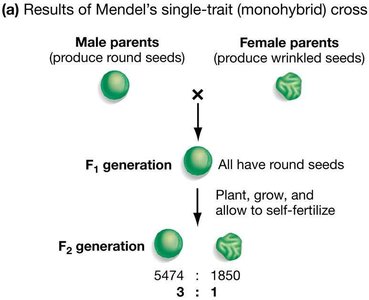
Mendelian Inheritance: Offspring in the F1 generation showed only the dominant trait, while the recessive trait reappeared in the F2 generation in a predictable ratio.
Example: Crossing round-seeded and wrinkled-seeded plants produced all round seeds in F1, but both round and wrinkled seeds in F2.
Mendel's Laws of Inheritance
Mendel formulated two fundamental laws based on his experiments: the Law of Segregation and the Law of Independent Assortment.
Law of Segregation: Each individual has two alleles for each gene, which segregate during gamete formation so that each gamete carries only one allele.
Law of Independent Assortment: Genes for different traits assort independently of one another during gamete formation.
Mathematical Ratio: The classic ratio for a monohybrid cross is 3:1 for dominant to recessive phenotypes in the F2 generation.
Equation:
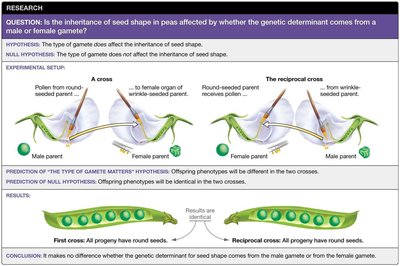

Experimental Controls: Reciprocal Crosses
Mendel performed reciprocal crosses to test whether the inheritance of traits depended on whether the genetic determinant came from the male or female parent. He found that the results were the same regardless of which parent contributed the trait.
Reciprocal Cross: Swapping the trait between male and female parents to test for sex-linked inheritance.
Conclusion: The inheritance of seed shape in peas was not affected by the sex of the parent contributing the trait.
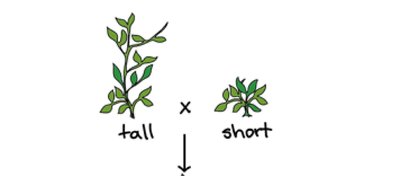
Classic Monohybrid Cross Example: Tall vs. Short Pea Plants
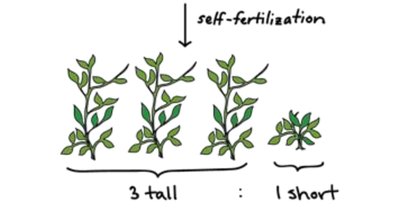
Mendel's experiments with tall and short pea plants illustrated the principles of dominant and recessive inheritance. When tall and short plants were crossed, all F1 offspring were tall. Self-fertilization of F1 plants produced a 3:1 ratio of tall to short plants in the F2 generation.
Dominant Trait: Tallness
Recessive Trait: Shortness
F1 Generation: All tall
F2 Generation: 3 tall : 1 short
Summary Table of Mendelian Traits and Ratios
Mendel's experiments consistently produced similar ratios for different traits, supporting the universality of his laws.
Trait | Dominant Phenotype | Recessive Phenotype | Ratio |
|---|---|---|---|
Seed shape | Round | Wrinkled | 2.96 : 1 |
Seed color | Yellow | Green | 3.01 : 1 |
Pod shape | Inflated | Constricted | 2.95 : 1 |
Pod color | Green | Yellow | 2.82 : 1 |
Flower color | Purple | White | 3.15 : 1 |
Flower position | Axial | Terminal | 3.14 : 1 |
Stem length | Tall | Short | 2.96 : 1 |
Additional info:
Mendel's work was published in 1866 but was not widely recognized until the early 20th century.
His experiments provided the foundation for the field of genetics, which studies heredity and variation in organisms.
The concept of alleles, dominant and recessive traits, and the use of mathematical ratios in genetics are central to understanding inheritance.
