뒤로
뒤로Metabolism and Energy: Foundations of Bioenergetics
스터디 가이드 - 스마트 노트
 자료에 맞춘 맞춤형 노트, 핵심 정의, 예시, 맥락을 확장해 제공합니다.
Metabolism: The Chemical Reactions of Life
Definition and Overview
Metabolism encompasses all the chemical reactions that occur within living organisms to sustain life. These reactions allow organisms to transform energy and matter, enabling growth, maintenance, and reproduction. - Metabolism is the sum of all chemical reactions in a living being. - Bioenergetics is the study of how energy flows through living systems. - Energy and matter are not created or destroyed, but are transformed through metabolic reactions.
Metabolic Pathways
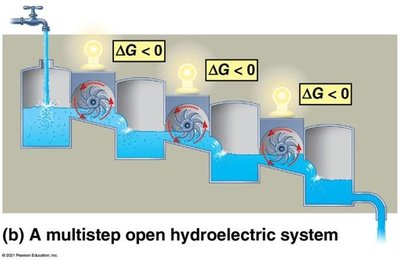
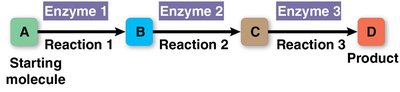
Metabolic pathways are sequences of chemical reactions, each catalyzed by a specific enzyme, that convert a starting molecule into a final product. - Each step in a pathway is facilitated by a unique enzyme. - Pathways can be linear, branched, or cyclical. 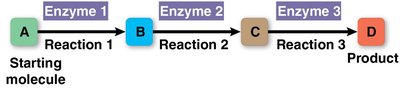
Catabolic and Anabolic Pathways
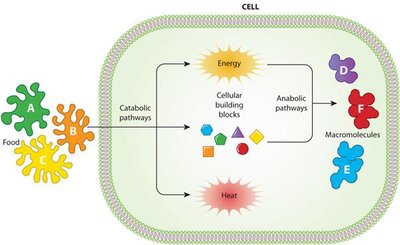
Metabolism is divided into two main types of pathways: catabolic and anabolic. - Catabolic pathways break down complex molecules into simpler ones, releasing energy. - Anabolic pathways build complex molecules from simpler ones, requiring energy input. 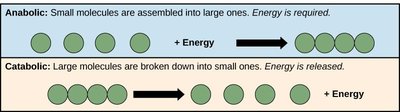
Forms of Energy in Biological Systems
Kinetic Energy
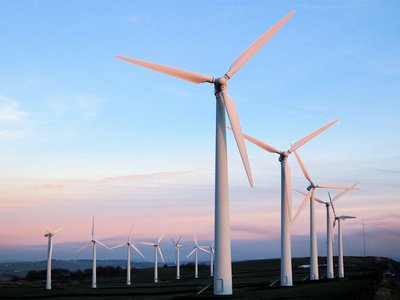
Kinetic energy is the energy of motion. It is used to perform work, such as moving molecules or cells. - Examples: muscle contraction, movement of water through a dam. 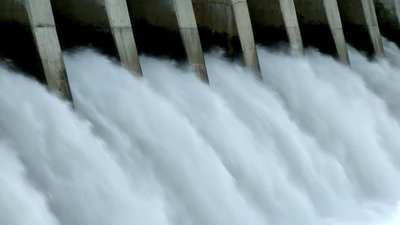
Thermal Energy and Heat
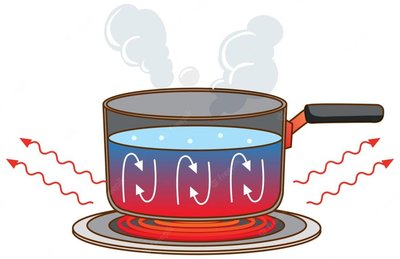
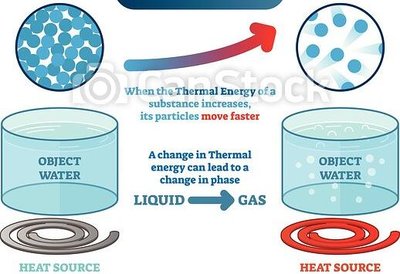
Thermal energy is a form of kinetic energy at the atomic or molecular level. When transferred between objects, it is called heat. - Temperature measures the average kinetic energy of particles. - Heat is energy transferred due to temperature difference. 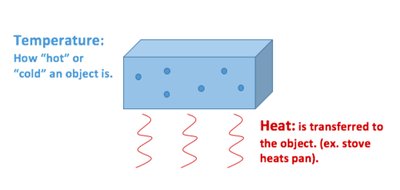
Potential Energy
Potential energy is stored due to an object's position or structure. - Water at high altitude in a dam has gravitational potential energy. - Molecules have potential energy stored in their chemical bonds. 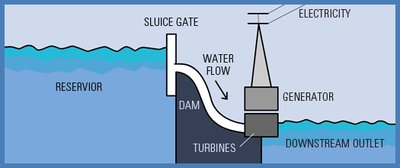
Chemical Energy
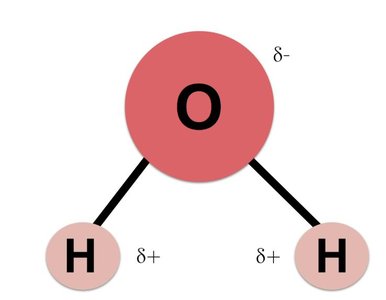
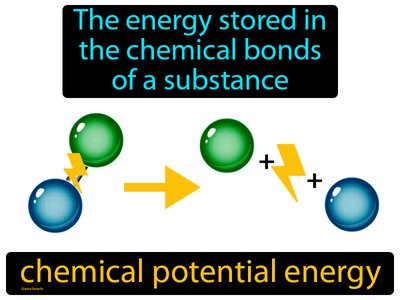
Chemical energy is a type of potential energy stored in the bonds of molecules. It is released during chemical reactions. 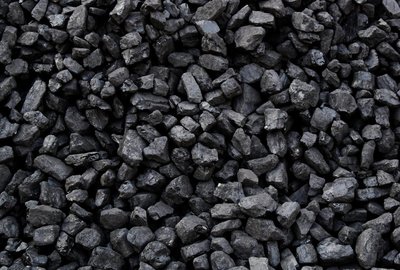
Energy Transformation and Thermodynamics
Energy Transformation
Energy can be converted from one form to another, such as from potential to kinetic energy. 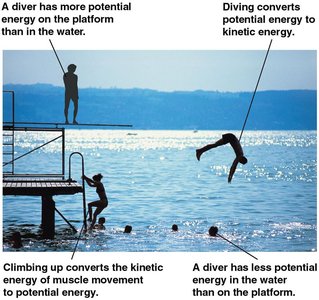
Thermodynamics: The Study of Energy Exchange
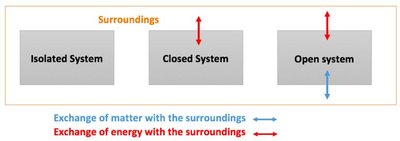
Thermodynamics examines how energy is exchanged and transformed between systems and their surroundings. - Isolated system: No exchange of energy or matter. - Closed system: Exchanges energy but not matter. - Open system: Exchanges both energy and matter. 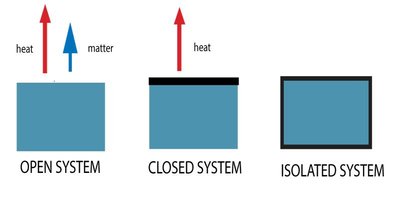
The First Law of Thermodynamics
The first law states that energy can be transferred or transformed, but cannot be created or destroyed. - Also known as the principle of conservation of energy. 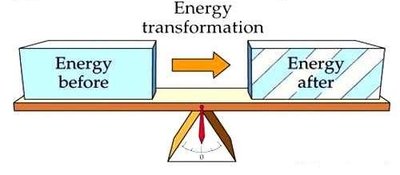
The Second Law of Thermodynamics
The second law states that every energy transfer increases the disorder (entropy) of the universe. - Some energy is always lost as heat, which cannot be used to do work. - Entropy is a measure of disorder or unusable energy. 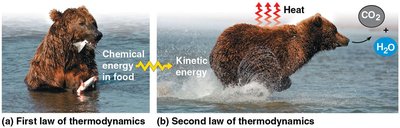
Order, Disorder, and Spontaneity in Biological Systems
Spontaneous and Nonspontaneous Processes
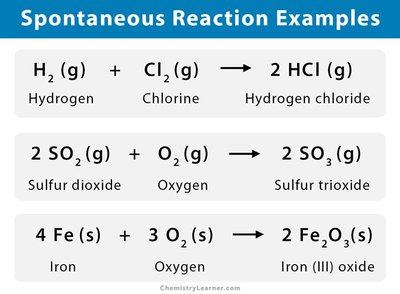
- Spontaneous processes increase entropy and occur without energy input. - Nonspontaneous processes decrease entropy and require energy input. 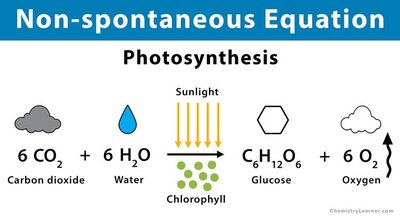
Balance of Order and Disorder
Living organisms maintain a balance between creating order (building complex structures) and increasing disorder (breaking down molecules and releasing heat). 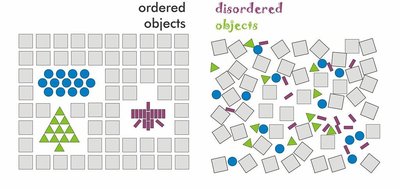
Free Energy and Reaction Spontaneity
Free Energy (G) and Its Calculation
Free energy (G) is the portion of a system's energy that can perform work. The change in free energy () determines whether a reaction is spontaneous. - - = change in enthalpy (total energy) - = change in entropy (disorder) - = temperature in Kelvin
Interpretation of
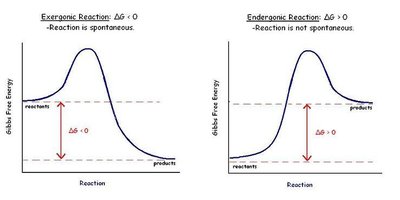
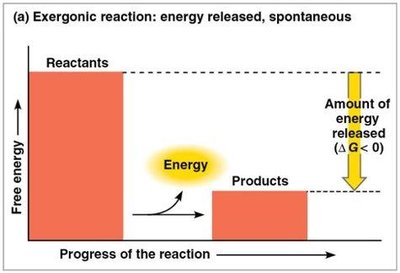
- If , the reaction is spontaneous (exergonic). - If , the reaction is nonspontaneous (endergonic). 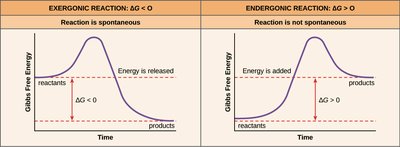
Free Energy and Stability
- Systems with high free energy are less stable. - Systems move towards lower free energy (greater stability). 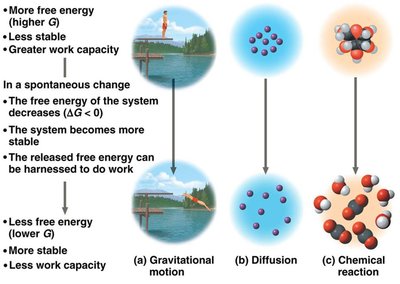
Equilibrium in Biological Systems
- Equilibrium is the state of maximum stability, where forward and reverse reactions occur at the same rate. - Isolated systems reach equilibrium, but open systems (like living cells) do not. 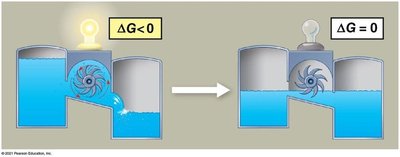
Exergonic and Endergonic Reactions
Exergonic Reactions
Exergonic reactions release free energy to the surroundings and are spontaneous. - Products have less free energy than reactants. - The greater the decrease in free energy, the more work can be done. 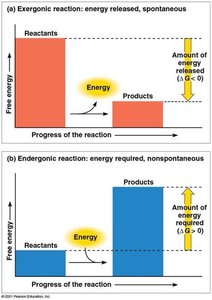
Endergonic Reactions
Endergonic reactions absorb free energy from the surroundings and are nonspontaneous. - Products have more free energy than reactants. - The greater the increase in free energy, the more work must be done to drive the reaction. 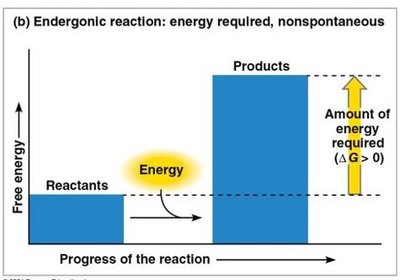
Summary Table: Exergonic vs. Endergonic Reactions
Type of Reaction | Spontaneity | Energy Flow | |
|---|---|---|---|
Exergonic | < 0 | Spontaneous | Energy released |
Endergonic | > 0 | Nonspontaneous | Energy absorbed |
Summary: Introduction to Metabolism
Living organisms rely on energy for life processes, transforming and transferring it through metabolism. Multiple forms of energy—kinetic, thermal, potential, and chemical—can be converted and used. The spontaneity of reactions is determined by free energy calculations, which also distinguish exergonic from endergonic reactions and explain movement towards or away from equilibrium.
Question Intermission: Theoretical Application
- Where does the original energy used in these chemical reactions come from? - What kind of reaction is shown below? What types of energy are involved?