 뒤로
뒤로Organic Chemistry and Functional Groups: Study Guide & Practice Test Guidance
스터디 가이드 - 스마트 노트
 자료에 맞춘 맞춤형 노트, 핵심 정의, 예시, 맥락을 확장해 제공합니다.
Q1. Which functional group acts as a base by accepting a hydrogen ion (H+)?
Background
Topic: Functional Groups in Organic Chemistry
This question tests your understanding of how different functional groups behave chemically, specifically which group can accept a hydrogen ion and act as a base.
Key Terms:
Functional group: A specific group of atoms within a molecule that is responsible for characteristic chemical reactions.
Base: A substance that can accept hydrogen ions (protons).
Amino group:
Step-by-Step Guidance
Recall the properties of each functional group listed in the answer choices.
Identify which group can accept a hydrogen ion to become positively charged.
Consider the chemical structure and behavior of the amino group () and how it interacts with hydrogen ions.
Try solving on your own before revealing the answer!
Final Answer: B) Amino group
The amino group () acts as a base because it can accept a hydrogen ion to become .
Q2. If a carbonyl group is located at the end of a hydrocarbon skeleton, the molecule is classified as a(n):
Background
Topic: Functional Groups and Organic Molecule Classification
This question tests your ability to distinguish between different types of molecules based on the location of the carbonyl group.
Key Terms:
Carbonyl group:
Aldehyde: Carbonyl group at the end of the carbon chain
Ketone: Carbonyl group within the carbon chain
Step-by-Step Guidance
Review the definitions of aldehyde and ketone.
Determine which term describes a molecule with a carbonyl group at the end of the chain.
Recall the structural difference between aldehydes and ketones.
Try solving on your own before revealing the answer!
Final Answer: D) Aldehyde
An aldehyde has a carbonyl group at the end of the hydrocarbon skeleton, while a ketone has it within the chain.
Q3. Which functional group is nonpolar and has a tetrahedral shape?
Background
Topic: Functional Groups and Molecular Geometry
This question tests your knowledge of the polarity and shape of functional groups.
Key Terms:
Methyl group:
Tetrahedral shape: Four bonds arranged around a central atom
Nonpolar: No significant charge separation
Step-by-Step Guidance
Recall the geometry of the methyl group and its polarity.
Compare the methyl group to other functional groups listed.
Identify which group fits both criteria: nonpolar and tetrahedral.
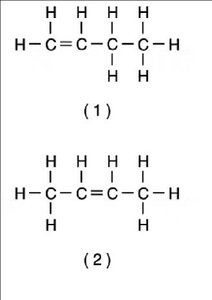
Try solving on your own before revealing the answer!
Final Answer: A) Methyl group
The methyl group () is nonpolar and has a tetrahedral shape due to its bonding arrangement.
Q4. Two sulfhydryl groups can react to form cross-links that stabilize protein structures. These cross-links are called:
Background
Topic: Protein Structure and Functional Groups
This question tests your understanding of how sulfhydryl groups contribute to protein stability.
Key Terms:
Sulfhydryl group:
Disulfide bond: Covalent bond formed between two sulfur atoms
Protein stabilization: Cross-links help maintain protein structure
Step-by-Step Guidance
Recall the role of sulfhydryl groups in proteins.
Identify the type of bond formed when two sulfhydryl groups react.
Consider how this bond affects protein structure.
Try solving on your own before revealing the answer!
Final Answer: B) Disulfide bonds
Disulfide bonds form between two sulfhydryl groups, stabilizing protein structures.
Q5. Which of the following elements are listed in your notes as essential for life, specifically linked to ATP?
Background
Topic: Elements Essential for Life
This question tests your recall of elements critical for biological processes, especially ATP.
Key Terms:
ATP: Adenosine triphosphate, the energy currency of the cell
Phosphate: , essential for ATP structure
Step-by-Step Guidance
Review the elements listed as essential for life in your notes.
Identify which element is directly associated with ATP.
Recall the structure of ATP and its key components.
Try solving on your own before revealing the answer!
Final Answer: C) Phosphate
Phosphate is a key component of ATP, making it essential for life.
Q6. What is the key difference between a carbonyl group and a carboxyl group?
Background
Topic: Functional Groups and Their Properties
This question tests your ability to distinguish between similar functional groups based on their structure and properties.
Key Terms:
Carbonyl group:
Carboxyl group:
Oxygen atom: Carboxyl group contains an additional oxygen compared to carbonyl
Step-by-Step Guidance
Compare the chemical formulas of carbonyl and carboxyl groups.
Identify the structural difference between the two groups.
Recall how the presence of an extra oxygen affects the properties of the carboxyl group.
Try solving on your own before revealing the answer!
Final Answer: B) Carboxyl contains an additional oxygen atom bonded to the same carbon.
The carboxyl group has one more oxygen atom than the carbonyl group, which is a key structural difference.
Q7. A straight-chain hydrocarbon consisting of 4 carbons joined entirely by single bonds would be named:
Background
Topic: Hydrocarbon Nomenclature
This question tests your knowledge of naming hydrocarbons based on their structure and bonding.
Key Terms:
Alkane: Hydrocarbon with only single bonds
Butane: 4-carbon alkane
Step-by-Step Guidance
Recall the prefixes for the number of carbons in a chain.
Identify the suffix for hydrocarbons with only single bonds.
Combine the prefix and suffix to name the molecule.
Try solving on your own before revealing the answer!
Final Answer: C) Butane
"Butane" is the correct name for a straight-chain hydrocarbon with 4 carbons and only single bonds.
Q8. What does the number prefix in the molecule name "2-Butene" signify?
Background
Topic: Hydrocarbon Nomenclature and Structure
This question tests your understanding of how the location of double bonds is indicated in molecule names.
Key Terms:
Butene: 4-carbon hydrocarbon with a double bond
Number prefix: Indicates the position of the double bond
Step-by-Step Guidance
Recall how double bonds are numbered in hydrocarbon chains.
Identify what the "2" in "2-Butene" refers to.
Review the structure of butene and how the double bond placement affects its name.
Try solving on your own before revealing the answer!
Final Answer: B) The double bond starts at the 2nd carbon atom.
The number prefix indicates the position of the double bond in the carbon chain.
Q9. Which functional group can act as an acid because the electronegativity difference between oxygen and hydrogen allows the hydrogen atom to be donated as an H+ ion?
Background
Topic: Functional Groups and Acid/Base Properties
This question tests your understanding of which functional group can donate a hydrogen ion due to its structure.
Key Terms:
Carboxyl group:
Acid: Can donate a hydrogen ion ()
Step-by-Step Guidance
Recall which functional group is known for acting as an acid.
Consider the electronegativity difference between oxygen and hydrogen in the group.
Identify which group can donate a hydrogen ion.
Try solving on your own before revealing the answer!
Final Answer: B) Carboxyl
The carboxyl group can act as an acid because it can donate a hydrogen ion due to the electronegativity difference between oxygen and hydrogen.
Q11–15. Matching: Match each term or functional group in Column A with its correct description in Column B.
Background
Topic: Organic Chemistry Vocabulary
This section tests your ability to match terms and functional groups with their correct descriptions.
Key Terms:
Monomer: Single building block
Hydrocarbon: Molecule of carbon and hydrogen
Thiol: Hydrocarbon with sulfhydryl group
Alkene: Double bond suffix
Ketone: Carbonyl group inside chain
Step-by-Step Guidance
Review the definitions of each term in Column A.
Match each term to its correct description in Column B.
Use your notes to confirm the relationships between terms and descriptions.
Try solving on your own before revealing the answer!
Final Answer:
11. Monomer — D. A single building block used to form a polymer
12. Hydrocarbon — B. Molecule composed exclusively of carbon and hydrogen atoms
13. Thiol — A. Hydrocarbon skeleton with a sulfhydryl (-SH) group attached
14. Alkene — C. Suffix indicating the presence of a double bond in a carbon skeleton
15. Ketone — E. Molecule where a carbonyl group is located on the inside of the carbon chain
Q16. Name the 6 primary elements for life highlighted in your Chapter 4 notes.
Background
Topic: Elements Essential for Life
This question tests your recall of the most important elements for biological systems.
Key Terms:
Carbon, Oxygen, Nitrogen, Hydrogen, Phosphate, Sulfur
Step-by-Step Guidance
Review your notes for the list of elements essential for life.
Recall which elements are specifically mentioned in Chapter 4.
Write out the names of these elements.
Try solving on your own before revealing the answer!
Final Answer:
Carbon, Oxygen, Nitrogen, Hydrogen, Phosphate, Sulfur
These elements are essential for life and are highlighted in your notes.
Q17. Identify the functional group represented by the chemical formula −OPO32− and state what key energy molecule it is associated with.
Background
Topic: Functional Groups and Biological Molecules
This question tests your ability to recognize the phosphate group and its association with energy molecules.
Key Terms:
Phosphate group:
ATP: Adenosine triphosphate
Step-by-Step Guidance
Identify the functional group from the chemical formula.
Recall which energy molecule is associated with this group.
Write out the name of the functional group and the molecule.
Try solving on your own before revealing the answer!
Final Answer:
The functional group is the phosphate group (), and it is associated with ATP (adenosine triphosphate).
Q18. List three distinct ways carbon skeletons can vary in structure.
Background
Topic: Carbon Skeleton Variations
This question tests your understanding of the structural diversity of carbon skeletons in organic molecules.
Key Terms:
Length, branching, ring formation, double/triple bonds
Step-by-Step Guidance
Recall the different ways carbon skeletons can be arranged.
List three distinct structural variations.
Use examples from your notes to support your answer.
Try solving on your own before revealing the answer!
Final Answer:
Length (number of carbons)
Branching (straight or branched chains)
Ring formation (closed rings)
Carbon skeletons can also vary by the number and location of double/triple bonds.
Q19. What functional group is found in both sugars and alcohols and makes organic compounds more soluble in water due to its polarity?
Background
Topic: Functional Groups and Solubility
This question tests your knowledge of which functional group increases solubility in water.
Key Terms:
Hydroxyl group:
Polarity: Makes compounds more soluble in water
Step-by-Step Guidance
Recall which functional group is present in sugars and alcohols.
Consider how polarity affects solubility.
Identify the group responsible for increased solubility.
Try solving on your own before revealing the answer!
Final Answer:
The hydroxyl group () is found in both sugars and alcohols and increases solubility in water due to its polarity.
Q20. Draw or write out the chemical formula for an Amino group in its non-ionized and ionized (after acting as a base) forms.
Background
Topic: Functional Groups and Ionization
This question tests your ability to represent the amino group in both its non-ionized and ionized forms.
Key Terms:
Amino group: (non-ionized)
Ionized form: (after accepting a hydrogen ion)
Step-by-Step Guidance
Write the chemical formula for the amino group in its non-ionized form.
Show how the group changes after accepting a hydrogen ion.
Write the formula for the ionized form.
Try solving on your own before revealing the answer!
Final Answer:
Non-ionized: Ionized:
The amino group accepts a hydrogen ion to become ionized.
