 뒤로
The Cell Cycle and Cell Division: Structure, Regulation, and Significance
스터디 가이드 - 스마트 노트
 자료에 맞춘 맞춤형 노트, 핵심 정의, 예시, 맥락을 확장해 제공합니다.
The Cell Cycle
Overview and Importance
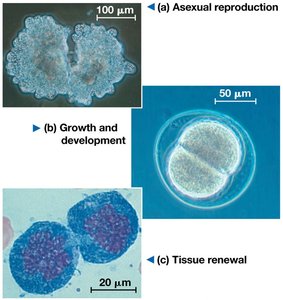
The cell cycle is the series of events that cells undergo to grow, replicate their DNA, and divide into two new cells. This process is fundamental for growth, tissue repair, and reproduction in all living organisms. Tight regulation of the cell cycle is essential to prevent errors such as uncontrolled cell division (cancer) or cell death.
Growth and development: Multicellular organisms develop from a single cell through repeated cell divisions.
Tissue repair: Damaged or worn-out cells are replaced by new cells.
Reproduction: Single-celled organisms reproduce by cell division.
Genetic continuity: Each division passes identical genetic information to daughter cells.
Phases of the Cell Cycle
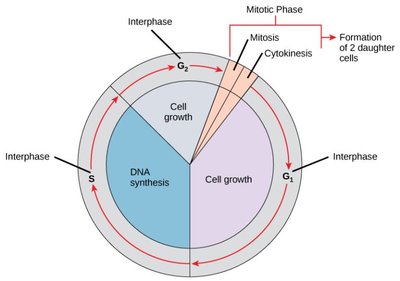
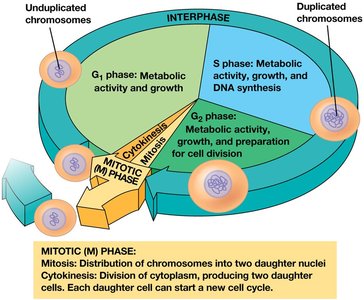
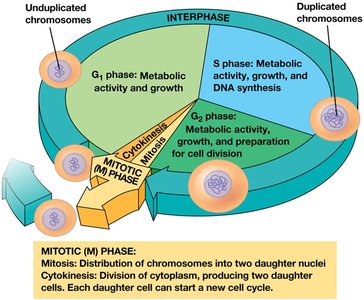
The cell cycle consists of two main parts: Interphase and the Mitotic (M) phase. Interphase is subdivided into G1, S, and G2 phases, during which the cell grows, replicates DNA, and prepares for division. The M phase includes mitosis (nuclear division) and cytokinesis (cytoplasmic division).
G1 phase: Cell growth and normal functions.
S phase: DNA synthesis and replication.
G2 phase: Further growth and preparation for division.
M phase: Mitosis and cytokinesis, resulting in two daughter cells.
Cell Division
Types of Cell Division
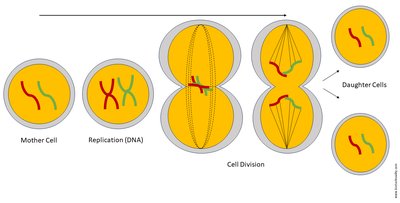
Cell division is the process by which a parent cell splits into two daughter cells. There are two main types:
Mitosis: Produces genetically identical cells, used for growth, repair, and asexual reproduction.
Meiosis: Produces genetically diverse gametes (sperm and eggs) for sexual reproduction.
Why Cells Divide
Cells divide for several reasons:
Reproduction: Single-celled organisms create new individuals.
Growth and development: Multicellular organisms grow from a single cell.
Tissue repair and renewal: Replacement of damaged or old cells.
Genetic continuity: Ensures each new cell receives a complete set of DNA.
Organization of Genetic Material
Genome and Chromosomes
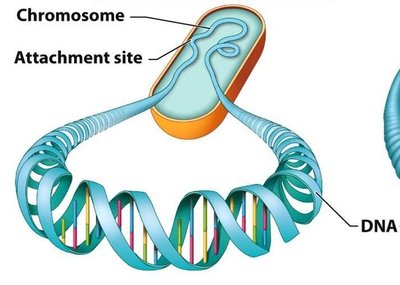
The genome is the complete set of genetic material in a cell. In prokaryotes, the genome is usually a single circular chromosome, while eukaryotes have multiple linear chromosomes.
Prokaryotes: One circular chromosome in the nucleoid; may have plasmids.
Eukaryotes: Multiple linear chromosomes in the nucleus.
Chromatin and Chromosome Structure
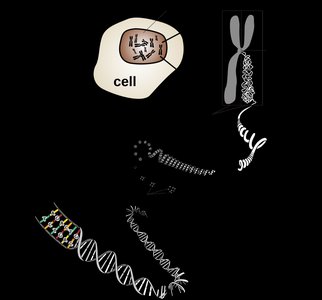
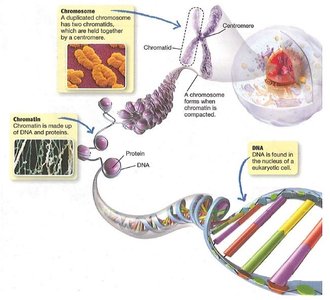
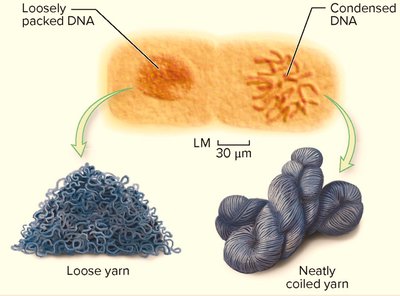
Eukaryotic DNA is packaged with proteins (histones) to form chromatin. Chromatin condenses into visible chromosomes during cell division.
Chromatin: DNA-protein complex; less condensed during interphase.
Chromosome: Highly condensed chromatin, visible during mitosis.
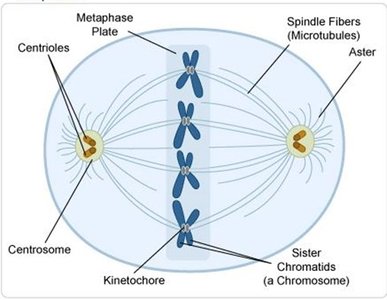
Sister chromatids: Identical copies of a chromosome joined at the centromere.
Chromosome Sets and Ploidy
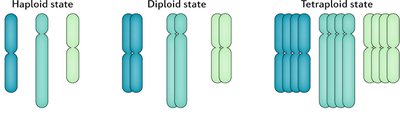
Chromosomes in eukaryotes are organized in sets. The number of sets is called ploidy.
Haploid (n): One set of chromosomes.
Diploid (2n): Two sets, one from each parent.
Polyploid (>2n): More than two sets.
Germ Line and Somatic Cells
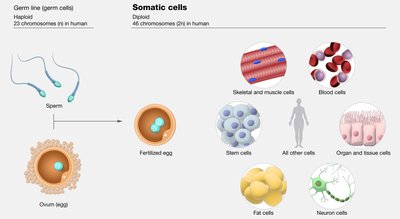
Germline cells produce gametes (sperm and eggs) and are haploid, while somatic cells make up the body and are diploid.
Germline cells: Undergo meiosis to produce haploid gametes.
Somatic cells: Divide by mitosis, remain diploid.
Chromosome Number in Species
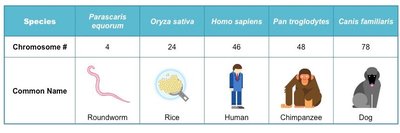
Each species has a characteristic chromosome number, usually referring to the diploid number in somatic cells. Chromosome number does not correlate with organism complexity.
Species | Chromosome # | Common Name |
|---|---|---|
Parascaris equorum | 4 | Roundworm |
Oryza sativa | 24 | Rice |
Homo sapiens | 46 | Human |
Pan troglodytes | 48 | Chimpanzee |
Canis familiaris | 78 | Dog |
Stages of Mitosis
Sequence of Mitosis
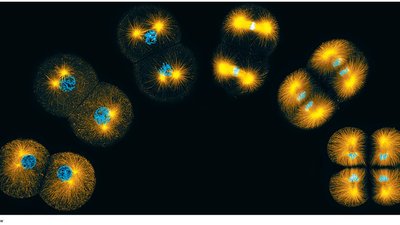
Mitosis is the process of nuclear division, ensuring each daughter cell receives a complete genome. The stages are:
Prophase: Chromosomes condense, spindle forms, nucleolus disappears.
Prometaphase: Nuclear envelope breaks down, spindle fibers attach to kinetochores.
Metaphase: Chromosomes align at the metaphase plate.
Anaphase: Sister chromatids separate and move to opposite poles.
Telophase: Chromosomes decondense, nuclear envelopes reform.
Cytokinesis overlaps with telophase, dividing the cytoplasm.
Chromosome Duplication and Distribution
Before division, chromosomes are duplicated, forming sister chromatids. During mitosis, these chromatids are separated, ensuring each daughter cell receives one copy of each chromosome.
Mitotic Structures
Centrosomes and Centrioles
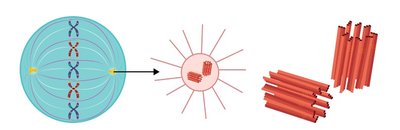
The centrosome is the microtubule-organizing center in animal cells, containing two centrioles. It helps arrange the mitotic spindle during cell division.
The Mitotic Spindle
The mitotic spindle is made of microtubules that attach to chromosomes via kinetochores. It ensures proper chromosome alignment and separation.
Cell Cycle Regulation
Control Mechanisms
Cell division is regulated by growth factors, cyclins, and cyclin-dependent kinases (CDKs). These proteins ensure cells only divide when conditions are favorable and DNA is intact.
Cyclins: Regulatory proteins that activate CDKs.
CDKs: Enzymes that trigger cell cycle events.
Cell Cycle Checkpoints
Checkpoints are control points where the cell assesses readiness to proceed:
G1 checkpoint: Checks DNA integrity, nutrients, and growth signals.
G2 checkpoint: Ensures DNA replication is complete and undamaged.
M checkpoint: Verifies chromosome attachment to spindle before anaphase.
Loss of Cell Cycle Control and Cancer
Cancer and Cell Cycle Dysregulation
Cancer cells bypass normal cell cycle controls, leading to uncontrolled division. They may ignore growth signals, evade apoptosis, and pass damaged DNA to daughter cells. Tumors can be benign (localized) or malignant (invasive), and metastasis occurs when cancer cells spread to distant sites.
Benign tumor: Localized, non-invasive.
Malignant tumor: Invades tissues, can metastasize.
Metastasis: Spread of cancer cells to new locations.
Prokaryotic Cell Division
Binary Fission
Prokaryotes divide by binary fission, a simpler process than mitosis. The single circular chromosome replicates, and the cell splits into two genetically identical daughter cells.
Chromosome replication
Cell elongation
Membrane and cell wall formation
Separation into two cells
Summary Table: Cell Cycle Phases
Phase | Main Events |
|---|---|
G1 | Cell growth, metabolic activity |
S | DNA synthesis and replication |
G2 | Preparation for division |
M | Mitosis and cytokinesis |
Key Formula:
Cell cycle duration = G1 + S + G2 + M
Example: Human somatic cells have a diploid chromosome number of 46. During mitosis, each daughter cell receives 46 chromosomes.
Additional info: The notes include inferred details about cell cycle regulation, cancer, and binary fission for completeness and academic context.
