 뒤로
뒤로The Cell: Structure, Function, and Diversity
스터디 가이드 - 스마트 노트
 자료에 맞춘 맞춤형 노트, 핵심 정의, 예시, 맥락을 확장해 제공합니다.
The Cell: The Basic Unit of Life
Introduction to Cells
Cells are the fundamental units of life, responsible for all biological processes. Understanding cell structure and function is essential for grasping how living organisms operate and maintain homeostasis.
Cell Theory: All living things are composed of cells, and all cells arise from pre-existing cells through division.
Homeostasis: Each cell regulates its internal environment, contributing to the stability of tissues, organs, and entire organisms.
Macromolecules in Cells
Major Classes of Macromolecules
Cells contain four major types of macromolecules, each with distinct roles:
Proteins: Perform most cellular functions, including catalysis, structure, and signaling.
Nucleic Acids: Store, transmit, and process genetic information (DNA and RNA).
Carbohydrates: Provide energy, structural support, and cellular identity.
Lipids: Form membranes and store energy.
Discovery and History of Cells
Early Observations
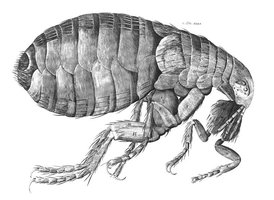
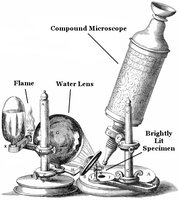
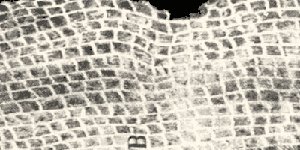
The cell was first described in 1665 by Robert Hooke, who used a compound microscope to observe cork tissue. This discovery laid the foundation for cell theory.

Cell Size and Surface Area-to-Volume Ratio
Why Are Cells Small?
Cells remain small to maximize their surface area-to-volume ratio, which facilitates efficient exchange of materials (nutrients, gases, waste) with the environment.
Surface Area-to-Volume Ratio: As a cell grows, its volume increases faster than its surface area, limiting the rate of exchange.

Types of Cells: Prokaryotic vs. Eukaryotic
Cell Morphology
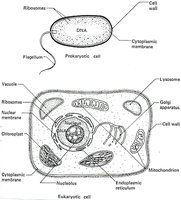
Cells are classified based on their internal structure:
Feature | Prokaryotes | Eukaryotes |
|---|---|---|
Nucleus | No | Yes |
Organelles | Few/simple | Complex/many |
Size | Smaller | Larger |
Evolution | Earlier (3.5 BYA) | Later (2.1 BYA) |
Cellularity | Almost entirely unicellular | Some unicellular, some multicellular |
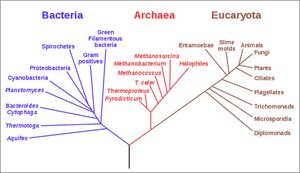
The Tree of Life: Three Domains
All life is classified into three domains: Bacteria, Archaea (both prokaryotic), and Eukaryota (eukaryotic).
Prokaryotic Cell Structure
Major Characteristics
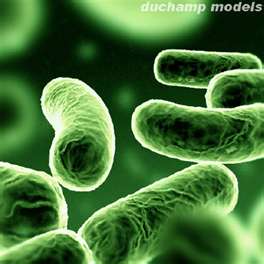
No nucleus: DNA is located in a region called the nucleoid and is typically circular; plasmids may be present.
Cell wall: Composed of peptidoglycan in bacteria.
Simple cytoskeleton and organelles (e.g., for photosynthesis or storage).
Flagella and fimbriae: Structures for movement and attachment.
Eukaryotic Cell Structure
Major Characteristics
Nucleus: Stores DNA and is surrounded by a double membrane (nuclear envelope).
Compartmentalized organelles: Specialized for various functions (e.g., mitochondria, endoplasmic reticulum, Golgi apparatus).
Complex cytoskeleton: Provides structure and facilitates movement.
Nucleus and DNA Packaging
Nucleus Structure and Function
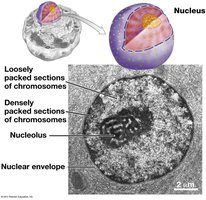
Nuclear envelope: Double membrane with pores for molecular transport.
Nucleolus: Site of ribosome biogenesis.
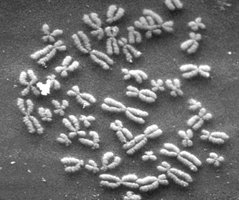
DNA packaging: DNA is organized into chromosomes and tightly packed with proteins.
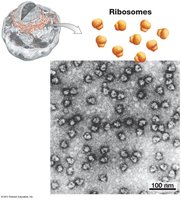
Ribosomes
Structure and Function
Function: Translate mRNA into proteins (site of protein synthesis).
Structure: Composed of large and small subunits made of protein and rRNA.
Location: Free in cytoplasm or attached to rough ER.
Mitochondria
Structure and Function
Function: Site of ATP production via cellular respiration.
Structure: Double membrane, contains its own DNA and ribosomes.
The Endomembrane System
Components and Functions
Nuclear envelope
Endoplasmic reticulum (ER): Rough ER (protein synthesis and processing), Smooth ER (lipid synthesis and detoxification)
Golgi apparatus: Receives, modifies, and ships proteins and lipids
Vesicles: Transport materials between organelles
Lysosomes: Digest and recycle macromolecules (animal cells)
Peroxisomes: Break down toxins and fatty acids
Protein Targeting and the Signal Hypothesis
How Proteins Reach Their Destinations
Signal sequences: Short amino acid sequences direct proteins to specific cellular locations (e.g., ER, Golgi, lysosome, plasma membrane).
Vesicular transport: Proteins are transported in vesicles between organelles.
Cytoskeleton
Structure and Function
The cytoskeleton provides shape, support, and movement for cells. It consists of three main types of fibers:
Microfilaments (actin): Involved in cell movement, muscle contraction, and cytokinesis.
Intermediate filaments: Provide structural support and cell-cell anchoring.
Microtubules: Serve as tracks for vesicle transport, move chromosomes during cell division, and form cilia/flagella.
Plant Cell Specializations
Unique Features of Plant Cells
Chloroplasts: Site of photosynthesis; contain their own DNA and double membrane.
Central vacuole: Stores water, enzymes, pigments, and toxins; can occupy up to 80% of cell volume.
Cell wall: Provides structure and prevents dehydration; contains cellulose.
Plasmodesmata: Channels for communication between plant cells.
Endosymbiotic Theory
Origin of Mitochondria and Chloroplasts
Mitochondria and chloroplasts are believed to have originated from free-living prokaryotes that were engulfed by ancestral eukaryotic cells. Evidence includes their double membranes, own DNA, and division by binary fission.
Summary Table: Key Differences Between Prokaryotic and Eukaryotic Cells
Feature | Prokaryotes | Eukaryotes |
|---|---|---|
Nucleus | No | Yes |
DNA Form | Circular | Linear (chromosomes) |
Organelles | Few/simple | Many/complex |
Cell Size | Small | Larger |
Cell Wall | Peptidoglycan (bacteria) | Cellulose (plants), chitin (fungi), or none (animals) |
Practice Questions
Why are cells small? How does surface area-to-volume ratio affect cell function?
What are the main differences between prokaryotic and eukaryotic cells?
Where is DNA located in each cell type, and what form does it take?
What is the endomembrane system, and what are the main functions of its organelles?
What are the three main types of cytoskeletal fibers, and what are their functions?
How do plant and animal cells differ in their organelles?
