 뒤로
뒤로The Molecules of Cells: Structure and Function of Biological Macromolecules
스터디 가이드 - 스마트 노트
 자료에 맞춘 맞춤형 노트, 핵심 정의, 예시, 맥락을 확장해 제공합니다.
Chapter 3: The Molecules of Cells
Introduction to Organic Molecules
Organic molecules are the foundation of all living organisms. Their diversity and complexity arise from the unique properties of carbon, which forms the backbone of these molecules. Understanding the structure and function of organic molecules is essential for studying biology at the molecular level.
Organic molecules are primarily composed of carbon atoms bonded to hydrogen, oxygen, nitrogen, and other elements.
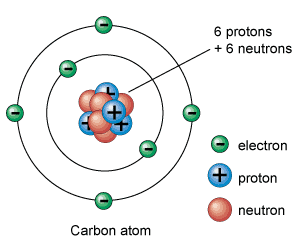
Carbon's ability to form four covalent bonds allows for a variety of stable structures, including chains and rings.
Organic compounds include carbohydrates, lipids, proteins, and nucleic acids.
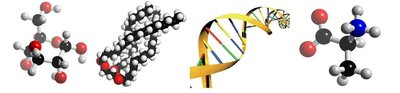
Carbon: The Basis of Life’s Molecules
Properties of Carbon
Carbon is central to the structure of biological molecules due to its bonding versatility. It can form single, double, or triple bonds, and its tetrahedral geometry allows for complex molecular shapes.
Carbon atoms can bond to four other atoms, creating a variety of molecular skeletons.
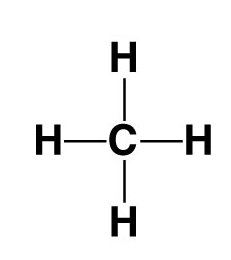
Methane (CH4) is the simplest organic molecule, with carbon at the center bonded to four hydrogens.
Hydrocarbons and Isomerism
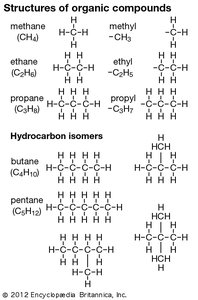
Hydrocarbons are organic molecules consisting only of carbon and hydrogen. They serve as the energy-rich components of many biological molecules. Isomers are compounds with the same molecular formula but different structures, leading to different properties.
Hydrocarbons are nonpolar and hydrophobic.
Isomers include structural isomers (different covalent arrangements) and geometric isomers (different spatial arrangements).
Functional Groups in Biological Molecules
Major Functional Groups
Functional groups are specific groups of atoms within molecules that determine the chemical properties and reactivity of those molecules. Seven major functional groups are important in biology:
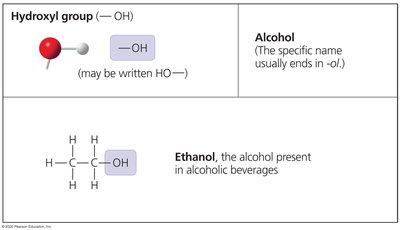
Hydroxyl group (–OH): Polar, found in alcohols.
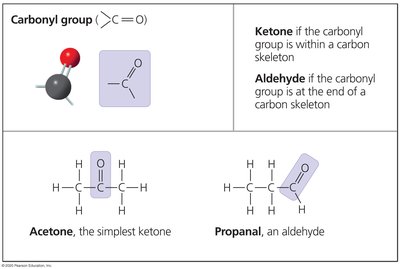
Carbonyl group (>C=O): Polar, found in ketones and aldehydes.
Carboxyl group (–COOH): Polar, acidic, found in amino acids and fatty acids.
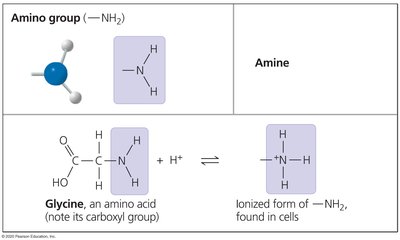
Amino group (–NH2): Polar, basic, found in amino acids.
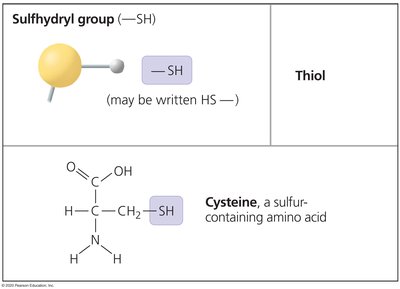
Sulfhydryl group (–SH): Polar, found in some amino acids (e.g., cysteine).
Phosphate group (–OPO32–): Polar, acidic, found in nucleic acids and ATP.
Methyl group (–CH3): Nonpolar, affects gene expression.
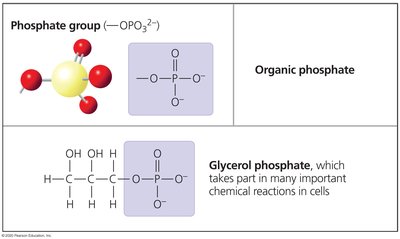
Functional Groups and Protein Properties
The presence and arrangement of functional groups in proteins influence their solubility, reactivity, and interactions with other molecules, ultimately affecting protein structure and function.
Macromolecules: Polymers and Monomers
Polymer Formation and Breakdown
Most biological macromolecules are polymers, long chains of repeating units called monomers. The formation and breakdown of polymers involve specific chemical reactions:
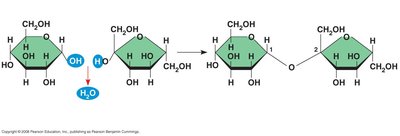
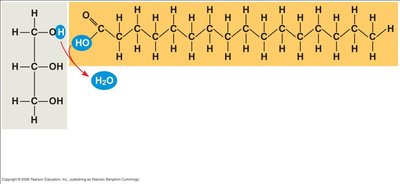
Dehydration (synthesis) reaction: Joins two monomers by removing a water molecule.
Hydrolysis: Breaks a polymer into monomers by adding water.

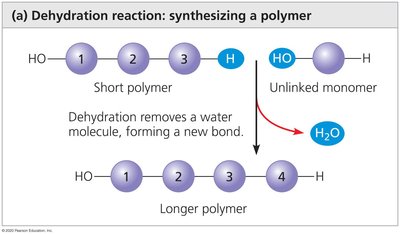
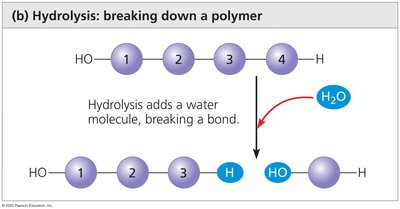
Four Major Classes of Macromolecules
Carbohydrates – energy storage and structural support
Lipids – long-term energy storage, membrane structure, signaling
Proteins – catalysis, structure, transport, signaling, defense
Nucleic acids – storage and transmission of genetic information
Carbohydrates
Monosaccharides, Disaccharides, and Polysaccharides
Carbohydrates are sugars and their polymers. They serve as fuel and building material for cells.
Monosaccharides: Simple sugars (e.g., glucose, fructose). Main fuel for cellular work.
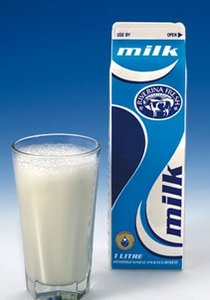
Disaccharides: Two monosaccharides joined by a glycosidic bond (e.g., sucrose, lactose, maltose).
Polysaccharides: Long chains of monosaccharides. Serve as storage (starch, glycogen) or structural (cellulose, chitin) molecules.
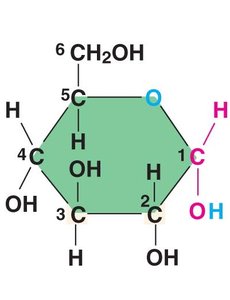
Oligosaccharides and Recognition
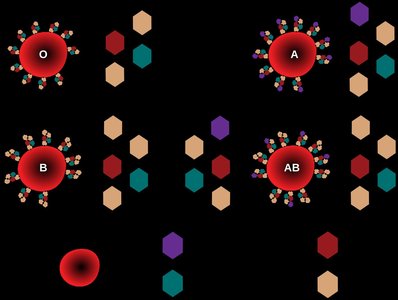
Oligosaccharides, containing several monosaccharides, are often attached to proteins and lipids on cell surfaces, serving as recognition signals (e.g., ABO blood groups).
Polysaccharide Structure and Function
The structure and function of polysaccharides depend on their monosaccharide composition and the type of glycosidic bonds. Examples include:
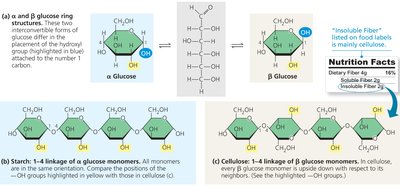
Starch: Storage polysaccharide in plants, composed of α-glucose monomers.
Glycogen: Storage polysaccharide in animals.
Cellulose: Structural polysaccharide in plant cell walls, composed of β-glucose monomers.
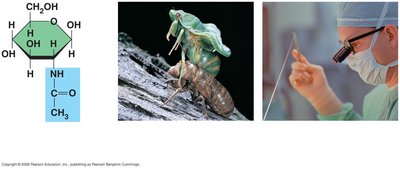
Chitin: Structural polysaccharide in fungal cell walls and arthropod exoskeletons.
Lipids
Types and Functions of Lipids
Lipids are hydrophobic molecules that include fats, phospholipids, steroids, and waxes. They are not true polymers but are essential for energy storage, membrane structure, and signaling.
Fats (triglycerides): Composed of glycerol and three fatty acids. Store energy efficiently.
Phospholipids: Major components of cell membranes, with hydrophilic heads and hydrophobic tails.
Steroids: Characterized by four fused rings; include cholesterol and hormones like testosterone and estradiol.
Waxes: Long-chain fatty acids linked to alcohols; provide waterproofing and protection.
Saturated vs. Unsaturated Fats
Saturated fats have no double bonds between carbon atoms, making them solid at room temperature. Unsaturated fats have one or more double bonds, causing kinks that prevent tight packing and are usually liquid at room temperature.
Proteins
Structure and Function
Proteins are polymers of amino acids linked by peptide bonds. They perform a vast array of functions, including catalysis (enzymes), structure, transport, and defense.
Primary structure: Sequence of amino acids.
Secondary structure: Local folding (α-helix, β-sheet).
Tertiary structure: Overall 3D shape.
Quaternary structure: Association of multiple polypeptides.
Protein Structure and Disease
A single amino acid change can drastically affect protein function, as seen in sickle-cell disease, where a mutation in hemoglobin leads to abnormal cell shape and function.
Nucleic Acids
DNA and RNA
Nucleic acids store and transmit genetic information. DNA contains the instructions for building proteins, while RNA translates these instructions during protein synthesis.
Monomers: Nucleotides (composed of a nitrogenous base, a sugar, and a phosphate group).
DNA: Double helix, deoxyribose sugar, bases A, T, C, G.
RNA: Single-stranded, ribose sugar, bases A, U, C, G.
Genetic Code and Protein Structure
The sequence of nucleotides in DNA determines the sequence of amino acids in proteins, linking genetic information to cellular function.
Summary Table: Macromolecules, Monomers, and Functions
Macromolecule | Monomer | Polymer | Example | Main Function |
|---|---|---|---|---|
Carbohydrate | Monosaccharide | Polysaccharide | Starch, Cellulose | Energy storage, structure |
Lipid | Fatty acid, Glycerol | Triglyceride | Fats, Oils | Energy storage, membranes |
Protein | Amino acid | Polypeptide | Enzymes, Hemoglobin | Catalysis, structure, transport |
Nucleic Acid | Nucleotide | Polynucleotide | DNA, RNA | Genetic information |
Key Equations
Dehydration Synthesis:
Hydrolysis:
Additional info: This guide covers the structure, function, and synthesis of biological macromolecules, their monomers, and the importance of functional groups, as well as the relationship between genetic information and protein structure.
