 뒤로
The Structural and Functional Unit of Life: Cells, Compartmentalization, and Endosymbiosis
스터디 가이드 - 스마트 노트
 자료에 맞춘 맞춤형 노트, 핵심 정의, 예시, 맥락을 확장해 제공합니다.
The Cell: The Structural and Functional Unit of Life
Scale of Living Things
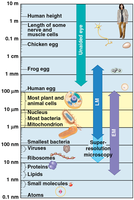
The cell is the smallest living subunit of an organism, and its size varies widely among different life forms. Most single cells are between 1 and 100 microns in diameter, which places them within the range observable by light microscopy. Understanding the scale of cells and their components is essential for appreciating cellular structure and function.
Cell size: Most plant and animal cells are 10–100 μm in diameter.
Organelles: Mitochondria and most bacteria are smaller, typically 1–10 μm.
Microscopy: Super-resolution microscopy and electron microscopy are required to visualize smaller structures such as ribosomes and viruses.
Key Features of Prokaryotes and Eukaryotes
Prokaryotic Cells
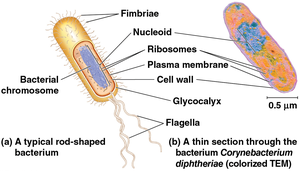
Prokaryotes are unicellular organisms lacking a true, membrane-enclosed nucleus and membrane-bound organelles. Their DNA is concentrated in a region called the nucleoid. The cell wall, plasma membrane, and other structures provide protection and facilitate cellular processes.
Nucleoid: Region where DNA is concentrated, not enclosed by a membrane.
Cell wall: Provides structural support and protection.
Ribosomes: Sites of protein synthesis, smaller than eukaryotic ribosomes.
Other features: Flagella for movement, fimbriae for attachment, and glycocalyx for protection.
Eukaryotic Cells
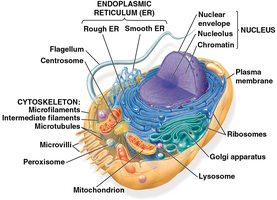
Eukaryotes possess membrane-bound organelles that compartmentalize cellular functions. The nucleus, enclosed by a double membrane, contains linear DNA. Eukaryotic cells can be unicellular or multicellular and exhibit greater structural complexity.
Nucleus: Enclosed by a nuclear envelope, contains chromatin and nucleolus.
Organelles: Includes mitochondria, endoplasmic reticulum (ER), Golgi apparatus, lysosomes, and peroxisomes.
Cytoskeleton: Provides structural support and facilitates intracellular transport.
Cellular Specialization
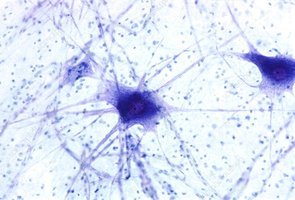
Within multicellular organisms, cells specialize to perform distinct functions, such as nerve cells for signaling or muscle cells for contraction. This specialization is enabled by the compartmentalization of eukaryotic cells.
Comparison Table: Prokaryotes vs. Eukaryotes
Feature | Prokaryotes | Eukaryotes |
|---|---|---|
Cell Size | Small (1–10 μm) | Large (10–100 μm) |
Nucleus | Nucleoid (not enclosed) | Enclosed nucleus |
DNA | Circular | Linear |
Organelles | None (no membrane-bound) | Many (membrane-bound) |
Cellularity | Unicellular | Unicellular or multicellular |
Blurry Lines: Unusual Prokaryotes
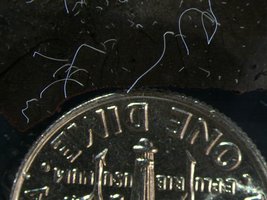
Some prokaryotes, such as Thiomargarita magnifica, challenge traditional definitions. This bacterium can reach up to 2 cm in length and contains internal compartments, including membrane-enclosed "nucleoids" and a large water-filled sac.
Compartmentalization in Eukaryotic Cells
Selective Permeability and Metabolic Reactions
Cell membranes are selectively permeable, allowing cells to maintain unique internal conditions. Different reactions require different environments:
Catabolic reactions: Break down macromolecules and release energy.
Anabolic reactions: Use energy and raw materials to synthesize biomolecules.
Endomembrane System
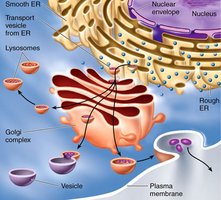
The endomembrane system separates the cell into distinct compartments, including the nucleus, ER, Golgi apparatus, and lysosomes. This organization allows for specialized functions and efficient metabolic processes.
Lipid bilayers: Provide selective permeability and unique conditions within each compartment.
Bulk Transport Across Cell Membranes
Exocytosis
Exocytosis is the process by which cells transport products out. Transport vesicles migrate to the membrane, fuse with it, and release their contents outside the cell. This process is crucial for cell signaling and communication.
Pathway: Rough ER → transport vesicle → Golgi → transport vesicle → plasma membrane
Endocytosis
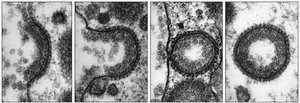
Endocytosis is the process by which cells take in molecules and large substances via vesicles. The membrane forms a pocket that deepens and pinches off, forming a vesicle around the material for transport.
Types: Phagocytosis (cell eating), pinocytosis (cell drinking), receptor-mediated endocytosis
Vesicle Movement
Vesicle movement within cells requires motor proteins interacting with cytoskeletal elements, powered by ATP.
Mitochondria and Chloroplasts: Energy Transformations
Mitochondria
Mitochondria are the site of cellular respiration, where ATP is generated from the breakdown of molecules.
Chloroplasts
Chloroplasts are the site of photosynthesis, converting light energy into chemical energy in plant cells.
Endosymbiotic Theory
Evolutionary Origins
The endosymbiotic theory proposes that the ancestors of modern eukaryotes engulfed prokaryotic cells, which became mitochondria and chloroplasts. This mutualistic relationship led to the evolution of complex eukaryotic cells.
Evidence: Mitochondria and chloroplasts reproduce by fission, have DNA and ribosomes similar to prokaryotes, and possess two membranes.
Multiple events: Some eukaryotes, such as Euglena, have chloroplasts with three membranes, indicating additional endosymbiotic events.
Summary
Eukaryotes exhibit greater structural and functional complexity than prokaryotes.
Compartmentalization allows for division of labor and specialized metabolic processes.
Bulk transport maintains unique conditions within compartments and facilitates communication.
Mitochondria and chloroplasts evolved from free-living prokaryotes via endosymbiosis.
