 뒤로
뒤로The Chemistry of the Cell: Atoms, Bonds, and Macromolecules
스터디 가이드 - 스마트 노트
 자료에 맞춘 맞춤형 노트, 핵심 정의, 예시, 맥락을 확장해 제공합니다.
Chemistry of the Cell
Introduction
The chemistry of the cell underpins all cellular structure and function. Understanding the types of atoms, bonds, and macromolecules present in cells is essential for grasping how life operates at the molecular level.
Types of Bonds in Biological Systems
Covalent, Ionic, Hydrogen, and Van der Waals Bonds
Covalent Bonds: Formed by the sharing of electron pairs between atoms, providing stability to biological molecules.
Ionic (Electrostatic) Bonds: Result from the attraction between oppositely charged ions.
Hydrogen Bonds: Weak attractions between a hydrogen atom covalently bonded to an electronegative atom (like O or N) and another electronegative atom.
Van der Waals Forces: Weak, non-specific interactions between molecules or atoms in close proximity, including forces between permanent or induced dipoles.
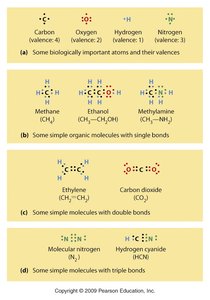
Biologically Important Atoms and Bonds
Atoms and Bond Types
Carbon, Oxygen, Hydrogen, Nitrogen: The most common atoms in biological molecules, each with characteristic valence and bonding patterns.
Single, Double, Triple Bonds: Atoms can form single, double, or triple covalent bonds, influencing molecular geometry and reactivity.
Energy of Covalent Bonds
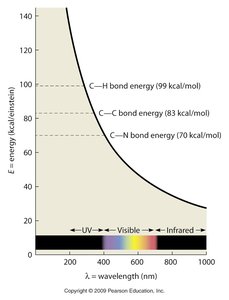
Covalent bonds vary in strength, with C–H, C–C, and C–N bonds being particularly important in organic molecules. The energy required to break these bonds is significant, contributing to the stability of biological macromolecules.
C–H bond energy: 99 kcal/mol
C–C bond energy: 83 kcal/mol
C–N bond energy: 70 kcal/mol
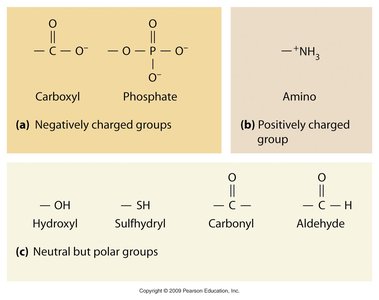
Chemical Groups in Biological Molecules
Functional Groups
Functional groups confer specific chemical properties to molecules, influencing their reactivity and interactions.
Negatively charged groups: Carboxyl, phosphate
Positively charged group: Amino
Neutral but polar groups: Hydroxyl, sulfhydryl, carbonyl, aldehyde
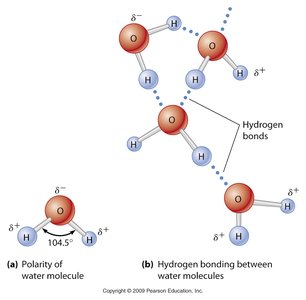
Water: Structure and Properties
Polarity and Hydrogen Bonding
Water is a polar molecule, with partial positive charges on hydrogen atoms and a partial negative charge on oxygen. This polarity allows water molecules to form hydrogen bonds, which are critical for many of water's unique properties.
High cohesiveness and high specific heat are due to hydrogen bonding.
Hydrogen bonds also contribute to water's role as a universal solvent.
Water as a Solvent
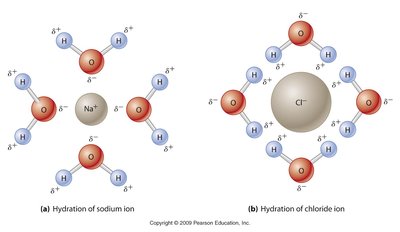
Water dissolves many ionic and polar substances by surrounding ions and molecules, facilitating biochemical reactions.
Hydration shells form around ions, stabilizing them in solution.
pH and Biological Systems
Definition and Importance
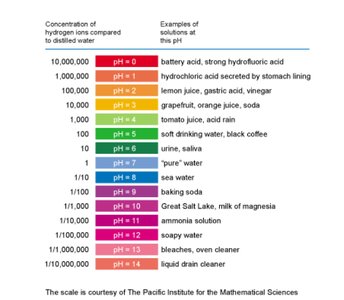
pH is a measure of hydrogen ion concentration, defined as:
Biological systems are sensitive to pH, which affects enzyme activity and molecular stability.
Hydrophilic, Hydrophobic, and Amphipathic Compounds
Interactions with Water
Hydrophilic: Water-loving, dissolve easily in water (e.g., salts, sugars).
Hydrophobic: Water-fearing, do not dissolve in water (e.g., lipids).
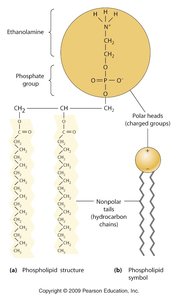
Amphipathic: Contain both hydrophilic and hydrophobic regions (e.g., phospholipids).
Lipids and Membrane Structure
Lipid Bilayer and Other Structures
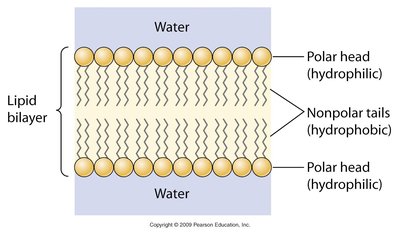
Lipids can self-assemble into various structures in water, including bilayers, micelles, and liposomes. The lipid bilayer forms the fundamental structure of cellular membranes.
Bilayer: Two layers of phospholipids with hydrophobic tails inward and hydrophilic heads outward.
Micelle: Spherical structure with hydrophobic cores.
Liposome: Spherical vesicle with a lipid bilayer.
Biological Macromolecules
Major Classes and Functions
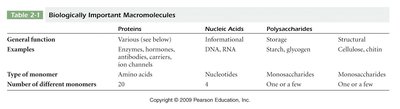
Cells contain four major classes of macromolecules: proteins, nucleic acids, polysaccharides, and lipids. Each class has distinct functions and is composed of characteristic monomers.
Macromolecule | General Function | Examples | Type of Monomer | Number of Different Monomers |
|---|---|---|---|---|
Proteins | Various (catalysis, structure, transport, etc.) | Enzymes, hormones, antibodies | Amino acids | 20 |
Nucleic Acids | Informational | DNA, RNA | Nucleotides | 4 |
Polysaccharides | Storage, structural | Starch, glycogen, cellulose, chitin | Monosaccharides | One or a few |
Carbohydrates: Structure and Function
Monosaccharides, Disaccharides, and Polysaccharides
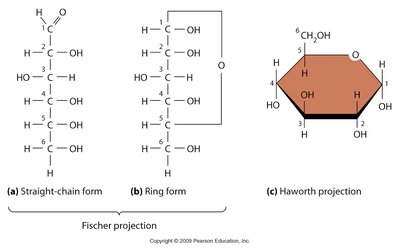
Monosaccharides: Simple sugars (e.g., glucose, fructose, galactose).
Disaccharides: Two monosaccharides joined by a glycosidic bond (e.g., maltose, lactose, sucrose).
Polysaccharides: Long chains of monosaccharides (e.g., starch, cellulose, glycogen).
Polysaccharide Structure and Function
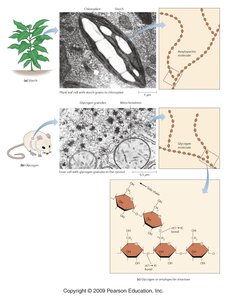
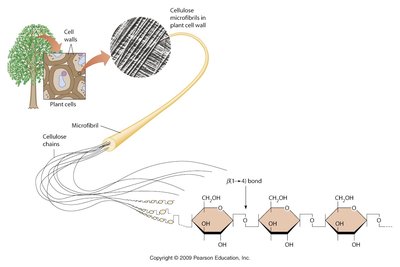
Starch, cellulose, and glycogen are all polymers of glucose but differ in structure and biological role:
Starch: Storage form in plants; glucose units oriented in the same direction.
Cellulose: Structural component in plant cell walls; alternating glucose orientation.
Glycogen: Storage form in animals; highly branched glucose polymer.
Proteins: Structure and Function
Amino Acids and Peptide Bonds
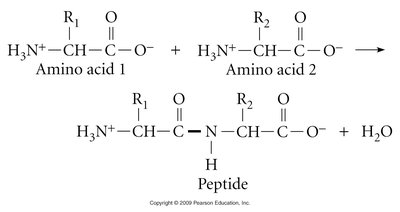
Amino acids: Building blocks of proteins, each with a central carbon, amino group, carboxyl group, and variable R group.
Peptide bond: Covalent bond formed between the carboxyl group of one amino acid and the amino group of another, releasing water.
Protein Structure
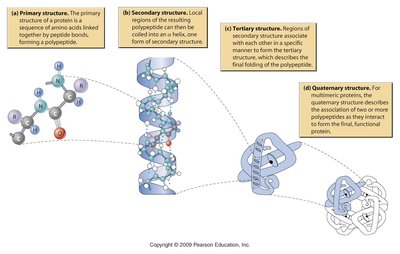
Proteins have four levels of structure:
Primary: Sequence of amino acids.
Secondary: Local folding (α-helix, β-sheet) stabilized by hydrogen bonds.
Tertiary: Overall 3D shape formed by interactions among R groups.
Quaternary: Association of multiple polypeptide chains.
Nucleic Acids: DNA and RNA
Structure and Function
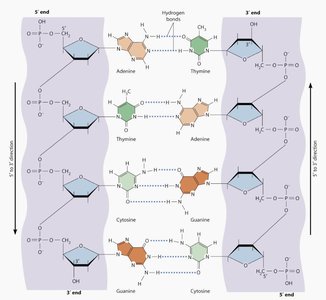
Nucleotides: Monomers of nucleic acids, each consisting of a sugar, phosphate group, and nitrogenous base.
DNA: Double helix, stores genetic information.
RNA: Single-stranded, involved in protein synthesis and regulation.
Additional info: This guide covers the foundational chemistry of the cell, including atoms, bonds, water, macromolecules, and their biological significance. Understanding these principles is essential for further study in cell biology, biochemistry, and molecular biology.
