 뒤로
Enzyme Classification, Mechanisms, and Regulation: Study Notes for GOB Chemistry
스터디 가이드 - 스마트 노트
 자료에 맞춘 맞춤형 노트, 핵심 정의, 예시, 맥락을 확장해 제공합니다.
Enzymes: Structure, Function, and Role in Biological Reactions
Definition and Components of Enzymes
Enzymes are biological catalysts that accelerate chemical reactions in living organisms. Most enzymes are proteins, though some are RNA molecules. The name of an enzyme typically ends in "-ase" and is often derived from the substrate it acts upon.
Substrate: The reactant in an enzyme-catalyzed reaction.
Turnover number: The number of substrate molecules converted to product per unit time.
Cofactor: A nonprotein molecule (often a metal ion) required for enzyme activity (e.g., Cu2+, Fe2+, Mg2+).
Coenzyme: An organic cofactor, often derived from vitamins, required for catalysis (e.g., NAD+, FAD).
Apoenzyme: The protein portion of an enzyme, without its cofactor/coenzyme.
Holoenzyme: The catalytically active enzyme, consisting of the apoenzyme plus its cofactor/coenzyme.
Active site: The pocket within the enzyme where substrate binding and catalysis occur.
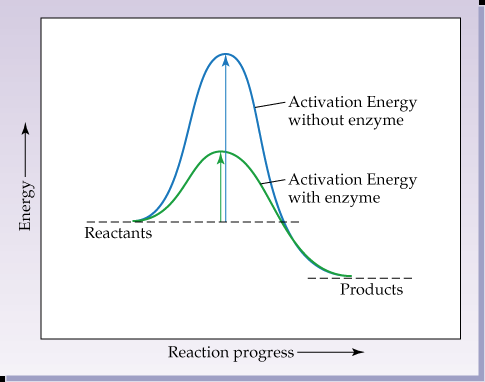
Enzyme Catalysis and Activation Energy
Enzymes function by lowering the activation energy required for a reaction, thereby increasing the reaction rate. They do not raise activation energy; instead, they facilitate the conversion of substrates to products by several mechanisms:
Proximity effect: Bringing reactants together.
Orientation effect: Holding reactants in the correct orientation for reaction.
Energy effect: Inducing strain on substrate bonds to lower activation energy.
Catalytic effect: Providing functional groups (acidic, basic, etc.) necessary for catalysis.
Classification of Enzymes
The Six Major Classes of Enzymes
Enzymes are classified based on the type of reaction they catalyze. Each class has specific subclasses that further define their function.
Oxidoreductases: Catalyze oxidation-reduction reactions.
Dehydrogenases: Remove hydrogen atoms from substrates, often requiring NAD+ or FAD as coenzymes.
Transferases: Transfer functional groups between molecules.
Kinases: Transfer phosphoryl groups (–PO32–).
Transaminases: Transfer amino groups (–NH3+).
Hydrolases: Catalyze hydrolysis reactions (breaking bonds with water).
Lipases: Hydrolyze ester bonds in lipids.
Proteases: Hydrolyze peptide bonds in proteins.
Nucleases: Hydrolyze phosphate ester bonds in DNA/RNA.
Amylases: Hydrolyze glycosidic bonds in starch.
Isomerases: Catalyze the rearrangement of atoms within a molecule to form isomers.
Lyases: Catalyze the addition or removal of groups to/from double bonds.
Ligases: Catalyze the joining of two molecules, often coupled with ATP hydrolysis.
Class | General Reaction | Key Subclasses |
|---|---|---|
Oxidoreductases | Oxidation-reduction | Dehydrogenases |
Transferases | Group transfer | Kinases, Transaminases |
Hydrolases | Hydrolysis | Lipases, Proteases, Nucleases, Amylases |
Isomerases | Isomerization | --- |
Lyases | Add/remove groups to double bonds | Decarboxylases, Dehydrases, Deaminases, Synthases |
Ligases | Bond formation (ATP hydrolysis) | Synthetases, Carboxylases |
Example Reactions for Each Enzyme Class
Oxidoreductase: Alcohol dehydrogenase reaction

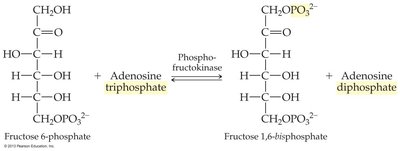
Transferase: Phosphofructokinase reaction
Hydrolase: Protease reaction

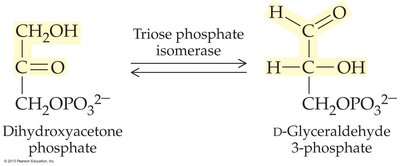
Isomerase: Triose phosphate isomerase reaction
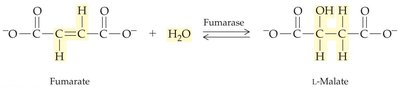
Lyase: Fumarase reaction
Ligase: Pyruvate carboxylase reaction

Enzyme Specificity and Substrate Binding
Specific vs. Nonspecific Enzymes
Enzyme specificity refers to the ability of an enzyme's active site to bind only certain substrates:
Highly specific enzymes: Catalyze one type of reaction for a single substrate (e.g., urease hydrolyzes urea).
Nonspecific enzymes: Catalyze a single reaction for a group of similar substrates (e.g., aminopeptidase releases N-terminal amino acids from polypeptides).
Induced Fit Model vs. Lock-and-Key Model
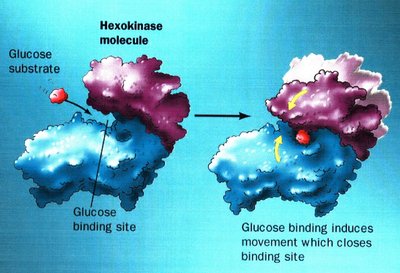
The induced fit model describes substrate binding more accurately than the lock-and-key model. In induced fit, substrate binding triggers a conformational change in the enzyme, optimizing the active site for catalysis.
Mechanism of Enzyme Action
Atomic-Level Mechanism (Hydrolase Example)
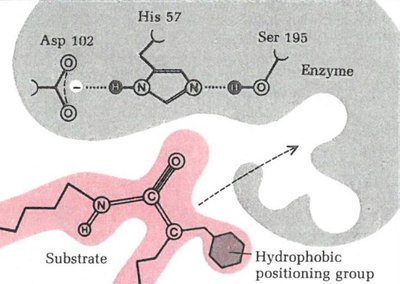
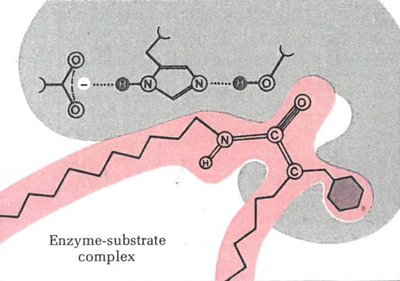
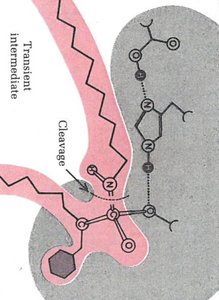
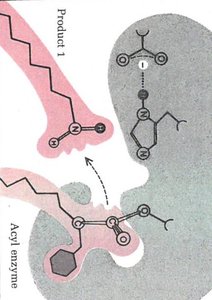
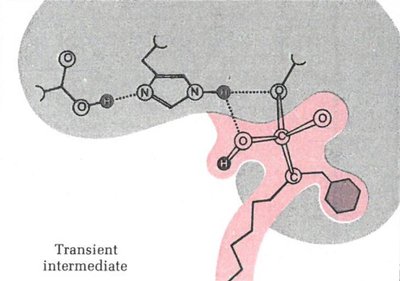
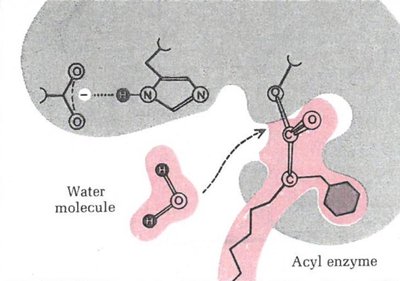
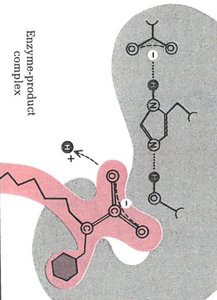
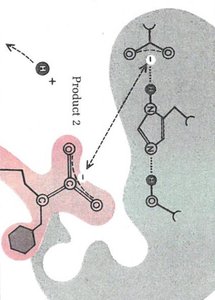
Enzymes operate at the atomic level, often involving multiple steps and transient intermediates. For hydrolases, the mechanism includes substrate recognition, bond cleavage, and product release. The enzyme is recycled after each reaction.
Enzyme recognizes substrate via a hydrophobic pocket.
Serine side chain binds substrate; histidine donates hydrogen, breaking the amide bond.
Water replaces the leaving group, splits, and resets the enzyme for another reaction.
Factors Affecting Enzyme Activity
Substrate Concentration
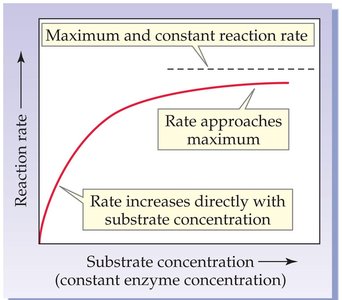
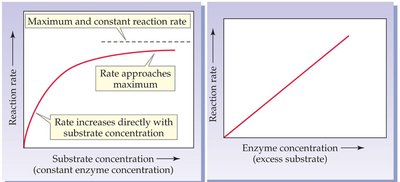
Increasing substrate concentration increases reaction rate until the enzyme becomes saturated, at which point the rate reaches a maximum.
Enzyme Concentration
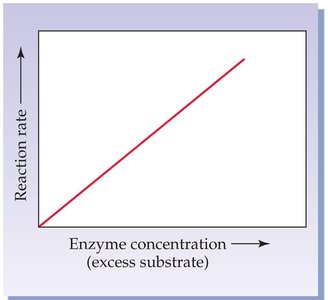
With excess substrate, increasing enzyme concentration increases reaction rate linearly.
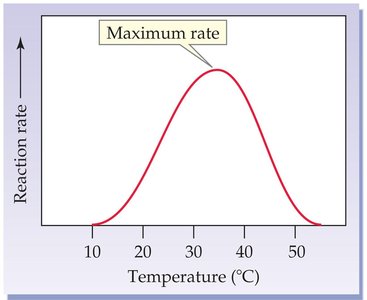
Temperature
Enzyme activity increases with temperature up to an optimum, after which activity decreases due to denaturation.
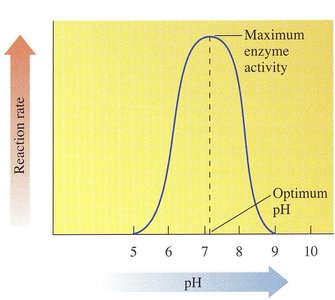
pH
Each enzyme has an optimum pH at which activity is maximal. Deviations from this pH reduce activity.
Summary Table: Enzyme Classes and Subclasses
Class | Subclass | Reaction Type |
|---|---|---|
Oxidoreductases | Dehydrogenases | Oxidation-reduction |
Transferases | Kinases, Transaminases | Group transfer |
Hydrolases | Lipases, Proteases, Nucleases, Amylases | Hydrolysis |
Isomerases | --- | Isomerization |
Lyases | Decarboxylases, Dehydrases, Deaminases, Synthases | Add/remove groups to double bonds |
Ligases | Synthetases, Carboxylases | Bond formation (ATP hydrolysis) |
Key Equations
General enzyme-catalyzed reaction:
Michaelis-Menten equation (for enzyme kinetics):
Additional info:
Enzyme mechanisms often involve transient intermediates and recycling of the enzyme.
Enzyme activity is highly sensitive to environmental conditions, which is critical for regulation in biological systems.
