 뒤로
뒤로Study Guide: Muscular System and Muscle Metabolism
스터디 가이드 - 스마트 노트
 자료에 맞춘 맞춤형 노트, 핵심 정의, 예시, 맥락을 확장해 제공합니다.
Muscular System Overview
Introduction to the Muscular System
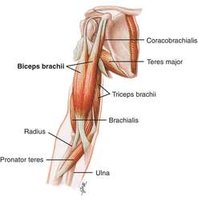
The muscular system is an organ system composed of skeletal, smooth, and cardiac muscles. It is essential for movement, posture, heat production, and blood circulation. There are approximately 640 muscles in the human body.
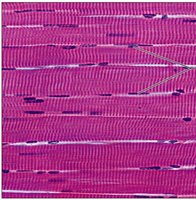
Skeletal muscle: Covers the skeleton and sphincters, consists of rod-shaped, striated cells, and is under voluntary control.
Smooth muscle: Found in internal organs, non-striated, involuntary.
Cardiac muscle: Found only in the heart, striated, involuntary.
Characteristics of Skeletal Muscles
Excitation-Contraction Coupling
Motor neurons stimulate muscle cells, causing them to contract and produce movement. This process is known as excitation-contraction coupling.
Excitation: Motor neuron releases neurotransmitter to excite muscle cell.
Contraction: Muscle cell shortens, generating force.
Muscle Anatomy: Origin, Insertion, and Body
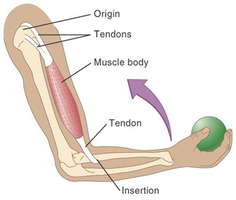
Skeletal muscles have a body, origin, and insertion. These anatomical features are crucial for understanding muscle function and movement.
Tendon: Connective tissue attaching muscle to bone.
Origin: Fixed attachment point, does not move during contraction.
Body/Belly: Thickest part of the muscle, contains most muscle tissue.
Insertion: Moveable attachment point, usually near the joint being moved.
When a muscle contracts, the insertion is pulled toward the origin.
Muscle Contraction and Movement
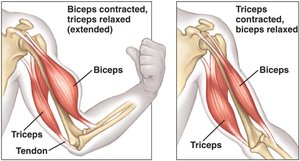
Muscles always shorten when they contract, acting as pulleys to move joints.
Agonist, Antagonist, and Synergist Muscles
Muscles that move a joint are often arranged in opposing pairs:
Agonist: Muscle that promotes a specific movement.
Antagonist: Muscle that opposes the agonist's movement.
Synergist: Two or more muscles that promote the same action on a joint.
Microanatomy of Skeletal Muscle
Muscle Structure Hierarchy
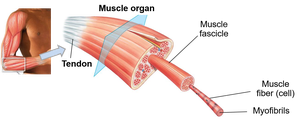
A muscle organ is composed of smaller thread-like subunits:
Fascicles: Bundles of muscle fibers.
Muscle fibers (cells): Individual muscle cells.
Myofibrils: Organelles found only in muscle cells.
Myofilaments: Thread-like proteins (thin and thick filaments) that make up myofibrils.
Connective tissue fascia: Enwraps each layer.
Structure of Skeletal Muscle Fibers
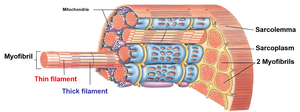
Muscle fibers are specialized cells with unique structures:
Sarcolemma: Cell membrane of muscle fibers.
Sarcoplasm: Cytoplasm containing organelles.
Myofibrils: Major organelle, composed of thin and thick filaments.
Mitochondria: Numerous, provide ATP for movement.
T-tubules and Sarcoplasmic Reticulum
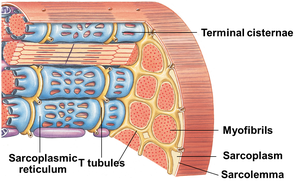
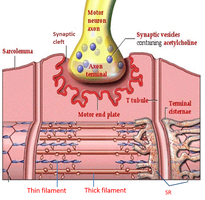
T-tubules are invaginations of the sarcolemma that transmit action potentials into the cell. The sarcoplasmic reticulum (SR) is a specialized endoplasmic reticulum that surrounds each myofibril and stores/releases calcium for muscle contraction.
Neuromuscular Junction and Excitation-Contraction Coupling
Neuromuscular Junction Structure
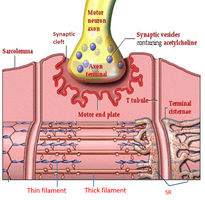
The neuromuscular junction is where a motor neuron contacts a muscle fiber, triggering contraction.
Synaptic knob (axon terminal): Produces synaptic vesicles containing acetylcholine (ACh).
Motor end plate: Part of sarcolemma with ACh receptors.
Events of Excitation-Contraction Coupling
Excitation-contraction coupling is the process by which a motor neuron stimulates a muscle fiber to contract:
An action potential travels down the motor neuron.
Acetylcholine is released and binds to receptors on the motor end plate.
A new action potential is generated in the muscle fiber, traveling down T-tubules.
Sarcoplasmic reticulum releases calcium.
Calcium binds to myofilaments, activating the contraction cycle.
Muscle contracts, using large amounts of ATP.
Contraction Cycle
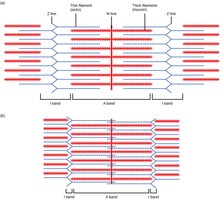
During contraction, thin filaments slide past thick filaments, shortening the muscle. This is the basis of muscle contraction.
Relaxed state: Filaments are not overlapping extensively.
Contracted state: Thin filaments are pulled past thick filaments, muscle shortens.
Cellular Respiration and Muscle Metabolism
Cellular Respiration Overview
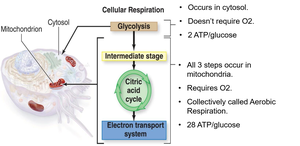
Cellular respiration is a four-step chemical reaction that breaks down glucose, releasing energy to synthesize ATP. Oxygen is required for maximum ATP production.
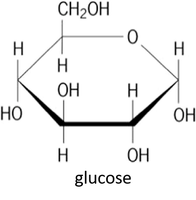
Glucose: The body's preferred fuel, energy-rich molecule.
Breathing and eating are essential to provide reactants for cellular respiration.
Net chemical reaction:
Lactic Acid Fermentation
Lactic acid fermentation occurs when cells are oxygen-limited, such as during intense exercise. It is an emergency process that allows glycolysis to continue, producing ATP and lactic acid as a waste product.
Glycolysis increases dramatically to compensate for lack of aerobic respiration.
Lactic acid fermentation ensures glycolysis can continue by providing necessary reactants.
Lactic acid is produced as a waste product.
Aerobic vs. Anaerobic Exercise
Exercise can be classified based on oxygen availability:
Aerobic exercise: Light/moderate, sustained, uses all steps of cellular respiration.
Anaerobic exercise: Intense, short duration, relies on glycolysis and lactic acid fermentation.
Muscle Fatigue
Causes and Effects of Muscle Fatigue
Muscle fatigue is a temporary decline in muscle ability to generate force, often resulting from physical activity.
Lack of oxygen, glucose, neurotransmitters, ATP: Limits muscle function.
Lactic acid accumulation: Acidifies muscle, limits enzyme function (does not cause pain).
Micro-tears and inflammation: Cause pain and cramping after exercise.
Practice Questions
What is the net chemical reaction of cellular respiration?
During lactic acid fermentation, which of the following does not apply?
Summary Table: Muscle Structure Hierarchy
Level | Description |
|---|---|
Muscle Organ | Entire muscle, composed of fascicles |
Fascicle | Bundle of muscle fibers |
Muscle Fiber (Cell) | Individual muscle cell |
Myofibril | Organelle within muscle cell |
Myofilament | Protein threads (thin and thick filaments) |
Additional info: Academic context was added to clarify muscle structure, function, and metabolism, and to ensure completeness for exam preparation.
