 뒤로
Principles of Disease: Microbiome, Koch’s Postulates, and Epidemiology
스터디 가이드 - 스마트 노트
 자료에 맞춘 맞춤형 노트, 핵심 정의, 예시, 맥락을 확장해 제공합니다.
Principles of Disease
Introduction
This section explores the foundational concepts of disease in microbiology, focusing on the human microbiome, Koch’s postulates, classification of infectious diseases, epidemiology, patterns of disease, and healthcare-associated infections. Understanding these principles is essential for identifying, preventing, and controlling infectious diseases.
Pathology, Infection, and Disease
Key Definitions
Pathology: The study of disease, including its causes, development, and effects on the body.
Etiology: The cause of a disease.
Pathogenesis: The development and progression of disease.
Infection: Invasion or colonization of the body by pathogenic microorganisms.
Disease: An abnormal state in which the body is not functioning normally.
The Human Microbiome
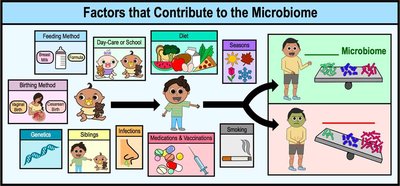
Establishment and Factors Affecting Microbiota
The human microbiome begins to establish in utero and continues to develop through exposure to food, people, pets, and the environment. It remains throughout life, influenced by various factors:
Nutrients: Availability of nutrients determines which microbes can colonize specific body sites.
Physical and Chemical Factors: Temperature, pH, and oxygen levels affect microbial growth.
Host Defenses: The immune system regulates microbial populations.
Mechanical Factors: Actions like chewing, swallowing, and movement of cilia help control microbial populations.
Resident vs. Transient Microbiota
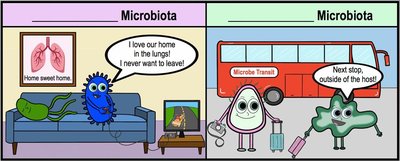
Resident Microbiota: Relatively stable, long-term inhabitants of the body. If disturbed, they reestablish themselves. Also called normal flora or human microflora.
Transient Microbiota: Temporary residents derived from the environment, present for hours, days, or weeks. They can be pathogenic or nonpathogenic.
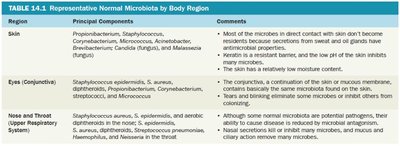
Representative Normal Microbiota by Body Region
Different body regions host distinct microbial communities. The following tables summarize the principal components and comments for each region:
Region | Principal Components | Comments |
|---|---|---|
Skin | Propionibacterium, Staphylococcus, Corynebacterium, Micrococcus, Acinetobacter, Brevibacterium, Candida (fungus), Malassezia (fungus) | Most microbes in direct contact with skin do not become residents; skin has a relatively low moisture content. |
Eyes (Conjunctiva) | Staphylococcus epidermidis, S. aureus, diphtheroids, Propionibacterium, Corynebacterium, Streptococcus, Micrococcus | Tears and blinking eliminate some microbes; the conjunctiva contains similar microbiota to skin. |
Nose and Throat (Upper Respiratory System) | Staphylococcus aureus, S. epidermidis, aerobic diphtheroids, Streptococcus pneumoniae, Haemophilus | Nasal secretions and mucus remove many microbes; mucous and ciliary action eliminate many microbes. |
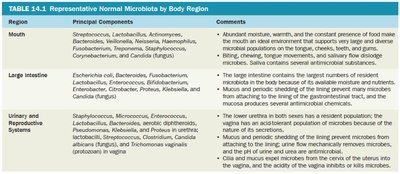
Region | Principal Components | Comments |
|---|---|---|
Mouth | Streptococcus, Lactobacillus, Actinomyces, Bacteroides, Veillonella, Neisseria, Haemophilus, Fusobacterium, Treponema, Staphylococcus, Corynebacterium, Candida (fungus) | Abundant moisture, warmth, and food make the mouth an ideal environment for diverse microbes. |
Large Intestine | Escherichia coli, Bacteroides, Fusobacterium, Enterococcus, Clostridium, Proteus, Klebsiella, Enterobacter, Citrobacter, Providencia, Candida (fungus) | Contains the largest numbers of resident microbiota; mucus and periodic shedding of lining prevent overgrowth. |
Urinary and Reproductive Systems | Staphylococcus, Micrococcus, Enterococcus, Lactobacillus, Streptococcus, Pseudomonas, Klebsiella, Proteus, Escherichia, Clostridium, Candida (fungus), Trichomonas vaginalis (protozoan in vagina) | Lower urethra has a resident population; urine flow and acidity of the vagina inhibit microbes. |
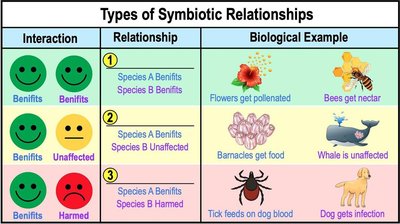
Symbiotic Relationships
Normal microbiota and the host interact in various symbiotic relationships:
Commensalism: One organism benefits, the other is unaffected.
Mutualism: Both organisms benefit.
Parasitism: One organism benefits at the expense of the other.
Some normal microbiota are opportunistic pathogens, causing disease under certain conditions (e.g., Candida albicans).
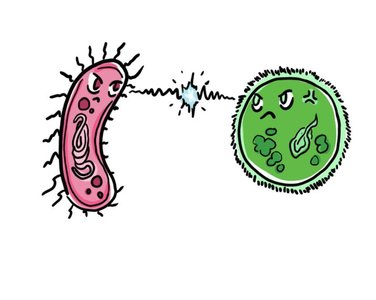
Microbial Antagonism (Competitive Exclusion)
Normal microbiota protect the host by:
Competing for nutrients
Producing substances harmful to invading microbes
Affecting pH and available oxygen
Koch’s Postulates
Establishing Disease Causation
Koch’s postulates are a series of criteria used to prove that a specific microorganism causes a specific disease:
The same pathogen must be present in every case of the disease.
The pathogen must be isolated from the diseased host and grown in pure culture.
The pathogen from the pure culture must cause the disease when inoculated into a healthy, susceptible laboratory animal.
The pathogen must be isolated from the inoculated animal and shown to be the original organism.
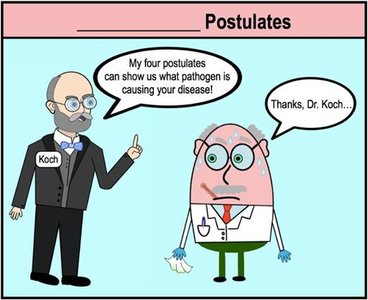
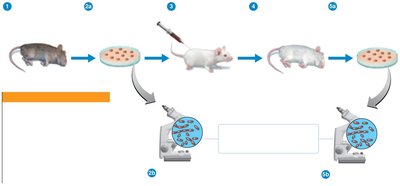
Koch’s postulates help determine the etiology (cause) of disease, which is essential for treatment and prevention.
Microbiologists use these steps to identify causes of emerging diseases.
Exceptions: Some pathogens cause multiple diseases, some only infect humans, and some cannot be cultured in the laboratory.
Classifying Infectious Diseases
Symptoms, Signs, and Syndromes
Symptoms: Subjective changes in body function felt by the patient (e.g., pain, fatigue).
Signs: Objective changes that can be measured or observed (e.g., fever, rash).
Syndrome: A specific group of signs and symptoms that accompany a disease.
Communicable, Contagious, and Noncommunicable Diseases
Communicable Disease: Can be spread from one host to another (e.g., influenza).
Contagious Disease: Easily and rapidly spread from one host to another (e.g., measles).
Noncommunicable Disease: Not spread from host to host (e.g., tetanus).
Occurrence of Disease: Incidence and Prevalence
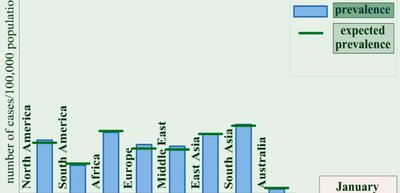
Incidence: Number of new cases during a specific time period.
Prevalence: Proportion of a population with a disease at a given time (includes old and new cases).
Patterns of Disease Occurrence
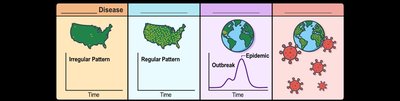
Sporadic Disease: Occurs occasionally (e.g., typhoid fever).
Endemic Disease: Constantly present in a population (e.g., common cold).
Epidemic Disease: Many people acquire the disease in a short time (e.g., influenza outbreak).
Pandemic Disease: Worldwide epidemic (e.g., COVID-19).
Severity or Duration of Disease
Acute Disease: Rapid onset, short duration (e.g., influenza).
Chronic Disease: Develops slowly, lasts a long time (e.g., tuberculosis).
Subacute Disease: Intermediate between acute and chronic.
Latent Disease: Pathogen is inactive for a time, then activates (e.g., herpes simplex).
Herd Immunity: Immunity in most of a population, reducing disease spread.
Emerging Infectious Diseases
Definition and Contributing Factors
Diseases that are new, increasing in incidence, or have the potential to increase soon.
Most are zoonotic, viral, and vector-borne.
Contributing factors:
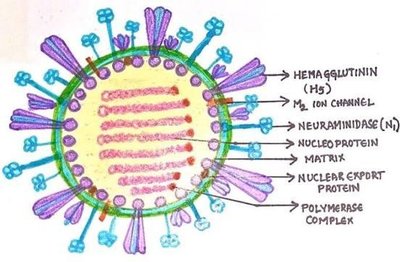
Genetic recombination (e.g., Escherichia coli O157, avian influenza H5N1)
Widespread use of antibiotics and pesticides (leading to resistance)
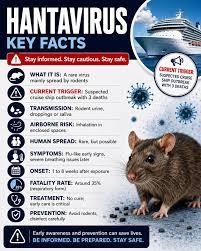
Changes in weather patterns (e.g., Hantavirus outbreaks)
Modern transportation (e.g., Zika virus, West Nile virus)
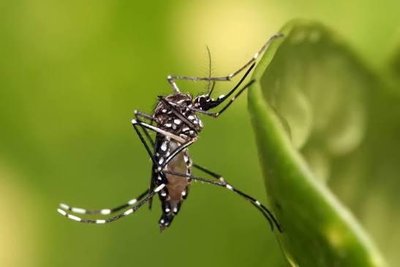
Insect vectors (e.g., Aedes aegypti, A. albopictus)
Public health failures (e.g., diphtheria)
Bioterrorism
Patterns of Disease and Spread of Infection
Extent of Host Involvement
Local Infection: Pathogens are limited to a small area.
Focal Infection: Systemic infection that began as a local infection.
Systemic (Generalized) Infection: Infection throughout the body.
Bacteremia: Bacteria in the blood.
Septicemia: Growth of bacteria in the blood (blood poisoning).
Sepsis: Toxic inflammatory condition from spread of microbes or toxins.
Toxemia: Toxins in the blood.
Viremia: Viruses in the blood.
Primary Infection: Acute infection causing initial illness.
Secondary Infection: Opportunistic infection after a primary infection.
Subclinical Disease: No noticeable signs or symptoms.
Predisposing Factors
Factors that make the body more susceptible to disease include gender, inherited traits, climate, lack of vaccination, fatigue, age, lifestyle, nutrition, and chemotherapy.
Development of Disease
Incubation Period: Time between initial infection and first symptoms.
Prodromal Period: Short period of early, mild symptoms.
Period of Illness: Disease is most severe.
Period of Decline: Signs and symptoms subside.
Period of Convalescence: Body returns to prediseased state.
Reservoirs of Infection
Human Reservoirs: Carriers may have inapparent or latent infections.
Animal Reservoirs: Zoonoses are diseases transmitted from animals to humans.
Nonliving Reservoirs: Soil and water can harbor pathogens.
Modes of Disease Transmission
Vertical (Congenital) Transmission: From mother to fetus or newborn at birth.
Horizontal Transmission: Any other method, including direct or indirect transfer between humans, animals, or the environment.
Direct Contact Transmission: Close association (e.g., shaking hands, respiratory droplets).
Indirect Transmission: Via intermediary or delay.
Airborne: Through microscopic droplet nuclei.
Vehicle-Borne: Through non-living objects (food, water, fomites).
Vector-Borne: Through living organisms (e.g., insects).
Healthcare-Associated Infections (HAIs)
Definition and Impact
HAIs are infections acquired while receiving treatment in a healthcare facility (also called nosocomial infections).
Affect 1 in 25 hospital patients; over 2 million cases and 70,000 deaths annually in the U.S.
Factors Contributing to HAIs
Presence of microorganisms in the hospital environment
Weakened status of the host (compromised host)
Chain of transmission within the hospital
Control of HAIs
Universal Precautions: Standard practices to prevent transmission.
Standard Precautions: Basic, minimum practices for all patients.
Transmission-Based Precautions: Supplemental measures for known or suspected infections (contact, droplet, airborne precautions).
Other measures: Handwashing, disinfecting equipment, cleaning instruments, using disposable items, and infection control committees.
Summary Table: Key Terms and Concepts
Term | Definition |
|---|---|
Pathology | Study of disease |
Etiology | Cause of disease |
Incidence | Number of new cases in a time period |
Prevalence | Total cases (old and new) at a given time |
Nosocomial Infection | Infection acquired in a healthcare facility |
Herd Immunity | Immunity in most of a population |
Additional info: These notes integrate textbook content, lecture slides, and academic context to provide a comprehensive overview of the principles of disease in microbiology, suitable for college-level study and exam preparation.
