Ch. 22 - Condensations and Alpha Substitutions of Carbonyl Compounds
Wade - Organic Chemistry 9th Edition
Wade9th EditionOrganic ChemistryISBN: 9780135213728당신이 사용하는 게 아니라요?교과서 변경
22장, 문제 60g

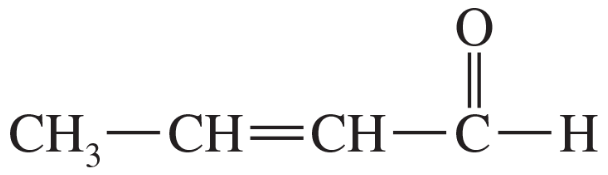
For each molecule shown below,
1. indicate the most acidic hydrogens.
2. draw the important resonance contributors of the anion that results from removal of the most acidic hydrogen.
(g)

검증된 단계별 안내
1
Step 1: Identify the most acidic hydrogen in the molecule. The molecule contains a carbonyl group (C=O) and an alpha hydrogen adjacent to the carbonyl group. Alpha hydrogens are typically the most acidic due to the resonance stabilization of the resulting enolate ion.
Step 2: Remove the most acidic hydrogen (the alpha hydrogen) to form the conjugate base. This results in the formation of an enolate ion, where the negative charge is delocalized between the alpha carbon and the oxygen atom of the carbonyl group.
Step 3: Draw the first resonance contributor of the enolate ion. In this structure, the negative charge resides on the oxygen atom of the carbonyl group, forming a double bond between the alpha carbon and the carbonyl carbon.
Step 4: Draw the second resonance contributor of the enolate ion. In this structure, the negative charge resides on the alpha carbon, and the carbonyl group retains its double bond.
Step 5: Ensure that both resonance contributors are properly drawn, showing the delocalization of the negative charge between the oxygen atom and the alpha carbon. This resonance stabilization explains the acidity of the alpha hydrogen.

비슷한 문제에 대한 검증된 영상 답변:

이 영상 해법은 위 문제에 도움이 된다고 튜터들이 추천한 것입니다.
영상 길이:
5m

주요 개념

질문에 올바르게 답하기 위해 반드시 이해해야 하는 핵심 개념들은 다음과 같습니다.

Acidity in Organic Molecules

Acidity in organic chemistry refers to the ability of a molecule to donate a proton (H+). The most acidic hydrogens are typically found on functional groups such as carboxylic acids, alcohols, and phenols. In the provided molecule, the hydrogen attached to the carbon adjacent to the carbonyl group is the most acidic due to the electron-withdrawing effect of the carbonyl, which stabilizes the resulting anion.
추천 영상:
02:17
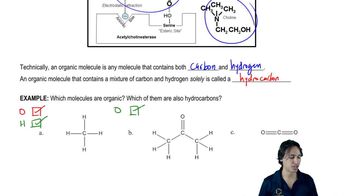
Identifying organic molecules

Resonance Structures

Resonance structures are different ways of drawing a molecule that represent the same compound, showing the delocalization of electrons. In the context of the anion formed after deprotonation, resonance contributors illustrate how the negative charge can be distributed across multiple atoms, enhancing the stability of the anion. This concept is crucial for predicting the behavior of the anion in chemical reactions.
추천 영상:
03:04
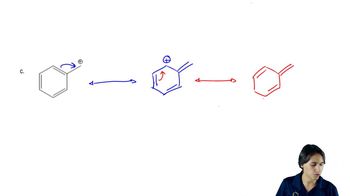
Drawing Resonance Structures

Stability of Anions

The stability of anions is influenced by factors such as electronegativity, resonance, and inductive effects. Anions that can delocalize their negative charge through resonance are generally more stable than those that cannot. In the case of the anion formed from the most acidic hydrogen in the given molecule, resonance with the adjacent carbonyl group significantly stabilizes the anion, making it more favorable for deprotonation.
추천 영상:
가이드 코스
0:53
Anionic Polymerization Concept 3