 뒤로
뒤로Chapter 46: Assessment and Management of Patients with Endocrine Disorders
스터디 가이드 - 스마트 노트
 자료에 맞춘 맞춤형 노트, 핵심 정의, 예시, 맥락을 확장해 제공합니다.
Chapter 46: Assessment and Management of Patients with Endocrine Disorders
Overview of the Endocrine System
The endocrine system is a complex network of glands and tissues that secrete hormones to regulate and integrate various physiological processes throughout the body. Hormones act on local or distant target sites and are essential for maintaining homeostasis, growth, metabolism, and reproduction. The endocrine system interacts closely with the nervous and immune systems, with neurotransmitters and cytokines playing regulatory roles.
Hormones: Chemical messengers produced by endocrine glands and specialized tissues.
Major glands: Pituitary, thyroid, parathyroid, adrenal, pancreas (islets of Langerhans), ovaries, and testes.
Functions: Regulation of metabolism, growth, development, tissue function, and mood.
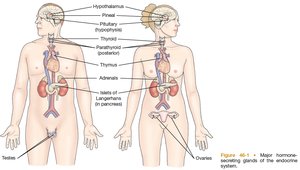
Assessment of the Endocrine System
Health History and Physical Assessment
Assessment of the endocrine system involves a thorough health history and physical examination to identify symptoms and signs of hormonal imbalance. This process helps in recognizing, analyzing, and prioritizing clinical cues for individualized patient care.
Health history: Focus on changes in energy, weight, thirst, urination, bowel function, body proportions, muscle mass, fat/fluid distribution, secondary sexual characteristics, menstrual cycle, memory, concentration, sleep, mood, vision, joint pain, and sexual function.
Physical examination: Includes vital signs, inspection, and palpation of skin, hair, thyroid, and other relevant structures. Look for signs such as facial hair in females, moon face, exophthalmos, edema, skin thinning, and abnormal fat distribution.
Diagnostic Evaluation
Diagnostic studies are essential for evaluating endocrine function and include blood and urine tests, stimulation and suppression tests, imaging studies, and genetic screening.
Blood tests: Measure hormone and autoantibody levels (e.g., T3, T4, TSH).
Urine tests: Assess hormone excretion (e.g., catecholamines for pheochromocytoma).
Imaging: MRI, CT, ultrasound, PET, DXA for gland visualization.
Genetic screening: Identifies mutations associated with endocrine disorders.
The Pituitary Gland
Structure and Function
The pituitary gland, or hypophysis, is the master gland that regulates the secretion of hormones from other endocrine glands. It is divided into anterior and posterior lobes and is controlled by the hypothalamus.
Location: Inferior aspect of the brain, connected by the pituitary stalk.
Function: Secretes hormones that regulate growth, metabolism, and reproductive functions.
Pituitary Gland Disorders
Disorders may result from over- or undersecretion of pituitary hormones, often due to tumors or damage from surgery, radiation, or disease.
Hypopituitarism: Deficiency of pituitary hormones causing weight loss, atrophy of glands, hair loss, and metabolic disturbances.
Pituitary tumors: Usually benign; classified as functional (hormone-secreting) or nonfunctional. Types include eosinophilic (gigantism/acromegaly), basophilic (Cushing disease), and chromophobic (hypopituitarism).
Assessment and Management
Diagnosis: History, physical exam, visual field testing, CT/MRI, hormone assays.
Treatment: Surgical removal (hypophysectomy), radiation, medications (e.g., bromocriptine).
Disorders of Antidiuretic Hormone (ADH)
Diabetes Insipidus (DI)
DI is characterized by a deficiency of ADH, leading to excessive excretion of dilute urine and intense thirst. Causes include head trauma, surgery, infection, or kidney resistance to ADH.
Symptoms: Polyuria (>250 mL/hr), low urine specific gravity (1.001–1.005), polydipsia, dehydration, hypernatremia.
Diagnosis: Fluid deprivation test, plasma/urine osmolality, ADH levels.
Treatment: ADH replacement, fluid management, thiazide diuretics for nephrogenic DI.
Syndrome of Inappropriate Antidiuretic Hormone (SIADH)
SIADH results from excessive ADH secretion, causing water retention and dilutional hyponatremia. Common causes include malignancies, CNS disorders, and medications.
Symptoms: Fluid retention, low serum sodium, concentrated urine.
Treatment: Fluid restriction, diuretics, hypertonic saline for severe cases.
Nursing care: Monitor fluid balance, electrolytes, neurologic status.
The Thyroid Gland
Anatomy and Physiology
The thyroid gland is the largest endocrine gland, located in the lower neck. It produces thyroxine (T4), triiodothyronine (T3), and calcitonin, which regulate metabolism and calcium balance.
Structure: Two lobes connected by an isthmus.
Hormones: T4 and T3 (metabolism), calcitonin (calcium regulation).
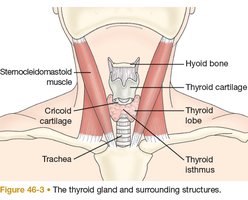
Thyroid Hormone Synthesis and Regulation
Thyroid hormones are synthesized from iodine and tyrosine, stored in the gland, and released under the control of TSH from the anterior pituitary. A negative feedback mechanism regulates hormone levels.
T4: Maintains steady metabolism.
T3: More potent, rapid metabolic effects.
Calcitonin: Lowers plasma calcium by increasing bone deposition.
Thyroid Function Tests
TSH: Primary screening test for thyroid function.
Free T4: Measures active thyroxine.
T3 and T4: Total hormone levels.
T3 resin uptake: Indirect measure of thyroid-binding globulin.
Thyroid antibodies: Detect autoimmune thyroid disease.
Radioactive iodine uptake: Measures gland activity.
Fine-needle aspiration biopsy: Detects malignancy.
Physical Examination of the Thyroid
Routine inspection and palpation of the thyroid gland are essential for detecting abnormalities such as goiter, nodules, or tenderness. Auscultation for bruits may indicate hyperthyroidism.
Thyroid Disorders
Hypothyroidism
Hypothyroidism is a condition of insufficient thyroid hormone production, leading to a generalized slowing of metabolic processes.
Symptoms: Fatigue, weight gain, cold intolerance, dry skin, bradycardia, low body temperature.
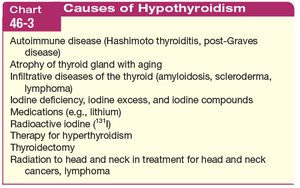
Causes: Autoimmune disease (Hashimoto), thyroidectomy, radiation, medications, iodine deficiency/excess, aging.
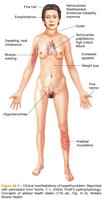
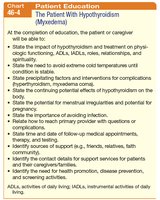
Treatment: Levothyroxine replacement, monitoring TSH, supportive care for myxedema coma.
Hyperthyroidism
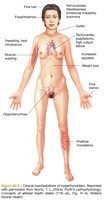
Hyperthyroidism is characterized by excessive synthesis and secretion of thyroid hormones, most commonly due to Graves disease (an autoimmune disorder).
Symptoms: Anxiety, irritability, tachycardia, palpitations, weight loss, diarrhea, exophthalmos.
Treatment: Antithyroid medications, radioactive iodine, surgery (thyroidectomy).
The Parathyroid Glands
Structure and Function
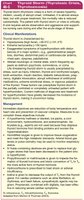
The parathyroid glands are small glands located on the posterior aspect of the thyroid gland. They secrete parathyroid hormone (PTH), which regulates calcium and phosphorus metabolism.
PTH: Increases serum calcium by promoting absorption from the kidney, intestine, and bone; decreases serum phosphorus.
Regulation: Negative feedback by serum calcium levels.
Hyperparathyroidism
Hyperparathyroidism is caused by overproduction of PTH, leading to hypercalcemia, bone decalcification, and kidney stones.
Symptoms: Fatigue, muscle weakness, nausea, constipation, hypertension, psychiatric disturbances, nephrolithiasis, bone pain.
Diagnosis: Elevated serum calcium and PTH, imaging studies.
Treatment: Parathyroidectomy, hydration, mobility, dietary management, monitoring for complications.
Hypoparathyroidism
Hypoparathyroidism results from inadequate PTH secretion, most commonly after thyroid surgery, leading to hypocalcemia and hyperphosphatemia.
Symptoms: Tetany, muscle cramps, spasms, numbness, seizures, cardiac arrhythmias.
Diagnosis: Low serum calcium, high phosphate, positive Chvostek and Trousseau signs.
Treatment: Calcium and vitamin D supplementation, thiazide diuretics, dietary modifications.
The Adrenal Glands
Structure and Function
The adrenal glands are located atop each kidney and consist of the adrenal medulla (secretes catecholamines) and adrenal cortex (secretes steroid hormones).
Adrenal medulla: Secretes epinephrine and norepinephrine for fight-or-flight response.
Adrenal cortex: Produces glucocorticoids (cortisol), mineralocorticoids (aldosterone), and sex hormones (androgens).
Adrenal Disorders
Pheochromocytoma: Tumor of the adrenal medulla causing episodic hypertension, headache, sweating, and palpitations. Diagnosed by catecholamine levels and imaging; treated surgically.
Addison Disease (Adrenocortical Insufficiency): Deficiency of adrenal cortex hormones, leading to hypotension, hyperpigmentation, weakness, and risk of Addisonian crisis. Treated with hormone replacement and stress management.
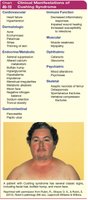
Cushing Syndrome: Excess glucocorticoids from endogenous or exogenous sources, causing obesity, hypertension, muscle weakness, and psychiatric symptoms. Managed by addressing the underlying cause and tapering steroids if possible.
Tables
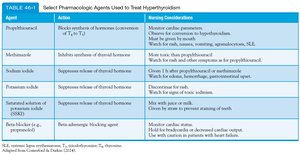
Pharmacologic Agents Used to Treat Hyperthyroidism
Agent | Action | Nursing Considerations |
|---|---|---|
Propylthiouracil | Blocks synthesis of hormones (conversion of T4 to T3) | Monitor for rash, nausea, agranulocytosis; monitor for signs of hypothyroidism. |
Methimazole | Inhibits synthesis of thyroid hormones | Monitor for rash, nausea, agranulocytosis; less hepatotoxicity than propylthiouracil. |
Sodium iodide | Suppresses release of thyroid hormone | Watch for edema, hemorrhage, GI upset. |
Potassium iodide | Suppresses release of thyroid hormone | Watch for edema, hemorrhage, GI upset. |
Saturated solution of potassium iodide (SSKI) | Suppresses release of thyroid hormone | Mix with juice or milk; caution in patients with dental issues. |
Beta-blocker (e.g., propranolol) | Beta-adrenergic blocking agent | Monitor pulse; caution in patients with heart failure. |
Causes of Hypothyroidism
Causes |
|---|
Autoimmune disease (Hashimoto thyroiditis, post-Graves disease) |
Atrophy of thyroid gland with aging |
Infiltrative diseases of the thyroid (amyloidosis, scleroderma, lymphoma) |
Iodine deficiency, iodine excess, and iodine compounds |
Medications (e.g., lithium) |
Radioactive iodine (131I) |
Therapy for hyperthyroidism |
Thyroidectomy |
Radiation to head and neck in treatment for head and neck cancers, lymphoma |
Patient Education
Hypothyroidism
Understand the impact of hypothyroidism and its treatment on daily life and health.
Recognize symptoms and complications, and know when to seek medical attention.
Adhere to medication regimens and follow-up appointments.
Maintain a healthy lifestyle and monitor for changes in symptoms.
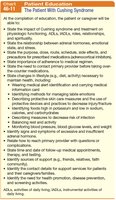
Cushing Syndrome
Understand the effects of excess corticosteroids and the importance of medication adherence.
Monitor for complications and maintain regular follow-up care.
Adopt lifestyle modifications to manage symptoms and prevent infection.
