 뒤로
Chapter 6: Learning – Introduction to Psychological Science Study Notes
스터디 가이드 - 스마트 노트
 자료에 맞춘 맞춤형 노트, 핵심 정의, 예시, 맥락을 확장해 제공합니다.
Learning
Overview of Learning
Learning is a fundamental process in psychology, referring to behavioural changes that result from experience. It encompasses various forms, including associative learning, where connections are made between events, and learning through consequences.
Associative Learning: Learning that involves forming associations between stimuli or between behaviours and outcomes.
Behavioural Changes: Modifications in behaviour as a result of learning experiences.
Classical Conditioning: Learning by Association
Pavlov’s Dogs and Classical Conditioning
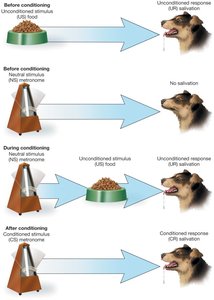
Classical conditioning is a type of associative learning where a neutral stimulus becomes associated with a meaningful stimulus, eliciting a conditioned response. Ivan Pavlov’s experiments with dogs demonstrated this process.
Unconditioned Stimulus (US): A stimulus that naturally elicits a response (e.g., food).
Unconditioned Response (UR): The natural response to the US (e.g., salivation).
Conditioned Stimulus (CS): A previously neutral stimulus that, after association, elicits a response (e.g., metronome).
Conditioned Response (CR): The learned response to the CS (e.g., salivation to metronome).
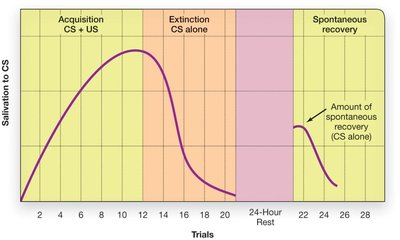
Acquisition: The process of learning the association between CS and US.
Extinction: The reduction of the conditioned response when the CS is presented without the US.
Spontaneous Recovery: The reappearance of the conditioned response after a rest period.
Example: Pavlov’s dogs learned to salivate at the sound of a metronome after it was repeatedly paired with food.
Classical Conditioning and the Brain
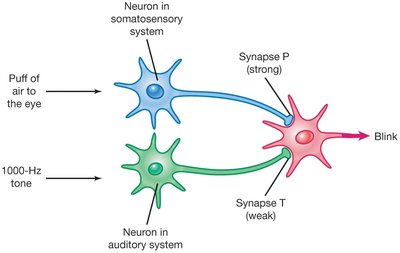
Classical conditioning involves changes in neural connections. During conditioning, weak synapses are strengthened through simultaneous activation with strong synapses, facilitating learning.
Synaptic Strengthening: Weak synapses become stronger when activated alongside strong synapses.
Acquisition, Extinction, and Spontaneous Recovery
The process of acquiring, extinguishing, and recovering conditioned responses is central to classical conditioning. Acquisition occurs with repeated pairings, extinction with the removal of the US, and spontaneous recovery after a rest period.
Acquisition: CS paired with US leads to CR.
Extinction: CS presented alone leads to decrease in CR.
Spontaneous Recovery: CR returns after a rest period.
Stimulus Generalization and Discrimination
Generalization occurs when a conditioned response is elicited by stimuli similar to the original CS. Discrimination is the ability to distinguish between the original CS and other stimuli.
Stimulus Generalization: Responding to similar stimuli.
Discrimination: Responding only to the original CS.
Conditioned Emotional Responses
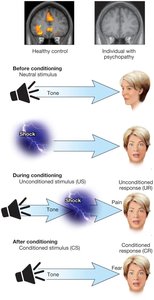
Classical conditioning can produce emotional responses, such as fear and phobias. The "Little Albert" experiment demonstrated how phobias can be acquired through conditioning.
Phobias: Irrational fears acquired through conditioning.
Conditioned Emotional Response: Emotional reaction to a CS.
Conditioned Taste Aversions
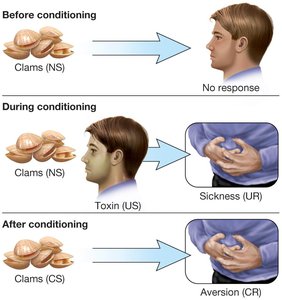
Taste aversions are a form of classical conditioning where illness following food consumption leads to avoidance of that food. The UR and CR may differ, such as sickness (UR) and aversion (CR).
Taste Aversion: Avoidance of food after illness.
Example: Feeling sick after eating clams leads to aversion to clams.
Applications: Conditioning and Negative Political Advertising
Classical conditioning is used in advertising to create negative associations with political candidates by pairing their images with unpleasant stimuli.
Evaluative Conditioning: Changing attitudes by pairing stimuli.
Third-person Effect: Belief that others are more affected by media than oneself.
Drug Tolerance and Conditioning
Classical conditioning can influence drug tolerance and cravings. Environmental cues associated with drug use can trigger physiological responses.
Drug Tolerance: Reduced effect of a drug due to repeated exposure.
Conditioned Cravings: Environmental cues trigger cravings.
Operant Conditioning: Learning through Consequences
Basic Principles of Operant Conditioning
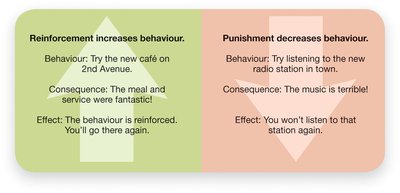
Operant conditioning involves learning through consequences. Reinforcement increases behaviour, while punishment decreases it.
Reinforcement: Increases the likelihood of a behaviour.
Punishment: Decreases the likelihood of a behaviour.
Thorndike’s Puzzle Box and the Law of Effect
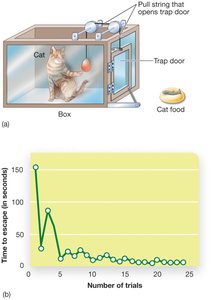
Edward Thorndike’s experiments with cats in puzzle boxes led to the Law of Effect, which states that behaviours followed by satisfying outcomes are more likely to be repeated.
Law of Effect: Behaviours followed by positive outcomes are strengthened.
Learning Curve: Time to escape decreases with repeated trials.
Operant Chamber (Skinner Box)
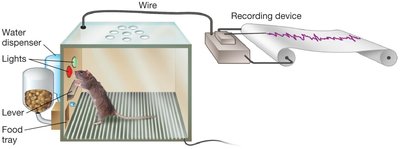
The operant chamber is used to study operant conditioning in animals. It allows precise measurement of responses and reinforcement.
Operant Chamber: Laboratory apparatus for studying operant conditioning.
Reinforcer: Food or water given for desired behaviour.
Types of Reinforcement and Punishment
Reinforcement and punishment can be positive or negative, depending on whether a stimulus is added or removed.
Consequence | Effect on Behaviour | Example |
|---|---|---|
Positive reinforcement | Increases the response | Allowance for making bed |
Negative reinforcement | Increases the response | Umbrella removes rain |
Positive punishment | Decreases the response | Scolding dog for jumping |
Negative punishment | Decreases the response | Taking away TV privileges |
Shaping and Chaining
Shaping involves reinforcing successive steps toward a desired behaviour. Chaining links multiple behaviours together.
Shaping: Step-by-step reinforcement of closer approximations to the target behaviour.
Chaining: Linking sequences of behaviours.
Applied Behaviour Analysis (ABA)
ABA is used to shape desirable behaviours, especially in individuals with developmental conditions.
Applied Behaviour Analysis: Systematic application of operant conditioning principles.
Primary and Secondary Reinforcers
Primary reinforcers satisfy biological needs, while secondary reinforcers are associated with primary reinforcers.
Primary Reinforcer: Food, water.
Secondary Reinforcer: Money, praise.
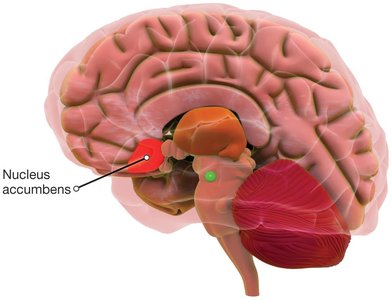
Nucleus Accumbens: Brain’s primary reward centre.
Discrimination, Generalization, Delayed Reinforcement, and Extinction
Both classical and operant conditioning involve discrimination, generalization, and extinction, though the processes differ.
Process | Classical Conditioning | Operant Conditioning |
|---|---|---|
Discrimination | CR does not occur to different CS | No response to similar discriminative stimulus |
Generalization | CR occurs to similar CS | Response to similar discriminative stimulus |
Extinction | CS presented without US | Response ceases if reinforcement stops |
Reinforcement Schedules
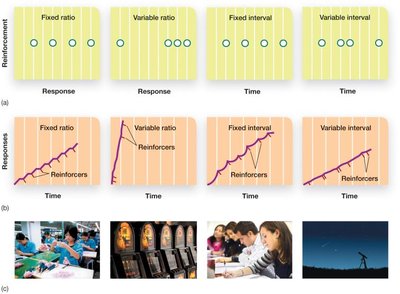
Reinforcement can be continuous or partial. Partial reinforcement includes fixed ratio, variable ratio, fixed interval, and variable interval schedules, each affecting behaviour differently.
Continuous Reinforcement: Every response is reinforced.
Partial Reinforcement: Only some responses are reinforced.
Fixed Ratio: Reinforcement after a set number of responses.
Variable Ratio: Reinforcement after a variable number of responses.
Fixed Interval: Reinforcement after a set time interval.
Variable Interval: Reinforcement after variable time intervals.
Superstition and Reinforcement
Superstitious behaviours can arise when reinforcement is not clearly linked to behaviour, as seen in experiments with pigeons.
Superstition: Behaviour reinforced by chance.
Confirmation Bias: Tendency to seek evidence that supports beliefs.
Effective Punishment
Punishment is most effective when it is proportional, immediate, consistent, and alternatives are provided.
Principle | Description and Explanation |
|---|---|
Severity | Should match the offence |
Initial punishment level | Strong enough to reduce behaviour |
Contiguity | Immediate punishment is more effective |
Consistency | Punishment should be consistent |
Show alternatives | Provide appropriate behaviours for reinforcement |
Cognitive and Observational Learning
Latent Learning
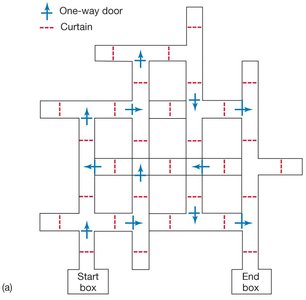
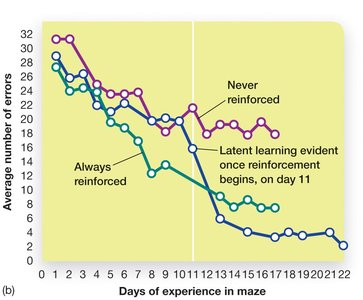
Latent learning occurs without immediate reinforcement, as demonstrated by Tolman and Honzik’s maze experiments with rats. Rats learned spatial details even without reinforcement, showing learning can occur without direct rewards.
Latent Learning: Learning that is not immediately expressed.
Example: Rats learned maze layout without reinforcement, but showed learning when reinforcement was introduced.
Observational Learning
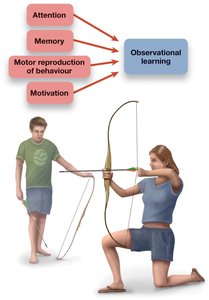
Observational learning involves acquiring new behaviours by watching others. It is essential for learning cultural customs and social behaviours.
Processes Required: Attention, memory, motor reproduction, motivation.
Example: Learning archery by observing another person.
Imitation and Mirror Neurons
Imitation is a key aspect of observational learning. Mirror neurons play a role in the ability to imitate others, and humans tend to over-imitate compared to other species.
Mirror Neurons: Neurons that fire when observing and performing actions.
Imitation: Copying behaviours observed in others.
Teaching Behaviours in Animals
Teaching is not uniquely human; various animal species demonstrate teaching behaviours, such as ants, monkeys, and whales.
Teaching: Facilitating learning in others through demonstration and guidance.
Violence and Video Games
Research shows a consistent link between violent video games and violent behaviour, though correlation does not imply causation. Some studies suggest desensitization to violence.
Desensitization: Reduced emotional response to violence.
Awareness: Importance of understanding media effects.
Media Exposure and Behaviour
Children often imitate behaviours seen in media, as shown in the Bobo doll experiments. However, it is important to critically evaluate research, as correlation does not equal causation.
Bobo Doll Experiment: Children imitated aggressive behaviour observed in adults.
Critical Evaluation: Consider brain activation and other factors.
Relevance: Movie ratings and parental advisory stickers help guide media exposure.
