 뒤로
Classical Theories of Personality: The Behaviourist Approach
스터디 가이드 - 스마트 노트
 자료에 맞춘 맞춤형 노트, 핵심 정의, 예시, 맥락을 확장해 제공합니다.
Personality Psychology: The Behaviourist Approach
Introduction to Behaviourism
The behaviourist approach to personality emphasizes the role of environmental factors and learning in shaping individual patterns of behaviour. This theory, primarily associated with B.F. Skinner, asserts that personality is not innate but is formed through interactions with the environment and the consequences of one's actions.
Key Theorist: B.F. Skinner
Core Idea: Personality consists of learned patterns of behaviour reinforced by environmental consequences.
Tabula Rasa: The concept that individuals are born as a "blank slate" (John Locke), and personality develops through experience.

Behaviour and Conditioning
Behaviourism distinguishes between two main types of behaviour: respondent and operant. Both are shaped by conditioning processes, which are fundamental to understanding how personality traits are acquired and maintained.
Respondent Behaviour: Automatic responses to specific stimuli, often physiological in nature.
Operant Behaviour: Actions that are freely chosen and influenced by their consequences.
Conditioning: The process by which behaviours are learned or modified through association or reinforcement.
Respondent Behaviour and Classical Conditioning
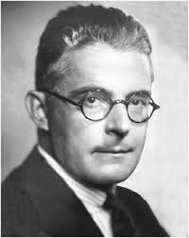
Respondent behaviour is shaped through classical conditioning, a process first described by Ivan Pavlov and later applied to humans by John B. Watson. Classical conditioning involves learning to associate a neutral stimulus with a meaningful one, resulting in a conditioned response.
Examples: Shivering when cold, salivating at the smell of food.
Key Experiments: Pavlov's dogs, Watson's Little Albert experiment.


Operant Behaviour and Operant Conditioning
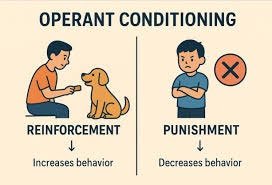
Operant behaviour is determined by the consequences that follow it. Skinner's operant conditioning theory explains how reinforcement and punishment shape behaviour, which in turn forms the basis of personality.
Positive Reinforcement: Increases the likelihood of a behaviour being repeated by providing a rewarding consequence.
Punishment: Decreases the likelihood of a behaviour being repeated by introducing an unpleasant consequence.
Two-way Relationship: Behaviour both influences and is influenced by the environment.
Strengths and Weaknesses of the Behaviourist Approach
The behaviourist approach offers valuable insights into how personality can be shaped and modified through reinforcement. However, it has been criticized for its exclusive focus on observable behaviour and neglect of internal psychological processes.
Strengths:
Provides practical methods for reinforcing desired behaviours (e.g., star charts).
Emphasizes the importance of environmental influences.
Weaknesses:
Ignores internal qualities such as self-control and conscious free will.
Limits understanding of complex human behaviour by focusing only on observable actions.

Summary Table: Classical vs. Operant Conditioning
The following table compares classical and operant conditioning, highlighting their main features and applications in personality development.
Aspect | Classical Conditioning | Operant Conditioning |
|---|---|---|
Key Theorists | Ivan Pavlov, John B. Watson | B.F. Skinner |
Type of Behaviour | Respondent (automatic, physiological) | Operant (voluntary, influenced by consequences) |
Learning Mechanism | Association between stimuli | Reinforcement and punishment |
Example | Salivating at food | Studying to earn good grades |
Key Terms and Definitions
Behaviourism: A psychological approach that emphasizes the study of observable behaviour and the role of environmental factors in shaping behaviour.
Classical Conditioning: Learning through association, where a neutral stimulus becomes associated with a meaningful stimulus.
Operant Conditioning: Learning through consequences, where behaviour is shaped by reinforcement or punishment.
Reinforcement: Any event that increases the likelihood of a behaviour being repeated.
Punishment: Any event that decreases the likelihood of a behaviour being repeated.
Tabula Rasa: The idea that individuals are born without built-in mental content and that all knowledge comes from experience.
Relevant Equations
While behaviourism does not rely heavily on mathematical equations, the basic formula for operant conditioning can be represented as:
Conclusion
The behaviourist approach provides a foundational understanding of how personality is shaped by environmental factors and learning processes. By focusing on observable behaviour and the effects of reinforcement and punishment, behaviourism offers practical strategies for modifying behaviour, though it is limited by its disregard for internal psychological processes.
Additional info: The notes infer the importance of classical and operant conditioning in personality development, referencing key theorists and experiments to provide academic context.
