In step 3 of the citric acid cycle, the enzyme isocitrate dehydrogenase is regulated by NADH. Compare and contrast the regulation of this enzyme with the regulation of phosphofructokinase in glycolysis.
검증된 단계별 안내
1
Identify the role of isocitrate dehydrogenase in the citric acid cycle: It catalyzes the oxidative decarboxylation of isocitrate to alpha-ketoglutarate, producing NADH and CO2.
Understand the regulation of isocitrate dehydrogenase: It is allosterically inhibited by high levels of NADH, which indicates a high-energy state of the cell, thus slowing down the citric acid cycle.
Identify the role of phosphofructokinase (PFK) in glycolysis: It catalyzes the conversion of fructose-6-phosphate to fructose-1,6-bisphosphate, a key regulatory step in glycolysis.
Understand the regulation of phosphofructokinase: It is allosterically inhibited by ATP and citrate, indicating a high-energy state, and activated by AMP, indicating a low-energy state.
Compare and contrast: Both enzymes are regulated by the energy status of the cell, but while isocitrate dehydrogenase is inhibited by NADH, phosphofructokinase is inhibited by ATP and citrate, reflecting their roles in different metabolic pathways.
비슷한 문제에 대한 검증된 영상 답변:
이 영상 해법은 위 문제에 도움이 된다고 튜터들이 추천한 것입니다.
영상 길이:
2m
영상 재생:
0 댓글
주요 개념
질문에 올바르게 답하기 위해 반드시 이해해야 하는 핵심 개념들은 다음과 같습니다.
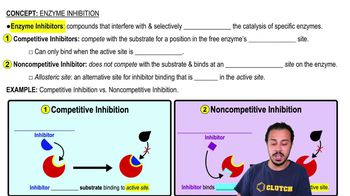
Isocitrate Dehydrogenase Regulation
Isocitrate dehydrogenase is a key enzyme in the citric acid cycle that catalyzes the conversion of isocitrate to alpha-ketoglutarate. Its activity is regulated by NADH, which serves as a negative feedback signal indicating high energy status in the cell. When NADH levels are elevated, it inhibits the enzyme, thereby slowing down the cycle and conserving resources when energy is plentiful.
Phosphofructokinase (PFK) is a crucial regulatory enzyme in glycolysis that converts fructose-6-phosphate to fructose-1,6-bisphosphate. It is primarily regulated by ATP and AMP levels; high ATP concentrations inhibit PFK, signaling sufficient energy, while high AMP levels activate it, indicating low energy. This regulation ensures that glycolysis is activated when energy is needed and inhibited when energy is abundant.
Feedback inhibition is a metabolic control mechanism where the end product of a pathway inhibits an upstream process, preventing overproduction. Both isocitrate dehydrogenase and phosphofructokinase exemplify this concept, as their activities are modulated by the energy status of the cell. This regulatory mechanism helps maintain metabolic balance and efficiency, ensuring that energy production aligns with cellular needs.

 2:33분
2:33분 검증된 단계별 안내
 03:31
03:31