After glucose is fully oxidized by glycolysis, pyruvate processing, and the citric acid cycle, where is most of its energy stored?
검증된 단계별 안내
1
Understand that glucose oxidation involves glycolysis, pyruvate processing, and the citric acid cycle, which are stages of cellular respiration.
Recognize that during these processes, glucose is broken down, and energy is transferred to carrier molecules.
Identify that the main energy carriers involved are NADH and FADH2, which are reduced forms of NAD+ and FAD.
Acknowledge that these carriers store high-energy electrons that were originally part of the glucose molecule.
Conclude that most of the energy from glucose is stored in the form of high-energy electrons within NADH and FADH2, which will be used in the electron transport chain to produce ATP.
비슷한 문제에 대한 검증된 영상 답변:
이 영상 해법은 위 문제에 도움이 된다고 튜터들이 추천한 것입니다.
영상 길이:
1m
영상 재생:
0 댓글
주요 개념
질문에 올바르게 답하기 위해 반드시 이해해야 하는 핵심 개념들은 다음과 같습니다.
Glycolysis
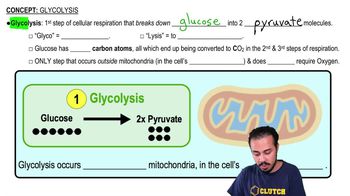
Glycolysis is the metabolic pathway that converts glucose into pyruvate, producing a small amount of ATP and NADH in the process. It occurs in the cytoplasm and is the first step in cellular respiration, setting the stage for further energy extraction from glucose.
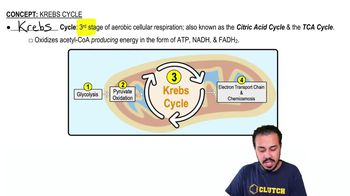
The Citric Acid Cycle, also known as the Krebs cycle, is a series of chemical reactions that occur in the mitochondria. It processes acetyl-CoA derived from pyruvate, generating high-energy electron carriers (NADH and FADH2) and releasing carbon dioxide, which is crucial for energy production.
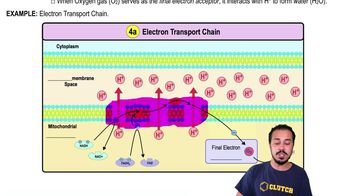
The Electron Transport Chain (ETC) is a series of protein complexes located in the inner mitochondrial membrane. It utilizes the high-energy electrons from NADH and FADH2 to create a proton gradient, ultimately leading to the production of ATP through oxidative phosphorylation, where most of the energy from glucose is stored.

 1:45분
1:45분 검증된 단계별 안내
 05:04
05:04