 뒤로
뒤로Anatomy & Physiology II Exam Study Guide – Endocrine System & Hematology
스터디 가이드 - 스마트 노트
 자료에 맞춘 맞춤형 노트, 핵심 정의, 예시, 맥락을 확장해 제공합니다.
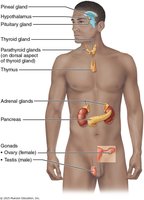
Q1. Study the diagram of the endocrine glands in the human body.
Background
Topic: Endocrine System Anatomy
This question is testing your ability to identify the major endocrine glands in the human body and understand their locations.
Key Terms:
Endocrine glands: Organs that secrete hormones directly into the bloodstream.
Hormones: Chemical messengers that regulate physiological processes.
Step-by-Step Guidance
Examine the diagram and locate each labeled gland (e.g., pineal, pituitary, thyroid, adrenal, pancreas, gonads).
Review the anatomical position of each gland and consider their physiological roles.
Think about which hormones are secreted by each gland (e.g., insulin from pancreas, testosterone from testes).
Make a list of the glands and their associated hormones for study.
Try solving on your own before revealing the answer!
Final Answer:
The diagram shows the following endocrine glands: pineal gland, hypothalamus, pituitary gland, thyroid gland, parathyroid glands, thymus, adrenal glands, pancreas, and gonads (ovaries/testes). Each gland secretes specific hormones, such as melatonin (pineal), growth hormone (pituitary), thyroxine (thyroid), insulin (pancreas), and sex hormones (gonads).
Q2. What are the hormones that each of the endocrine glands secrete?
Background
Topic: Endocrine System Function
This question is testing your knowledge of the hormones produced by each endocrine gland and their functions.
Key Terms:
Hormones: Chemical messengers produced by glands.
Endocrine glands: Organs that secrete hormones.
Step-by-Step Guidance
List each endocrine gland (e.g., pituitary, thyroid, adrenal, pancreas, gonads).
Recall or research the main hormones secreted by each gland (e.g., pituitary: growth hormone, thyroid: thyroxine).
Consider the physiological effects of each hormone (e.g., insulin lowers blood glucose).
Organize your list by gland and hormone for easy review.
Try solving on your own before revealing the answer!
Final Answer:
Each endocrine gland secretes specific hormones: Pituitary (growth hormone, ACTH, TSH), Thyroid (thyroxine, calcitonin), Parathyroid (parathyroid hormone), Adrenal (cortisol, aldosterone, adrenaline), Pancreas (insulin, glucagon), Gonads (testosterone, estrogen, progesterone), Pineal (melatonin), Thymus (thymosin).
Q3. What are the differences between autocrine and paracrine signaling, and how does it differ from endocrine signaling?
Background
Topic: Cell Signaling Mechanisms
This question is testing your understanding of the different ways cells communicate using chemical signals.
Key Terms:
Autocrine signaling: Cells release signals that affect themselves.
Paracrine signaling: Cells release signals that affect nearby cells.
Endocrine signaling: Glands release hormones into the bloodstream to affect distant cells.
Step-by-Step Guidance
Define autocrine, paracrine, and endocrine signaling.
Compare the distance over which each type of signaling acts (local vs. distant).
Consider examples of each type (e.g., immune cells for autocrine/paracrine, hormones for endocrine).
Think about how the method of delivery (direct, local diffusion, bloodstream) affects the response.
Try solving on your own before revealing the answer!
Final Answer:
Autocrine signaling affects the same cell that releases the signal; paracrine signaling affects nearby cells; endocrine signaling involves hormones traveling through the bloodstream to distant target cells. Endocrine signaling is systemic, while autocrine and paracrine are local.
Q4. What are the two types of hormones based on their composition?
Background
Topic: Hormone Classification
This question is testing your knowledge of hormone structure and how it affects their function.
Key Terms:
Amino acid-based hormones: Derived from proteins or peptides.
Steroid hormones: Derived from cholesterol.
Step-by-Step Guidance
Identify the two main categories: amino acid-based and steroid-based hormones.
Recall examples of each type (e.g., insulin is amino acid-based, cortisol is steroid-based).
Consider how their structure affects solubility and mechanism of action.
Think about which glands produce each type.
Try solving on your own before revealing the answer!
Final Answer:
The two types of hormones are amino acid-based (proteins, peptides, amines) and steroid-based (derived from cholesterol). Amino acid-based hormones are water-soluble, while steroid hormones are lipid-soluble.
Q5. What are eicosanoids? Give examples of them.
Background
Topic: Hormone Types – Eicosanoids
This question is testing your understanding of a specific class of signaling molecules derived from fatty acids.
Key Terms:
Eicosanoids: Signaling molecules derived from arachidonic acid.
Examples: Prostaglandins, leukotrienes, thromboxanes.
Step-by-Step Guidance
Define eicosanoids and their origin (arachidonic acid).
List common examples (prostaglandins, leukotrienes).
Consider their roles in inflammation, immunity, and other processes.
Think about how they differ from classic hormones.
Try solving on your own before revealing the answer!
Final Answer:
Eicosanoids are signaling molecules derived from arachidonic acid. Examples include prostaglandins (inflammation), leukotrienes (immune response), and thromboxanes (blood clotting).
Q6. What are the mechanisms by which hormones take effect in the target cell?
Background
Topic: Hormone Action Mechanisms
This question is testing your understanding of how hormones interact with target cells, including water-soluble and lipid-soluble hormone pathways.
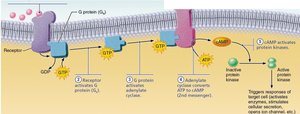
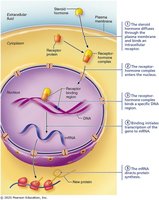
Key Terms and Formulas:
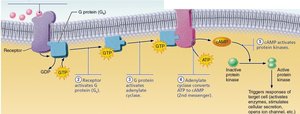
Second messenger system: Used by water-soluble hormones (e.g., cAMP pathway).
Direct gene activation: Used by steroid and thyroid hormones.
Step-by-Step Guidance
Identify whether the hormone is water-soluble or lipid-soluble.
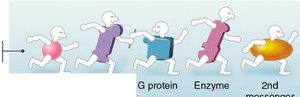
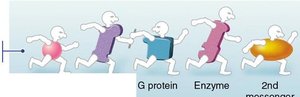
For water-soluble hormones, describe the second messenger pathway (e.g., hormone binds receptor, activates G protein, triggers enzyme, produces second messenger like cAMP).
For lipid-soluble hormones, explain how they diffuse through the cell membrane and bind to intracellular receptors, leading to direct gene activation.
Review the diagrams to visualize each mechanism.
Try solving on your own before revealing the answer!
Final Answer:
Water-soluble hormones use second messenger systems (e.g., cAMP pathway), while steroid and thyroid hormones use direct gene activation by binding to intracellular receptors and affecting DNA transcription.
Q7. How are hormones secreted? What is the hypothalamic-hypophyseal tract and the hypothalamic-hypophyseal portal system?
Background
Topic: Hormone Secretion & Neuroendocrine Pathways
This question is testing your understanding of hormone release mechanisms and the specialized pathways connecting the hypothalamus and pituitary gland.
Key Terms:
Hormone secretion: Release of hormones from glands.
Hypothalamic-hypophyseal tract: Neural pathway connecting hypothalamus to posterior pituitary.
Hypothalamic-hypophyseal portal system: Blood vessel network connecting hypothalamus to anterior pituitary.
Step-by-Step Guidance
Describe how hormones are released (exocytosis, diffusion).
Explain the role of the hypothalamus in controlling pituitary hormone release.
Distinguish between the tract (neural) and portal system (vascular).
Consider examples of hormones released via each pathway.
Try solving on your own before revealing the answer!
Final Answer:
Hormones are secreted by exocytosis or diffusion. The hypothalamic-hypophyseal tract is a neural pathway for posterior pituitary hormones, while the portal system is a vascular pathway for anterior pituitary hormones.
Q8. Study the diagram of hormonal stimulus.
Background
Topic: Hormonal Stimulus Mechanisms
This question is testing your ability to interpret diagrams showing how one hormone stimulates the release of another.
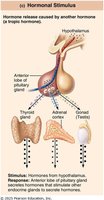
Key Terms:
Hormonal stimulus: Release of hormones triggered by other hormones.
Tropic hormones: Hormones that stimulate other glands.
Step-by-Step Guidance
Examine the diagram and identify the sequence of hormone release.
Note which glands and hormones are involved (e.g., hypothalamus, pituitary, thyroid).
Understand the concept of tropic hormones and their effects.
Think about how feedback mechanisms regulate hormone levels.
Try solving on your own before revealing the answer!
Final Answer:
The diagram shows hormonal stimulus: the hypothalamus releases hormones that stimulate the pituitary, which then releases tropic hormones to stimulate other endocrine glands (e.g., thyroid, adrenal, gonads).
Q9. Study hormone mechanisms and their interaction with each other (permissiveness, synergism, antagonism; particularly for insulin and glucagon, calcitonin and parathyroid hormone).
Background
Topic: Hormone Interactions
This question is testing your understanding of how hormones can influence each other's effects in the body.
Key Terms:
Permissiveness: One hormone enables another to act.
Synergism: Hormones work together for a greater effect.
Antagonism: Hormones have opposing effects.
Step-by-Step Guidance
Define each interaction type (permissiveness, synergism, antagonism).
Consider examples: insulin vs. glucagon (antagonism), calcitonin vs. parathyroid hormone (antagonism).
Think about how these interactions regulate physiological processes (e.g., blood glucose, calcium levels).
Review how feedback mechanisms maintain homeostasis.
Try solving on your own before revealing the answer!
Final Answer:
Permissiveness: one hormone enables another to act (e.g., thyroid hormone for reproductive hormones). Synergism: hormones work together (e.g., glucagon and epinephrine). Antagonism: hormones oppose each other (e.g., insulin lowers blood glucose, glucagon raises it; calcitonin lowers calcium, parathyroid hormone raises it).
Q10. Study the components of blood.
Background
Topic: Blood Composition
This question is testing your knowledge of the different components that make up blood.
Key Terms:
Plasma: Liquid portion of blood.
Formed elements: Cells and cell fragments (erythrocytes, leukocytes, platelets).
Step-by-Step Guidance
Identify the main components: plasma and formed elements.
List the types of formed elements (red blood cells, white blood cells, platelets).
Consider the functions of each component.
Think about the relative proportions in blood.
Try solving on your own before revealing the answer!
Final Answer:
Blood is composed of plasma (about 55%) and formed elements (erythrocytes, leukocytes, platelets).
Q11. What are the formed elements?
Background
Topic: Blood Cell Types
This question is testing your knowledge of the cellular components of blood.
Key Terms:
Erythrocytes: Red blood cells.
Leukocytes: White blood cells.
Platelets: Cell fragments involved in clotting.
Step-by-Step Guidance
List the three main formed elements: erythrocytes, leukocytes, platelets.
Recall the function of each type.
Think about their appearance and abundance in blood.
Review their origin from hematopoietic stem cells.
Try solving on your own before revealing the answer!
Final Answer:
The formed elements are erythrocytes (red blood cells), leukocytes (white blood cells), and platelets (thrombocytes).
Q12. How do erythrocytes develop/form?
Background
Topic: Erythropoiesis
This question is testing your understanding of the process by which red blood cells are produced.
Key Terms:
Erythropoiesis: Formation of red blood cells.
Hematopoietic stem cells: Cells in bone marrow that give rise to blood cells.
Step-by-Step Guidance
Describe the process starting from hematopoietic stem cells in the bone marrow.
List the stages of development (e.g., proerythroblast, erythroblast, reticulocyte, erythrocyte).
Consider the role of erythropoietin in stimulating production.
Think about how maturation affects cell structure and function.
Try solving on your own before revealing the answer!
Final Answer:
Erythrocytes develop from hematopoietic stem cells in the bone marrow through stages: proerythroblast, erythroblast, reticulocyte, and mature erythrocyte. Erythropoietin stimulates this process.
Q13. What are the function of erythrocytes?
Background
Topic: Red Blood Cell Function
This question is testing your knowledge of the primary roles of red blood cells in the body.
Key Terms:
Hemoglobin: Protein in erythrocytes that binds oxygen.
Gas transport: Movement of oxygen and carbon dioxide.
Step-by-Step Guidance
Recall the main function: oxygen transport.
Consider the role of hemoglobin in binding oxygen and carbon dioxide.
Think about how erythrocytes help maintain pH balance.
Review their lifespan and turnover in the body.
Try solving on your own before revealing the answer!
Final Answer:
Erythrocytes transport oxygen from the lungs to tissues and carbon dioxide from tissues to the lungs, using hemoglobin. They also help buffer blood pH.
Q14. What are leukocytes? Different types of leukocytes?
Background
Topic: White Blood Cells
This question is testing your knowledge of the types and functions of white blood cells.
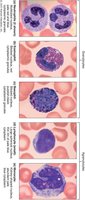
Key Terms:
Leukocytes: White blood cells involved in immunity.
Granulocytes: Neutrophils, eosinophils, basophils.
Agranulocytes: Lymphocytes, monocytes.
Step-by-Step Guidance
Define leukocytes and their role in the immune system.
List the five main types: neutrophils, eosinophils, basophils, lymphocytes, monocytes.
Distinguish between granulocytes and agranulocytes.
Review the functions of each type (e.g., neutrophils fight bacteria, lymphocytes produce antibodies).
Try solving on your own before revealing the answer!
Final Answer:
Leukocytes are white blood cells. Types include neutrophils, eosinophils, basophils (granulocytes), and lymphocytes, monocytes (agranulocytes). Each type has a specific immune function.
Q15. How does blood typing work? Importance of blood typing.
Background
Topic: Blood Typing
This question is testing your understanding of blood group antigens and their clinical significance.
Key Terms:
Blood typing: Determining blood group based on antigens.
ABO system: Main blood group classification.
Antibodies: Proteins that react with foreign antigens.
Step-by-Step Guidance
Describe the ABO and Rh blood group systems.
Explain how antigens and antibodies determine compatibility.
Consider the importance of matching blood types for transfusions.
Think about the consequences of mismatched transfusions.
Try solving on your own before revealing the answer!
Final Answer:
Blood typing identifies antigens (A, B, Rh) on red blood cells. It is important for safe transfusions; mismatched blood can cause immune reactions.
Q16. What is Rh factor? What is the hemolytic disease of the newborn?
Background
Topic: Rh Factor & Hemolytic Disease
This question is testing your understanding of the Rh antigen and its clinical implications, especially in pregnancy.
Key Terms:
Rh factor: Antigen on red blood cells.
Hemolytic disease of the newborn: Condition caused by Rh incompatibility.
Step-by-Step Guidance
Define Rh factor and its role in blood typing.
Explain how Rh incompatibility can occur between mother and fetus.
Describe the mechanism of hemolytic disease of the newborn.
Consider prevention strategies (e.g., Rh immunoglobulin).
Try solving on your own before revealing the answer!
Final Answer:
Rh factor is an antigen on red blood cells. Hemolytic disease of the newborn occurs when an Rh-negative mother has an Rh-positive baby, leading to antibody-mediated destruction of fetal red blood cells.
