 뒤로
뒤로Anatomy & Physiology Study Guide: Structure, Function, and Cellular Organization
스터디 가이드 - 스마트 노트
 자료에 맞춘 맞춤형 노트, 핵심 정의, 예시, 맥락을 확장해 제공합니다.
Introduction to Anatomy & Physiology
Definition and Scope
Anatomy and physiology are foundational sciences for understanding the human body.
Anatomy: The study of structure and organization of living organisms.
Physiology: The study of how the body functions, including chemical and physical processes.
Approaches include teleological (purpose-driven), mechanistic (process-driven), and the concept of emergent properties (complexity arising from interactions).
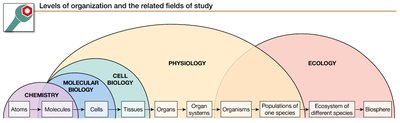
Core Concepts of Physiology
Structure and Function: Closely related; molecular interactions and compartmentation are key.
Energy: Essential for life processes.
Gradients and Flow: Concentration, pressure, and electrical gradients drive physiological processes.
Communication: Coordinates body functions.
Homeostasis: Maintains internal stability.
Tissues & Histology
Formation and Types of Tissues
Tissues are groups of cells assembled by cell junctions and extracellular matrix (ECM).
Extracellular Matrix (ECM): Synthesized and secreted by cells; includes proteoglycans and insoluble protein fibers (collagen, fibronectin, laminin).
Cell Junctions: Hold cells together; include cell adhesion molecules (CAMs) such as cadherins, integrins, immunoglobulin superfamily, and selectins.
Types of cell junctions: communicating (gap), occluding (tight), and anchoring (adherens, desmosomes, hemidesmosomes, focal adhesions).
Types of Tissue
Epithelial: Covers surfaces, regulates exchange.
Connective: Supports, protects, stores energy.
Muscular: Movement, posture, heat.
Nervous: Detects and responds to environment.
Epithelial Tissue
Structure and Function
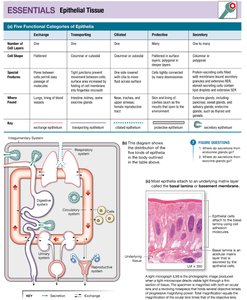
Epithelial tissue protects internal environments and regulates material exchange.
Classified by number of layers (simple, stratified) and cell shape (squamous, cuboidal, columnar).
Functional categories: exchange, transporting, ciliated, protective, secretory.
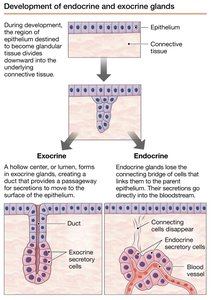
Development of Endocrine and Exocrine Glands
Exocrine glands: Form ducts to secrete substances to the surface.
Endocrine glands: Lose connecting cells, secrete hormones directly into the bloodstream.
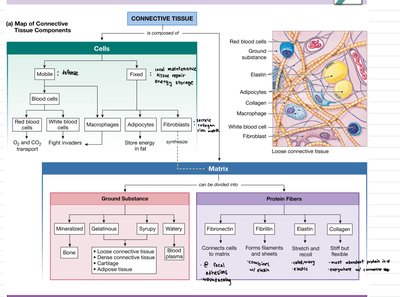
Connective Tissue
Structure and Components
Connective tissue is characterized by abundant ECM and diverse cell types.
Functions: Support, strength, insulation, transport, fat storage.
Composition: Cells (mobile and fixed) and matrix (ground substance and protein fibers).
Organ Systems Overview
Major Organ Systems and Functions
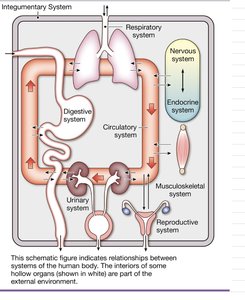
The human body is organized into systems that perform specialized functions.
Integumentary: Protection
Respiratory: Gas exchange
Digestive: Nutrient absorption
Urinary: Waste removal, water balance
Reproductive: Species perpetuation
Musculoskeletal: Support, movement
Circulatory: Material transport
Immune: Defense
Nervous: Coordination via electrical signals
Endocrine: Coordination via regulatory molecules
Homeostasis
Principles and Regulation
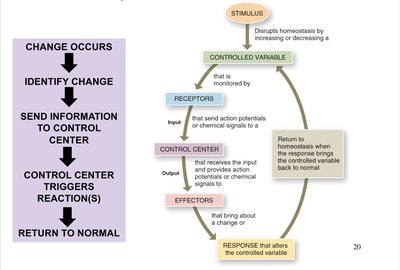
Homeostasis is the maintenance of a stable internal environment.
Factors under control: Temperature, pH, fluids, gases, nutrients, electrolytes, hormones.
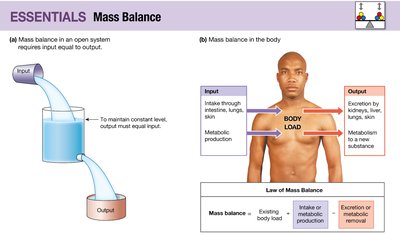
Mass balance: Input must equal output for stability.
Mass flow: Rate of movement of substances.
Feedback Mechanisms
Negative feedback: Reverses changes, stabilizes variables.
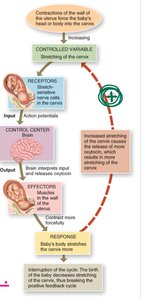
Positive feedback: Reinforces changes, requires external intervention.
Feedforward: Anticipates changes.
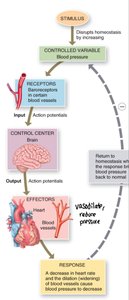
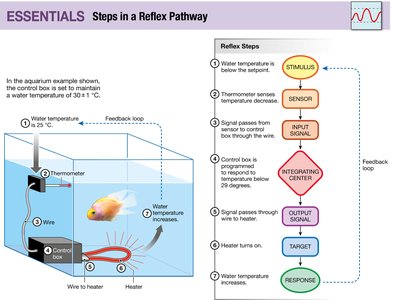
Regulation Pathways
Control systems: Input signal, integrating center, output signal.
Reflex control: Long-distance pathways using nervous/endocrine systems.
Body Compartments
Anatomical and Functional Compartments
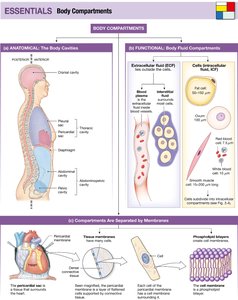
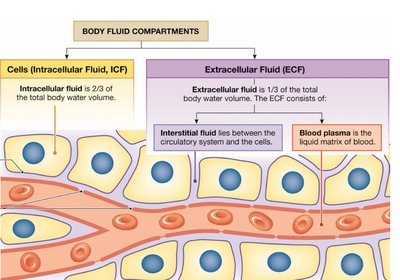
The body is divided into cavities and fluid compartments.
Anatomical compartments: Cranial, thoracic, abdominopelvic cavities.
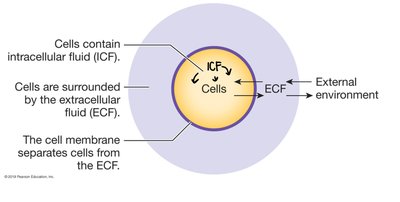
Functional compartments: Intracellular fluid (ICF), extracellular fluid (ECF: interstitial fluid and plasma).
Chemical Disequilibrium
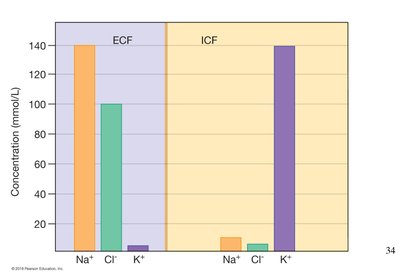
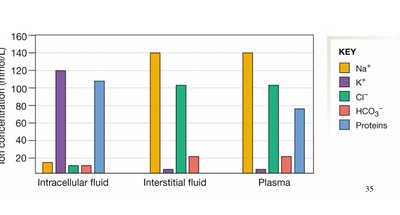
ICF and ECF have distinct ion concentrations.
Cell Chemistry & Cell Components
Cell Membrane Structure and Function
The cell membrane is a phospholipid-protein boundary layer.
Functions: Physical isolation, regulation of exchange, communication, structural support.
Composition: Phospholipids, cholesterol, glycolipids, proteins (integral, peripheral, glycoproteins).
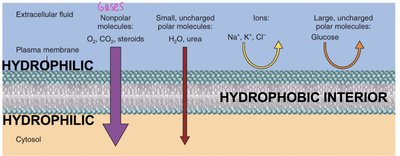
Selective permeability: Nonpolar molecules pass easily; ions and large polar molecules require channels or transporters.
Nervous Tissue and Nervous System
Organization and Cell Types
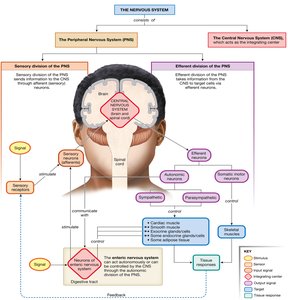
The nervous system is divided into central (CNS) and peripheral (PNS) systems.
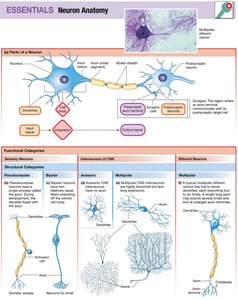
Neurons: Excitable cells transmitting signals.
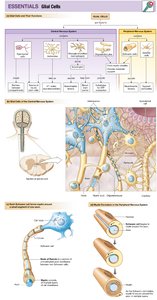
Glial cells: Support and protect neurons; types include oligodendrocytes, microglia, astrocytes, ependymal cells (CNS), Schwann cells, and satellite cells (PNS).
Neuron Anatomy and Functional Categories
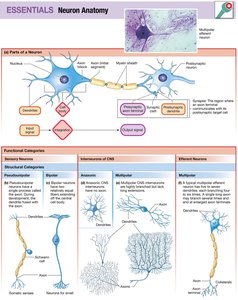
Structural types: Pseudounipolar, bipolar, anaxonic, multipolar.
Functional types: Sensory (afferent), interneurons, motor (efferent).
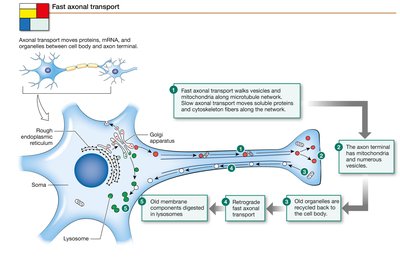
Axonal Transport
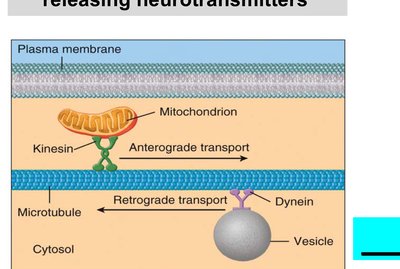
Motor proteins (kinesin, dynein) move cargo along microtubules.
Fast axonal transport moves vesicles and organelles; slow transport moves soluble proteins.
Resting Membrane Potential
Cellular Properties and Ion Gradients
Conductors (cytosol, ECF) allow ion flow; insulators (membrane) create charge separation.
Resting membrane potential is established by ion gradients and selective permeability.
Key ions: Na+, K+, Cl-.
Na+/K+ ATPase
Maintains concentration gradients by pumping 3 Na+ out and 2 K+ in per ATP hydrolyzed.
Electrical Excitability of Neurons
Graded and Action Potentials
Graded potentials: Local, variable amplitude, decremental.
Action potentials: Long-distance, all-or-none, propagate without loss of strength.
Action Potential Steps
Resting state: VG Na+ channels resting, VG K+ closed.
Depolarization to threshold opens VG Na+ channels (fast), VG K+ (slow).
Na+ influx, then K+ efflux restores resting potential.
Refractory Periods
Absolute refractory: No new action potential possible.
Relative refractory: Action potential possible with stronger stimulus.
Summary Table: Functional Categories of Epithelia
Category | Cell Layers | Cell Shape | Special Features | Where |
|---|---|---|---|---|
Exchange | One | Flattened | Pores for easy passage | Lungs, blood vessels |
Transporting | One | Columnar/Cuboidal | Tight junctions, folding increases SA | Intestine, kidney |
Ciliated | One | Columnar/Cuboidal | Cilia move fluid | Nose, trachea, airways |
Protective | Many | Flattened/polygonal | Desmosomes, stacked layers | Skin, cavities |
Secretory | One-Many | Columnar/polygonal | Granules, RER/SER | Glands |
Summary Table: Connective Tissue Types
Type | Ground Substance | Fibers | Cells | Where |
|---|---|---|---|---|
Loose | Gel | Collagen, elastic, reticular | Fibroblasts | Skin, vessels, organs |
Dense irregular | Fibers > ground | Collagen | Fibroblasts | Muscle, nerve sheaths |
Dense regular | Fibers > ground | Collagen | Fibroblasts | Tendons, ligaments |
Adipose | Very little | None | Adipocytes | Varies |
Cartilage | Firm, flexible | Collagen | Chondroblasts | Joints, spine, ear |
Bone | Rigid, Ca salts | Collagen | Osteoblasts, osteocytes | Skeleton |
Blood | Aqueous | None | Blood cells | Blood, lymph |
Summary Table: Glial Cell Types
Type | Location | Function |
|---|---|---|
Oligodendrocytes | CNS | Myelinate multiple neurons |
Microglia | CNS | Phagocytosis, immune |
Astrocytes | CNS | Maintain BBB, homeostasis |
Ependymal | CNS | Produce CSF, line ventricles |
Schwann | PNS | Myelinate one neuron |
Satellite | PNS | Supportive capsules |
