 뒤로
뒤로Cryder Chapter 2 practice
스터디 가이드 - 스마트 노트
 자료에 맞춘 맞춤형 노트, 핵심 정의, 예시, 맥락을 확장해 제공합니다.
Biochemistry: The Chemical Basis of Life
I. Matter and Its Organization
Matter is anything that occupies space and has mass. Understanding the chemical nature of matter is essential for studying anatomy and physiology, as all living structures are composed of matter.
Elements: Unique substances that cannot be broken down into simpler substances by chemical reactions. There are 106 known elements, but only a subset is essential for life (e.g., C, H, O, N, P, K, Na, Ca, S, Mg, Fe, Cl).
Atoms: The smallest units of elements, consisting of protons, neutrons, and electrons.
Compounds: Substances formed by the chemical union of two or more elements in fixed proportions. Examples include molecules (e.g., H2O, O2, CO2) and ionic compounds (e.g., NaCl, HCl).
Mixtures: Physical combinations of two or more compounds, such as solutions, colloids, and suspensions.
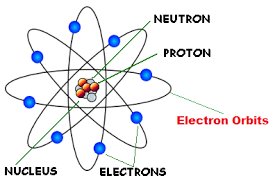
II. Atomic Structure
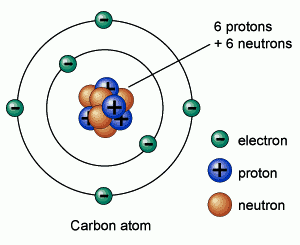
Atoms are composed of a central nucleus containing protons and neutrons, surrounded by electrons in orbitals. The arrangement of these subatomic particles determines the chemical properties of each element.
Nucleus: Contains protons (positively charged, mass = 1) and neutrons (no charge, mass = 1).
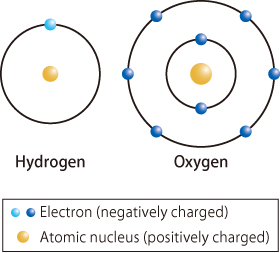
Electrons: Negatively charged particles with negligible mass, found in orbitals around the nucleus. The number of electrons equals the number of protons in a neutral atom.
Atomic Number: The number of protons in an atom (e.g., H = 1, C = 6, O = 8).
Mass Number: The sum of protons and neutrons in an atom (e.g., C = 12, O = 16).
III. Chemical Bonds
Chemical bonds are forces that hold atoms together in compounds. The type of bond formed depends on how electrons are distributed between atoms.
A. Electron Shells and the Octet Rule
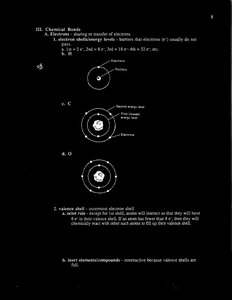
Electrons occupy energy levels (shells) around the nucleus: 1st shell holds 2 electrons, 2nd holds 8, 3rd holds 18, etc.
The valence shell is the outermost shell. Atoms tend to react to achieve a full valence shell (usually 8 electrons), known as the octet rule.
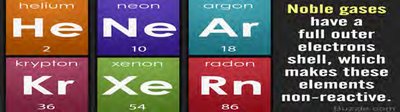
Inert elements (noble gases) have full valence shells and are nonreactive.
B. Ionic Bonds
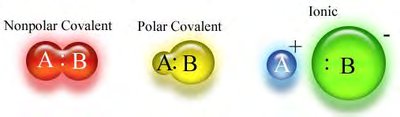
Formed when electrons are transferred from one atom to another, creating ions.
Anions: Negatively charged ions (gain electrons).
Cations: Positively charged ions (lose electrons).
Example: NaCl (sodium chloride) forms when sodium donates an electron to chlorine.
C. Covalent Bonds
Formed when two or more atoms share electrons.
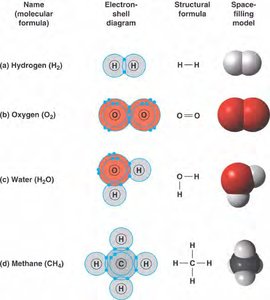
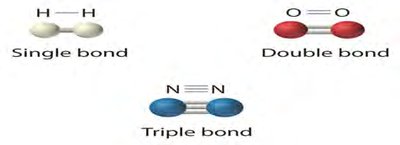
Single covalent bond: Sharing one pair of electrons (e.g., H2).
Double covalent bond: Sharing two pairs of electrons (e.g., O2).
Nonpolar covalent bond: Equal sharing of electrons (e.g., H2).
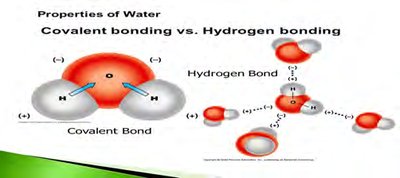
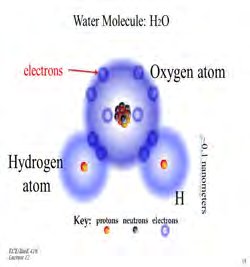
Polar covalent bond: Unequal sharing of electrons, resulting in partial charges (e.g., H2O).
D. Hydrogen Bonds
Weak attractions between a hydrogen atom in a polar covalent bond and another electronegative atom.
Important in maintaining the structure of water, proteins, and DNA.
Example: Surface tension of water due to hydrogen bonding between H2O molecules.
IV. Chemical Reactions
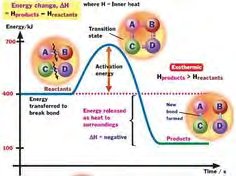
Chemical reactions involve the making or breaking of bonds between atoms, resulting in the formation of new substances.
Chemical Equation: Represents reactants and products (e.g., H2 + O2 → H2O).
Types of Reactions:
Synthesis (Anabolism): A + B → AB (building larger molecules).
Decomposition (Catabolism): AB → A + B (breaking down molecules).
Exchange: AB + CD → AD + CB (rearrangement of components).
Reversibility: Some reactions are reversible and reach equilibrium (A + B ⇌ AB).
Energy Flow:
Exergonic reactions: Release energy (e.g., cellular respiration).
Endergonic reactions: Absorb energy (e.g., synthesis of macromolecules).
Reaction Rates: Influenced by catalysts (e.g., enzymes), temperature, particle size, and concentration.
V. Inorganic Compounds
Inorganic compounds are essential for physiological processes and include water, salts, acids, and bases.
A. Water
Universal solvent due to its polarity.
Participates in chemical reactions (hydrolysis and dehydration synthesis).
Exhibits adhesion (attraction to charged/polar substances) and repulsion (nonpolar substances).
B. Salts
Electrolytes that ionize in water and conduct electrical currents (important for nerve and muscle function).
Examples: Na+, Cl-, K+, Ca2+
C. Acids and Bases
Acids: Release hydrogen ions (H+).
Bases: Release hydroxide ions (OH-).
pH Scale: Measures hydrogen ion concentration; 7 is neutral, below 7 is acidic, above 7 is basic.
Buffers: Resist changes in pH (e.g., blood buffer systems).
VI. Organic Compounds
Organic compounds contain carbon and hydrogen and are fundamental to the structure and function of living organisms.
A. Carbohydrates (C, H, O)
Primary source of energy and structural material.
Monosaccharides: Simple sugars (e.g., glucose, fructose, galactose).
Disaccharides: Two monosaccharides joined (e.g., sucrose, maltose, lactose).
Polysaccharides: Long chains of monosaccharides (e.g., starch, glycogen).
B. Lipids (C, H, O)
Nonpolar molecules used for energy storage and structure.
Neutral fats (triglycerides): Composed of glycerol and three fatty acids.
Saturated fats: No double bonds (solid at room temperature).
Unsaturated fats: One or more double bonds (liquid at room temperature).
Phospholipids: Major component of cell membranes.
C. Proteins (C, H, O, N)
Composed of amino acids linked by peptide bonds.
Serve as enzymes, structural components, and signaling molecules.
Protein structure: primary (sequence), secondary (helices/sheets), tertiary (3D folding), quaternary (multiple polypeptides).
Enzymes: Biological catalysts that lower activation energy and speed up reactions.
D. Nucleic Acids (C, H, O, N, P)
Store and transmit genetic information (DNA and RNA).
Composed of nucleotides (phosphate, sugar, nitrogenous base).
DNA: Double-stranded, contains deoxyribose, bases A, T, C, G.
RNA: Single-stranded, contains ribose, bases A, U, C, G.
ATP: Main energy currency of the cell.
Key Table: Comparison of DNA and RNA
Feature | DNA | RNA |
|---|---|---|
Sugar | Deoxyribose | Ribose |
Bases | A, T, C, G | A, U, C, G |
Strands | Double | Single |
Types | One main type | mRNA, rRNA, tRNA |
