 뒤로
뒤로Cell Structure and Function: Study Notes for Anatomy & Physiology
스터디 가이드 - 스마트 노트
 자료에 맞춘 맞춤형 노트, 핵심 정의, 예시, 맥락을 확장해 제공합니다.
Cell Structure and Function
Introduction to Cytology
Cytology is the study of cells, their structure, and their function. Cells are the fundamental units of life, forming the basis for all physiological processes in plants and animals. Understanding cell structure and function is essential for comprehending how the human body operates at the microscopic level.
Cell Theory: All living organisms are composed of cells; all cells arise from preexisting cells; cells are the smallest units that perform vital physiological functions; each cell maintains homeostasis at the cellular level.
Levels of Organization: Atoms → Molecules → Macromolecules → Organelles → Cells.
Anatomy of the Cell
Plasma Membrane Structure and Function
The plasma membrane, also known as the cell membrane, separates the cytoplasm from the extracellular fluid (ECF). It is essential for maintaining the internal environment of the cell and mediating interactions with the external environment.
Physical Isolation: Acts as a barrier between the cell and its surroundings.
Regulation of Exchange: Controls entry of ions and nutrients and exit of wastes and cellular products.
Sensitivity: Detects changes in the extracellular environment and responds to chemical signals.
Structural Support: Anchors cells and tissues.
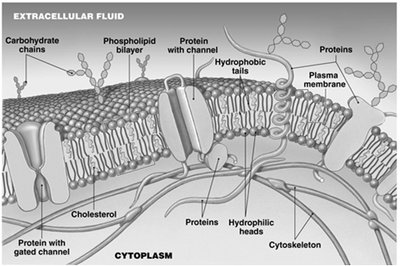
Phospholipid Bilayer: Composed of hydrophilic heads (facing water) and hydrophobic tails (facing inward), forming a selective barrier.
Membrane Proteins: Integral (span the membrane) and peripheral (attached to surfaces); involved in transport, signaling, and structural support.
Membrane Carbohydrates: Glycoproteins and glycolipids form the glycocalyx, important for cell recognition, protection, and adhesion.
Membrane Transport Mechanisms
Passive and Active Transport
Substances move across the plasma membrane by passive or active transport, depending on energy requirements and the nature of the substance.
Passive Transport: Does not require cellular energy (ATP). Includes diffusion, osmosis, facilitated diffusion, and filtration.
Active Transport: Requires energy (ATP) to move substances against their concentration gradients.
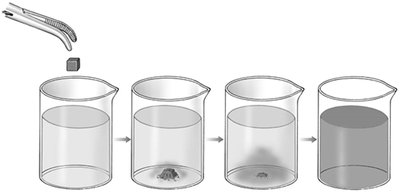
Diffusion
Diffusion is the movement of molecules from an area of higher concentration to an area of lower concentration, driven by the concentration gradient until equilibrium is reached.
Simple Diffusion: Lipid-soluble molecules and gases pass directly through the membrane.
Channel-Mediated Diffusion: Water-soluble compounds and ions move through protein channels.
Osmosis
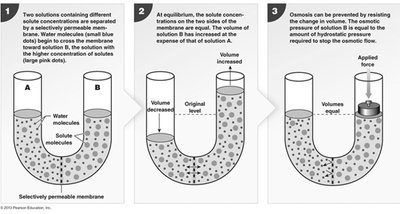
Osmosis is the diffusion of water across a selectively permeable membrane. Water moves toward the side with a higher solute concentration, affecting cell volume and shape.
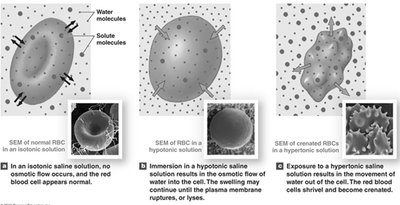
Isotonic Solution: No net movement of water; cell remains unchanged.
Hypotonic Solution: Water enters the cell; cell may swell and burst (lysis).
Hypertonic Solution: Water leaves the cell; cell shrinks (crenation).
Filtration
Filtration is the movement of water and solutes across a membrane due to hydrostatic pressure. It is important in processes such as urine formation in the kidneys.
Carrier-Mediated Transport
Carrier proteins assist in the movement of specific molecules across the membrane. This can be passive (facilitated diffusion) or active (active transport).
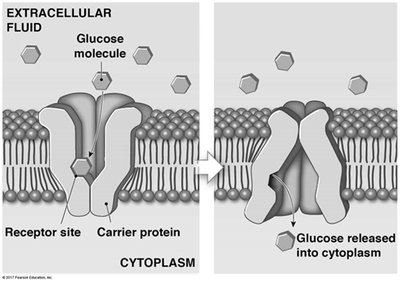
Facilitated Diffusion: Carrier proteins transport large or polar molecules (e.g., glucose) down their concentration gradient without energy input.
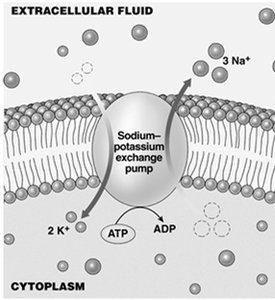
Active Transport: Carrier proteins move substances against their concentration gradient, requiring ATP. The sodium-potassium pump is a key example, moving 3 Na+ out and 2 K+ into the cell per ATP hydrolyzed.
Vesicular Transport: Large materials move via vesicles (endocytosis and exocytosis).
Cytoplasm and Organelles
Cytosol and Organelles
The cytoplasm consists of cytosol (fluid) and organelles (specialized structures performing specific functions).
Cytosol: Contains dissolved nutrients, ions, proteins, and waste products.
Organelles: Divided into membranous (e.g., ER, Golgi apparatus, lysosomes, peroxisomes, mitochondria) and nonmembranous (e.g., cytoskeleton, microvilli, centrioles, cilia, ribosomes, proteasomes).
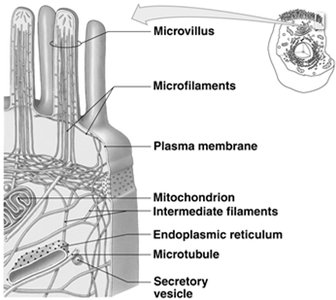
Cytoskeleton: Provides structural support; includes microfilaments, intermediate filaments, and microtubules.
Microvilli: Increase surface area for absorption (important in the small intestine).
Centrioles: Organize spindle fibers during cell division.
Cilia: Move fluids across the cell surface (important in the respiratory tract).
Ribosomes: Sites of protein synthesis; free ribosomes produce proteins for the cell, fixed ribosomes (on ER) produce proteins for secretion.
Proteasomes: Break down damaged proteins for recycling.
Membranous Organelles
Endoplasmic Reticulum (ER): Rough ER synthesizes proteins; smooth ER synthesizes lipids and carbohydrates, detoxifies drugs.
Golgi Apparatus: Modifies, sorts, and packages proteins and lipids for secretion or delivery to other organelles.
Lysosomes: Contain digestive enzymes for breaking down waste and cellular debris; involved in autolysis (self-destruction of damaged cells).
Peroxisomes: Break down fatty acids and produce hydrogen peroxide.
Mitochondria: Site of aerobic metabolism (cellular respiration); produce ATP from glucose and oxygen.
Cellular Respiration Equation:
Steps: Glycolysis (cytosol), TCA/Krebs cycle (mitochondrial matrix), Electron Transport Chain (inner mitochondrial membrane).
Nuclear Structure and Function
Nucleus and Genetic Material
The nucleus is the control center of the cell, containing DNA and the machinery for gene expression and cell division.
Nuclear Envelope: Double membrane surrounding the nucleus.
Nuclear Pores: Allow exchange of materials (e.g., RNA) between nucleus and cytoplasm.
Nucleolus: Site of rRNA synthesis and ribosome assembly.
Chromatin: Loosely coiled DNA (non-dividing cells); Chromosomes: Tightly coiled DNA (dividing cells).
Genetic Code and Protein Synthesis
Gene: Segment of DNA coding for a protein.
Genetic Code: Sequence of DNA bases (A, T, C, G) in triplets; each triplet codes for one amino acid.
Protein Synthesis Steps:
Transcription: DNA → mRNA (in nucleus).
Translation: mRNA → polypeptide (at ribosome in cytoplasm).
Processing: Folding and modification of proteins (in RER and Golgi apparatus).
Cell Life Cycle
Interphase and Mitosis
The cell cycle includes interphase (growth and DNA replication) and mitosis (nuclear division), followed by cytokinesis (cytoplasmic division).
Interphase: G1 (growth), S (DNA replication), G2 (preparation for division).
Mitosis: Prophase, Metaphase, Anaphase, Telophase.
Cytokinesis: Division of cytoplasm, producing two daughter cells.
Tumors and Cancer
Benign Tumor: Encapsulated, noninvasive growth.
Malignant Tumor (Cancer): Invasive, can metastasize (spread to other tissues).
Key Terms and Concepts
Cytology: Study of cells.
Phospholipid Bilayer: Double layer forming the cell membrane.
Ribosome: Organelle for protein synthesis.
Diffusion: Passive movement of molecules from high to low concentration.
Osmosis: Diffusion of water across a membrane.
Hypotonic Solution: Lower solute concentration than the cell; causes cell swelling.
Hypertonic Solution: Higher solute concentration than the cell; causes cell shrinkage.
Crenation: Shrinking of cells in a hypertonic solution.
Microvilli: Extensions increasing surface area for absorption.
Cilia: Hair-like structures moving substances across cell surfaces.
Lysosome: Organelle containing digestive enzymes.
Phagocytosis: Cell "eating" of large particles.
DNA Replication: Copying of DNA before cell division.
Chromosome: Condensed DNA during cell division.
Mitosis: Division of the nucleus.
Cytokinesis: Division of the cytoplasm.
Gene: DNA segment coding for a protein.
Metastasis: Spread of cancer cells.
Tumor: Abnormal cell growth.
Extracellular Fluid (ECF): Fluid outside cells.
Intracellular Fluid (ICF): Fluid inside cells.
Selectively Permeable: Membrane property allowing some substances to pass while restricting others.
