 뒤로
뒤로Cells: The Living Units – Structure and Function
스터디 가이드 - 스마트 노트
 자료에 맞춘 맞춤형 노트, 핵심 정의, 예시, 맥락을 확장해 제공합니다.
Cells: The Living Units
Cell Theory and Generalized Cell Structure
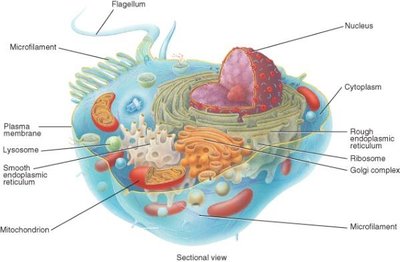
The cell is the fundamental structural and functional unit of life. All living organisms are composed of one or more cells, and new cells arise only from pre-existing cells. Human cells share three main structural regions, each with distinct functions:
Plasma membrane: A selectively permeable barrier that regulates entry and exit of substances.
Cytoplasm: The intracellular fluid containing organelles and inclusions.
Nucleus: The control center of the cell, housing genetic material and directing cellular activities.
Extracellular materials are found outside the cell and include:
Extracellular fluid: Interstitial fluid, blood plasma, and cerebrospinal fluid, which transport nutrients, regulatory substances, and wastes.
Cellular secretions: Digestive and lubricating fluids produced by cells.
Extracellular matrix: A meshwork of proteins and polysaccharides that binds cells together.
Plasma Membrane Structure and Function
The plasma membrane is a dynamic structure composed of a double layer of phospholipids with embedded proteins. Its composition and organization are essential for its function as a selective barrier and communication interface.
Phospholipid bilayer: Hydrophobic tails face inward, hydrophilic heads face outward.
Membrane proteins: Integral proteins span the membrane and function as channels or carriers; peripheral proteins are attached to the membrane surface and act as enzymes or structural supports.
Glycocalyx: A carbohydrate-rich area on the cell surface that serves as a biological marker for cell recognition.
Cell Junctions
Tight junctions: Form impermeable barriers between cells.
Desmosomes: Provide mechanical strength and prevent cell separation.
Gap junctions: Allow direct passage of small molecules and electrical signals between cells.
Passive Membrane Transport
Passive transport involves the movement of substances across the membrane without energy input, driven by concentration gradients.
Simple diffusion: Movement of small or lipid-soluble molecules directly through the membrane.
Facilitated diffusion: Transport of sugars, amino acids, or ions via protein carriers or channels.
Osmosis: Diffusion of water through a selectively permeable membrane.
Tonicity describes the effect of solutions on cell volume:
Isotonic: No net water movement.
Hypertonic: Water moves out, cell shrinks.
Hypotonic: Water moves in, cell swells.
Active Membrane Transport
Active transport requires energy (ATP) to move substances against their concentration gradients.
Primary active transport: Direct use of ATP to power solute pumps.
Secondary active transport: Uses energy stored in ionic gradients.
Vesicular Transport
Endocytosis: Uptake of materials into the cell via vesicles.
Phagocytosis: Engulfment of large particles.
Pinocytosis: Uptake of fluid and dissolved solutes.
Receptor-mediated endocytosis: Specific uptake of molecules.
Exocytosis: Release of substances from the cell.
Membrane Potential
The membrane potential is the voltage difference across the cell membrane, primarily established by selective diffusion of potassium ions (K+). Active transport maintains this potential by preventing equilibrium.
Resting membrane potential: Typically –5 to –100 mV, with the inside of the cell more negative.
Cell Adhesion Molecules and Membrane Receptors
Cell adhesion molecules (CAMs) and membrane receptors facilitate cell interactions and communication.
CAMs: Attach cells to extracellular molecules, guide cell movement, and signal immune cells.
Membrane receptors: Mediate contact and chemical signaling, including G protein-coupled receptors that activate second messenger systems.
The Cytoplasm and Organelles
Cytoplasmic Composition
The cytoplasm consists of cytosol (fluid), organelles (functional structures), and inclusions (stored substances).
Major Organelles and Their Functions
Mitochondria: Produce ATP by breaking down food molecules.
Ribosomes: Sites of protein synthesis; found free in cytosol or attached to rough ER.
Endoplasmic reticulum (ER): Network of membranes; rough ER synthesizes proteins, smooth ER metabolizes lipids and detoxifies.
Golgi apparatus: Modifies, concentrates, and packages proteins and lipids for export or incorporation into membranes.
Lysosomes: Contain digestive enzymes for breaking down particles, worn-out organelles, and glycogen.
Peroxisomes: Detoxify harmful substances using oxidases and catalases.
Cytoskeleton: Network of microtubules, microfilaments, and intermediate filaments supporting cell structure and movement.
Centrosome and centrioles: Organize microtubules and mitotic spindle; centrioles form bases of cilia and flagella.
Cellular Extensions: Cilia, Flagella, and Microvilli
Cilia and flagella are motile extensions formed by centrioles (basal bodies) and microtubules, enabling movement. Microvilli are finger-like projections that increase surface area for absorption.
Cilia: Whip-like extensions for moving substances across cell surfaces.
Flagella: Longer projections for cell locomotion.
Microvilli: Increase surface area, enhancing absorption.
Summary Table: Major Cell Organelles and Functions
Organelle | Structure | Function |
|---|---|---|
Mitochondria | Double membrane, inner folds (cristae) | ATP production |
Ribosomes | Small granules of protein and rRNA | Protein synthesis |
Rough ER | Membranous tubules with ribosomes | Protein synthesis and transport |
Smooth ER | Membranous tubules without ribosomes | Lipid metabolism, detoxification |
Golgi apparatus | Stacked, flattened sacs | Modification, packaging of proteins/lipids |
Lysosomes | Membranous sacs with enzymes | Digestion of particles and organelles |
Peroxisomes | Membranous sacs with oxidases/catalases | Detoxification |
Cytoskeleton | Microtubules, microfilaments, intermediate filaments | Support, movement |
Centrioles | Barrel-shaped, paired structures | Organize spindle, form cilia/flagella |
Additional info: The above content expands on brief points with academic context, definitions, and examples for clarity and completeness.
