 뒤로
뒤로Cells: The Living Units – Structure, Function, and Membrane Transport
스터디 가이드 - 스마트 노트
 자료에 맞춘 맞춤형 노트, 핵심 정의, 예시, 맥락을 확장해 제공합니다.
Cells: The Living Units
Introduction to Cells
Cells are the fundamental structural and functional units of all living organisms. Understanding their structure and function is essential for comprehending how the human body operates at the microscopic level.
Cell Theory: The cell is the smallest unit of life; all living things are composed of cells, and all cells arise from pre-existing cells.
Cell Diversity: The human body contains over 250 different types of cells, varying in size, shape, and function.
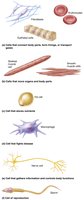
Generalized Cell Structure
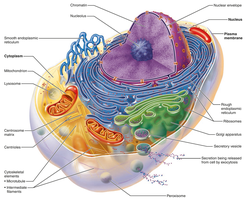
Despite their diversity, all human cells share three basic structural components:
Plasma membrane: The flexible outer boundary that separates the cell from its environment.
Cytoplasm: The intracellular fluid containing organelles.
Nucleus: The control center containing DNA.
Plasma Membrane Structure and Function
Fluid Mosaic Model
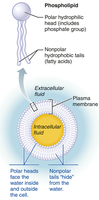
The plasma membrane is a dynamic, selectively permeable barrier composed primarily of a double layer of phospholipids with embedded proteins and cholesterol. This structure allows the membrane to be both flexible and stable.
Phospholipids: Have hydrophilic (water-loving) heads and hydrophobic (water-fearing) tails, forming a bilayer.
Cholesterol: Interspersed among phospholipids, increasing membrane stability.
Proteins: Serve as channels, carriers, receptors, and enzymes.
Membrane Transport Mechanisms
Passive Transport
Passive transport allows substances to move across the plasma membrane without energy input, following their concentration gradients.
Simple Diffusion: Nonpolar and lipid-soluble substances (e.g., O2, CO2) diffuse directly through the lipid bilayer.
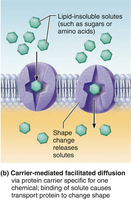
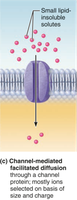
Facilitated Diffusion: Polar or charged molecules (e.g., glucose, ions) move via protein carriers or channels.
Osmosis: The diffusion of water across a selectively permeable membrane.
Active Transport
Active transport requires energy (ATP) to move substances against their concentration gradients. This process is essential for maintaining cellular homeostasis.
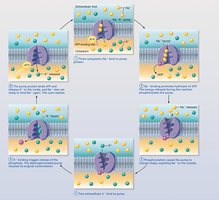
Primary Active Transport: Direct use of ATP to transport molecules (e.g., sodium-potassium pump).
Secondary Active Transport: Uses energy from the movement of another substance down its gradient.
Sodium-Potassium Pump: Maintains electrochemical gradients by pumping 3 Na+ ions out and 2 K+ ions into the cell for each ATP hydrolyzed.
Vesicular Transport
Vesicular transport moves large particles and macromolecules across membranes via vesicles. This process requires energy and includes:
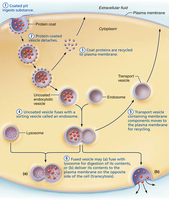
Endocytosis: Transport into the cell (includes phagocytosis, pinocytosis, and receptor-mediated endocytosis).
Exocytosis: Transport out of the cell.
Transcytosis: Movement into, across, and out of the cell.
Types of Endocytosis
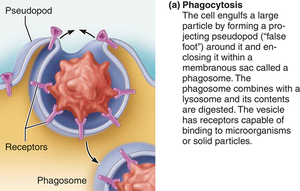
Phagocytosis: "Cell eating"—engulfment of large particles by pseudopods, forming a phagosome.
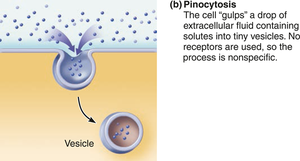
Pinocytosis: "Cell drinking"—ingestion of extracellular fluid and dissolved solutes into small vesicles.
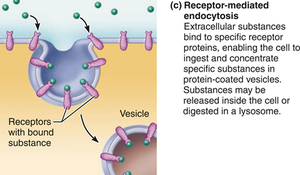
Receptor-Mediated Endocytosis: Specific molecules are ingested after binding to receptors on the cell surface.
Cytoplasm and Organelles
Cytoplasm
The cytoplasm is the cellular material between the plasma membrane and the nucleus, consisting of cytosol (fluid), organelles, and inclusions.
Major Organelles and Their Functions
Mitochondria: Powerhouse of the cell; site of ATP production via aerobic respiration.
Ribosomes: Sites of protein synthesis; composed of rRNA and proteins.
Endoplasmic Reticulum (ER): Rough ER synthesizes proteins; smooth ER synthesizes lipids and detoxifies chemicals.
Golgi Apparatus: Modifies, sorts, and packages proteins and lipids for secretion or delivery to other organelles.
Lysosomes: Contain digestive enzymes for breaking down waste and cellular debris.
Peroxisomes: Detoxify harmful substances and neutralize free radicals.
Cytoskeleton: Provides structural support and facilitates cell movement.
Centrosome and Centrioles: Organize microtubules and are essential for cell division.
Nucleus and Genetic Material
Nucleus
The nucleus is the largest organelle, containing the cell's genetic material (DNA) and controlling cellular activities.
Nuclear Envelope: Double membrane surrounding the nucleus.
Nucleoli: Sites of ribosomal RNA synthesis and ribosome assembly.
Chromatin: DNA-protein complex; condenses to form chromosomes during cell division.
The Cell Cycle and Mitosis
Cell Cycle
The cell cycle is the series of events that cells go through as they grow and divide. It consists of interphase (G1, S, G2 phases) and the mitotic phase (mitosis and cytokinesis).
Interphase: Cell grows, carries out normal functions, and replicates DNA.
Mitosis: Division of the nucleus into two genetically identical daughter nuclei.
Cytokinesis: Division of the cytoplasm, resulting in two separate cells.
Protein Synthesis
Overview
Protein synthesis is a two-step process involving transcription (DNA to mRNA) and translation (mRNA to polypeptide). This process is essential for cell structure and function.
Transcription: DNA information is copied into messenger RNA (mRNA).
Translation: mRNA is decoded by ribosomes to assemble amino acids into a polypeptide chain.
Additional info: For a deeper understanding, students should review the molecular details of DNA replication, the phases of mitosis, and the regulation of the cell cycle, as well as the mechanisms of protein targeting and secretion.
