 뒤로
뒤로Chapter 2: Basic Chemistry – Essentials of Human Anatomy & Physiology
스터디 가이드 - 스마트 노트
 자료에 맞춘 맞춤형 노트, 핵심 정의, 예시, 맥락을 확장해 제공합니다.
Basic Chemistry for Anatomy & Physiology
Matter and Energy
Understanding matter and energy is fundamental to the study of anatomy and physiology, as all biological processes are governed by chemical principles.
Matter: Anything that occupies space and has mass. Exists in three states:
Solid: Definite shape and volume
Liquid: Definite volume, takes shape of container
Gas: Neither definite shape nor volume
Physical Changes: Alter state (solid, liquid, gas) without changing chemical composition.
Chemical Changes: Alter the chemical composition of a substance.
Energy: The ability to do work; exists as kinetic (active) or potential (stored).
Forms of Energy:
Chemical: Stored in bonds (e.g., ATP)
Electrical: Movement of charged particles
Mechanical: Directly moves matter
Radiant: Travels in waves (electromagnetic spectrum)
Composition of Matter
All living things are composed of elements and atoms, which are the basic units of matter.
Elements: Fundamental units of matter; 96% of the human body is made from oxygen, carbon, hydrogen, and nitrogen.
Atoms: Building blocks of elements; each atom is unique to its element.
Atomic Symbol: Chemical shorthand for each element.
Subatomic Particles
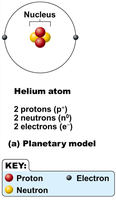
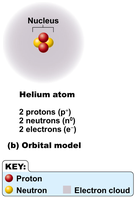
Atoms are composed of three main subatomic particles, which determine their chemical properties.
Protons: Positively charged
Neutrons: Neutral
Electrons: Negatively charged
Atoms are electrically neutral when protons equal electrons.
Ions: Atoms that have lost or gained electrons, resulting in a charge.
Atomic Weights and Isotopes
Isotopes are variants of elements with different numbers of neutrons. Some isotopes are radioactive and are used in medical tracing.
Isotopes: Same number of protons/electrons, different neutrons.
Radioisotopes: Unstable, undergo spontaneous decay (radioactivity).
Molecules and Compounds
Molecules are formed when atoms combine chemically. Compounds are molecules made from different elements.
Molecule: Two or more atoms of the same element combined chemically.
Compound: Two or more atoms of different elements combined chemically.
Chemical Equation: Represents reactants and products.
Chemical Bonds and Reactions
Chemical bonds are formed by interactions among electrons. Chemical reactions involve the making or breaking of these bonds.
Electron Shells: Energy levels where electrons reside.
Valence Shell: Outermost shell; stability achieved with 8 electrons.
Reactive Elements: Atoms with incomplete valence shells; tend to gain, lose, or share electrons.
Types of Chemical Bonds
Ionic Bonds: Electrons are transferred; forms ions (cations and anions).
Covalent Bonds: Electrons are shared; can be single, double, nonpolar (equal sharing), or polar (unequal sharing).
Hydrogen Bonds: Weak bonds; important in water and protein structure.
Patterns of Chemical Reactions
Synthesis: Building larger molecules; energy absorbed.
Decomposition: Breaking down molecules; energy released.
Exchange: Both synthesis and decomposition.
Most reactions are reversible.
Biochemistry: Chemical Composition of Living Matter
Biochemistry distinguishes between inorganic and organic compounds, both essential for life.
Inorganic Compounds: Lack carbon; include water, salts, acids, bases.
Organic Compounds: Contain carbon; include carbohydrates, lipids, proteins, nucleic acids.
Water
Most abundant inorganic compound; vital for heat capacity, solvent properties, chemical reactivity, and cushioning.
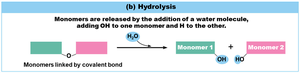
Hydrolysis: Water used to break bonds.
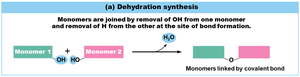
Dehydration Synthesis: Water removed to form bonds.
Salts, Acids, and Bases
Salts: Ionic compounds; dissociate in water; vital for nerve function.
Electrolytes: Ions that conduct electricity.
Acids: Release hydrogen ions; proton donors.
Bases: Release hydroxyl ions; proton acceptors.
pH Scale: Measures hydrogen ion concentration; ranges from 0 (acidic) to 14 (basic), 7 is neutral.
Buffers: Regulate pH changes.
Organic Compounds
Organic compounds are large molecules essential for structure and function in the body.
Carbohydrates
Contain carbon, hydrogen, oxygen; include sugars and starches.
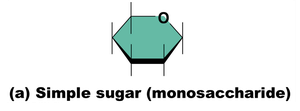
Monosaccharides: Simple sugars; single-ring structures (e.g., glucose).
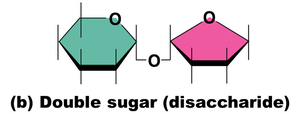
Disaccharides: Two monosaccharides joined by dehydration synthesis (e.g., sucrose).
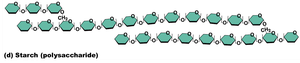
Polysaccharides: Long chains; storage molecules (e.g., starch, glycogen).
Lipids
Include triglycerides, phospholipids, steroids.
Insoluble in water; soluble in other lipids.
Triglycerides: Energy storage; composed of fatty acids and glycerol.
Saturated Fats: Single bonds; solid at room temperature.
Unsaturated Fats: Double bonds; liquid at room temperature.
Trans Fats: Hydrogenated oils; increase heart disease risk.
Omega-3 Fatty Acids: Heart healthy.
Phospholipids: Form cell membranes; hydrophilic head, hydrophobic tails.
Steroids: Include cholesterol, hormones.
Proteins
Account for over half of body’s organic matter; built from amino acids.
Structural Levels:
Primary: Amino acid sequence
Secondary: Twisting/bending (alpha helix, beta sheet)
Tertiary: Globular structure
Quaternary: Multiple polypeptide chains
Fibrous Proteins: Structural (e.g., collagen, keratin)
Globular Proteins: Functional (e.g., enzymes, antibodies)
Enzymes: Biological catalysts; increase reaction rates; names end in -ase.
Nucleic Acids
Form genes; composed of nucleotides (nitrogenous base, pentose sugar, phosphate group).
DNA: Double-stranded helix; contains genetic instructions.
RNA: Single-stranded; carries out DNA instructions; types include mRNA, tRNA, rRNA.
Adenosine Triphosphate (ATP)
Cellular energy molecule; composed of ribose, adenine, and three phosphate groups.
Energy released by breaking phosphate bonds.
ATP is replenished by oxidation of food fuels.
Summary Table: Common Elements in the Human Body
Element | Symbol | Body Mass (%) | Role |
|---|---|---|---|
Oxygen | O | 65 | Cellular respiration, water, organic molecules |
Carbon | C | 18 | Organic molecules, backbone of life |
Hydrogen | H | 10 | Water, organic molecules |
Nitrogen | N | 3 | Proteins, nucleic acids |
Calcium | Ca | 1.5 | Bone, muscle contraction |
Phosphorus | P | 1 | ATP, nucleic acids, bones |
Potassium | K | 0.4 | Nerve function |
Sulfur | S | 0.3 | Proteins |
Sodium | Na | 0.2 | Nerve function |
Chlorine | Cl | 0.2 | Water balance |
Magnesium | Mg | 0.1 | Enzyme function |
Iodine | I | 0.1 | Thyroid hormone |
Iron | Fe | 0.1 | Hemoglobin |
Trace Elements | Various | <0.01 | Enzyme activation |
Additional info: This summary table is inferred from textbook context and typical content for Anatomy & Physiology.
