 뒤로
뒤로Chapter 2: Basic Chemistry – Foundations for Anatomy & Physiology
스터디 가이드 - 스마트 노트
 자료에 맞춘 맞춤형 노트, 핵심 정의, 예시, 맥락을 확장해 제공합니다.
Basic Chemistry for Anatomy & Physiology
Introduction to Matter and Energy
Chemistry is fundamental to understanding the structure and function of the human body. Matter and energy are the two basic concepts that underlie all physiological processes.
Matter: Anything that occupies space and has mass. Exists in three states: solid (definite shape and volume), liquid (definite volume, shape of container), and gas (neither definite shape nor volume).
Physical changes do not alter the basic nature of a substance (e.g., changes in state).
Chemical changes alter the chemical composition of a substance.
Energy: The ability to do work. Exists as kinetic (energy in action) or potential (stored energy).
Forms of energy include chemical, electrical, mechanical, and radiant energy.
ATP (adenosine triphosphate) stores and releases chemical energy for cellular processes.
Composition of Matter: Elements and Atoms
All matter is composed of elements, which are substances that cannot be broken down into simpler substances by ordinary chemical means. The human body is primarily composed of four elements: oxygen, carbon, hydrogen, and nitrogen.
Elements: Fundamental units of matter. Represented by atomic symbols (e.g., O for oxygen).
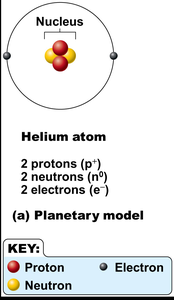
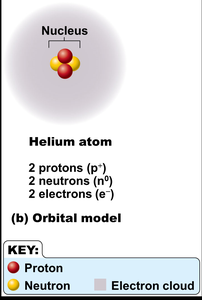
Atoms: The smallest units of elements that retain their properties. Atoms consist of protons (positive charge), neutrons (neutral), and electrons (negative charge).
Particle | Position in Atom | Mass (amu) | Charge |
|---|---|---|---|
Proton (p+) | Nucleus | 1 | + |
Neutron (n0) | Nucleus | 1 | 0 |
Electron (e−) | Orbits nucleus | 1/2000 | − |
Atomic Structure and Isotopes
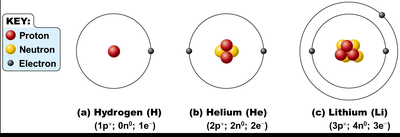
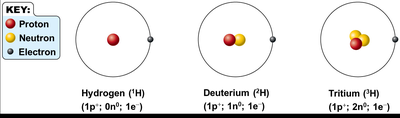
Atoms are identified by their atomic number (number of protons) and atomic mass (sum of protons and neutrons). Isotopes are atoms of the same element with different numbers of neutrons.
Atomic number: Number of protons in the nucleus.
Atomic mass: Number of protons plus neutrons.
Isotopes: Atoms with the same number of protons but different numbers of neutrons.
Radioisotopes: Unstable isotopes that decay, releasing radiation. Used in medical imaging and tracing biological molecules.
Molecules, Compounds, and Chemical Bonds
Atoms combine to form molecules and compounds through chemical bonds. The type of bond formed depends on how electrons are shared or transferred.
Molecule: Two or more atoms of the same element joined chemically (e.g., O2).
Compound: Two or more atoms of different elements joined chemically (e.g., H2O).
Chemical bonds: Energy relationships between electrons of reacting atoms.
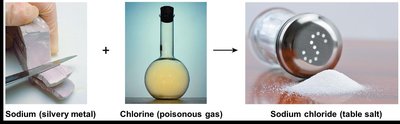
Role of Electrons and Electron Shells
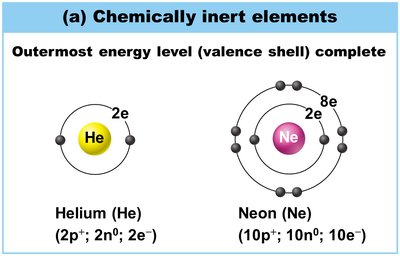
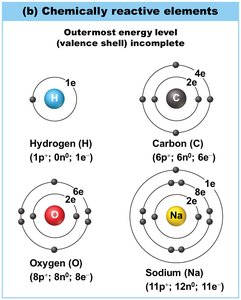
Electrons occupy energy levels (shells) around the nucleus. The outermost shell (valence shell) determines chemical reactivity.
Atoms are stable when their valence shell is full (usually 8 electrons; 2 for the first shell).
Atoms with incomplete valence shells are reactive and tend to form bonds to achieve stability.
Types of Chemical Bonds
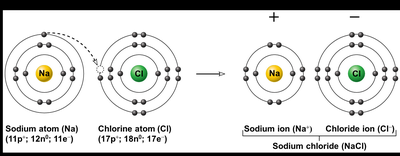
Ionic bonds: Formed when electrons are transferred from one atom to another, creating ions (cations and anions) that attract each other.
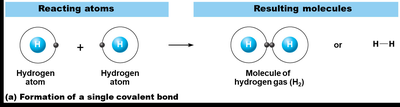
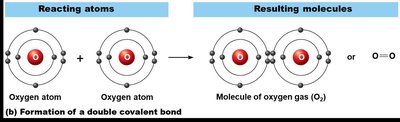
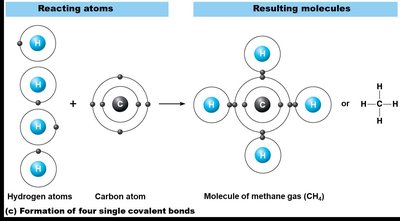
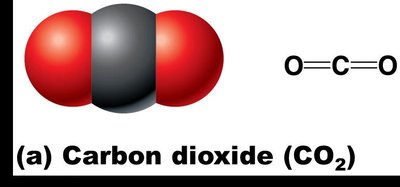
Covalent bonds: Formed when atoms share electrons. Can be single, double, or triple bonds.
Nonpolar covalent bonds: Electrons are shared equally (e.g., O2, CO2).
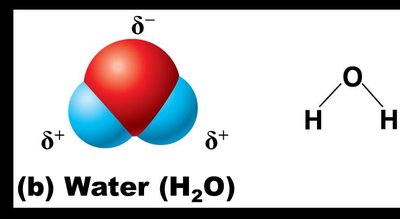
Polar covalent bonds: Electrons are shared unequally, creating partial charges (e.g., H2O).
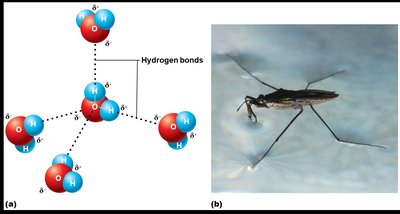
Hydrogen bonds: Weak attractions between a hydrogen atom and an electronegative atom (e.g., O or N). Important in water properties and protein structure.
Patterns of Chemical Reactions
Chemical reactions in the body can be classified into synthesis, decomposition, and exchange reactions. Most reactions are reversible and influenced by factors such as temperature, concentration, particle size, and catalysts.
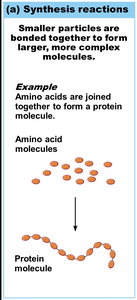
Synthesis reactions: Atoms or molecules combine to form larger molecules. Important for anabolic processes.
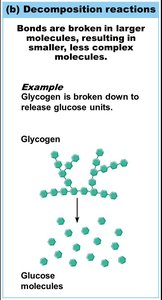
Decomposition reactions: Molecules are broken down into smaller components. Important for catabolic processes.
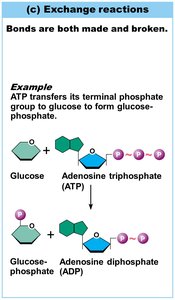
Exchange reactions: Bonds are both made and broken; atoms are exchanged between molecules.
Catalysts: Substances that increase the rate of chemical reactions without being consumed.
Biochemistry: Inorganic and Organic Compounds
Biological molecules are classified as inorganic (generally do not contain carbon) or organic (contain carbon and are typically large, covalently bonded molecules).
Inorganic compounds: Water, salts, acids, and bases.
Organic compounds: Carbohydrates, lipids, proteins, and nucleic acids.
Inorganic Compounds
Water: Most abundant inorganic compound in the body. Functions include high heat capacity, solvent properties, chemical reactivity, and cushioning.
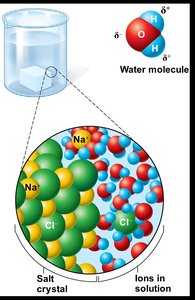
Salts: Ionic compounds that dissociate in water to form electrolytes, essential for nerve impulses and muscle contraction.
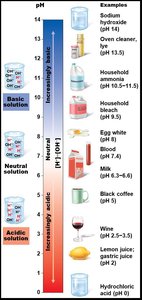
Acids and Bases: Acids release H+ ions (proton donors); bases release OH− ions (proton acceptors). Neutralization reactions form water and a salt.
pH scale: Measures hydrogen ion concentration. Ranges from 0 (acidic) to 14 (basic); 7 is neutral. Buffers help maintain stable pH in body fluids.
Organic Compounds
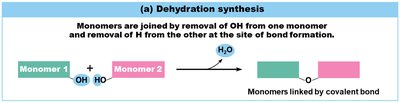
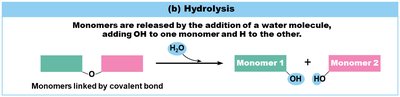
Polymers: Large molecules made of repeating units (monomers). Formed by dehydration synthesis and broken down by hydrolysis.
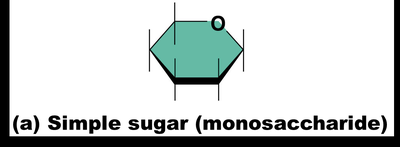
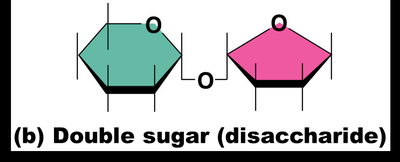
Carbohydrates: Contain C, H, and O. Main energy source. Classified as monosaccharides (simple sugars), disaccharides (double sugars), and polysaccharides (complex carbohydrates).
Lipids: Include triglycerides, phospholipids, and steroids. Insoluble in water, serve as energy storage, cell membrane structure, and hormones.
Proteins: Made of amino acids. Serve as structural materials, enzymes, hormones, and antibodies. Structure ranges from primary to quaternary levels.
Nucleic acids: DNA and RNA. Store and transmit genetic information. Built from nucleotides (nitrogenous base, sugar, phosphate group).
ATP: The primary energy carrier in cells. Energy is released by breaking phosphate bonds.
Summary Table: Major Classes of Biological Molecules
Class | Elements | Monomer | Function |
|---|---|---|---|
Carbohydrates | C, H, O | Monosaccharide | Energy source, structure |
Lipids | C, H, O (less O) | Fatty acids, glycerol | Energy storage, membranes, hormones |
Proteins | C, H, O, N, (S) | Amino acids | Structure, enzymes, signaling |
Nucleic acids | C, H, O, N, P | Nucleotide | Genetic information |
Additional info: This chapter provides foundational chemistry concepts essential for understanding physiological processes, including the structure and function of biomolecules, energy transfer, and the chemical basis of life.
