뒤로
뒤로Chapter 2: Chemistry Comes Alive – Foundations for Anatomy & Physiology
스터디 가이드 - 스마트 노트
 자료에 맞춘 맞춤형 노트, 핵심 정의, 예시, 맥락을 확장해 제공합니다.
2.1 The Importance of Chemistry in Anatomy and Physiology
Introduction to Chemistry in A&P
Chemistry is fundamental to understanding Anatomy & Physiology because all anatomical structures are composed of chemicals, and all physiological processes are based on chemical reactions. Water and electrolytes, which are chemicals, make up all body fluids, and the food and medications we consume are also chemical substances.
Chemistry: Study of the composition, properties, and interactions of matter.
Biochemistry: Branch of chemistry focused on chemical processes within and related to living organisms.
Application: Understanding chemical principles is essential for grasping how the body functions and how diseases affect physiological processes.
2.2 Fundamentals of Chemistry
Matter, Mass, and Weight
Matter is anything that occupies space and has mass. It exists in three states: solids, liquids, and gases. Mass refers to the amount of matter present, while weight is the heaviness due to gravity acting on mass.
Matter: Anything with mass and volume.
Mass: Quantity of matter in an object.
Weight: Force exerted by gravity on mass.
Elements, Atoms, and Compounds
Elements are the simplest forms of matter with unique chemical properties. Atoms are the smallest units of elements that retain their properties. Compounds are chemical combinations of different elements.
Bulk elements: Needed in large amounts (e.g., C, O, H, N, S, P).
Trace elements: Needed in small amounts (e.g., Fe, I).
Ultratrace elements: Needed in minute amounts (e.g., As).
Atomic Structure
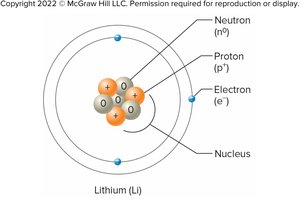
Atoms consist of a central nucleus containing protons (positive charge) and neutrons (no charge), with electrons (negative charge) orbiting the nucleus. The number of protons equals the number of electrons, making atoms electrically neutral.
Proton (p+): Positively charged particle in the nucleus.
Neutron (n0): Neutral particle in the nucleus.
Electron (e-): Negatively charged particle orbiting the nucleus.
Atomic Number and Mass Number
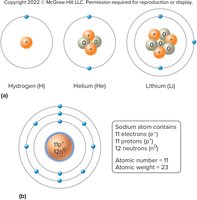
The atomic number is the number of protons in an atom, unique to each element. The mass number is the sum of protons and neutrons in the nucleus. Electrons contribute negligibly to atomic mass.
Isotopes
Isotopes are atoms of the same element with the same number of protons but different numbers of neutrons. Some isotopes are radioactive and can be used in medical diagnostics and treatments.
Radioactive isotopes: Unstable, emit radiation, used in imaging and therapy (e.g., iodine-131 for thyroid treatment).
2.3 Bonding of Atoms
Electron Shells and Chemical Bonds
Electrons occupy shells around the nucleus. The arrangement of electrons, especially in the outermost shell, determines an atom's chemical reactivity. Atoms form chemical bonds to achieve stable electron configurations.
Ionic Bonds
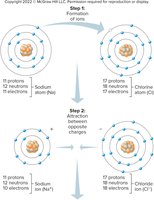
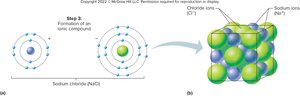
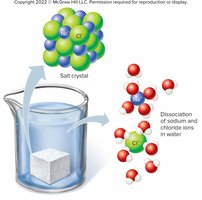
Ionic bonds form when atoms transfer electrons, resulting in charged ions. Cations are positively charged (loss of electrons), and anions are negatively charged (gain of electrons). Oppositely charged ions attract to form ionic compounds.
Example: Sodium (Na) donates an electron to chlorine (Cl), forming Na+ and Cl-, which combine to make NaCl (table salt).
Covalent Bonds
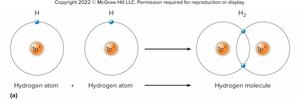
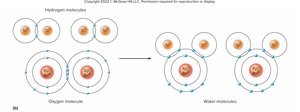
Covalent bonds are formed when atoms share electrons. These bonds are strong and can involve single, double, or triple pairs of shared electrons.
Example: Two hydrogen atoms share electrons to form H2; hydrogen and oxygen share electrons to form H2O (water).
Structural Formulas
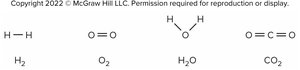
Structural formulas illustrate how atoms are bonded and arranged in molecules. Single lines represent single bonds, double lines represent double bonds.
Nonpolar and Polar Covalent Bonds
Nonpolar covalent bonds involve equal sharing of electrons (e.g., H2, O2). Polar covalent bonds involve unequal sharing, resulting in partial charges (e.g., H2O).
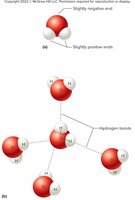
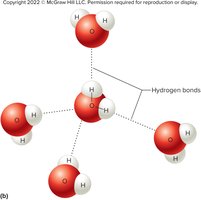
Hydrogen Bonds
Hydrogen bonds are weak attractions between the slightly positive hydrogen of one polar molecule and the slightly negative atom (often O or N) of another. They are crucial for the structure of water, proteins, and nucleic acids.
Chemical Reactions
Chemical reactions involve the making or breaking of bonds between atoms, ions, or molecules. Reactants are the starting substances, and products are the substances formed.
Synthesis: A + B → AB
Decomposition: AB → A + B
Exchange: AB + CD → AD + CB
Reversible: A + B ⇌ AB
2.4 Electrolytes, Acids & Bases, and Salts
Electrolytes
Electrolytes are substances that dissociate into ions in water, enabling the solution to conduct electricity. Acids release hydrogen ions (H+), bases release ions that combine with H+, and salts are formed from acid-base reactions.
pH: Acid and Base Concentrations
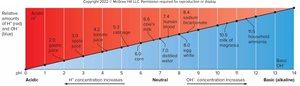
The pH scale measures the concentration of hydrogen ions in a solution, ranging from 0 (most acidic) to 14 (most basic). A pH of 7 is neutral. Each unit represents a tenfold change in H+ concentration.
Acidic: pH < 7
Neutral: pH = 7
Basic (alkaline): pH > 7
Homeostasis and Buffer Systems
The normal blood pH range is 7.35–7.45. Deviations can cause acidosis (pH 7.0–7.3) or alkalosis (pH 7.5–7.8), affecting physiological function. Buffers help maintain pH by binding or releasing H+ ions.
2.5 Chemical Constituents of Cells
Organic vs. Inorganic Molecules
Organic molecules contain both carbon and hydrogen and include carbohydrates, proteins, lipids, and nucleic acids. Inorganic molecules generally lack carbon and hydrogen together and include water, oxygen, carbon dioxide, and salts.
Inorganic Substances
Water: Most abundant compound in the body; solvent for metabolic reactions, transports substances, regulates temperature.
Oxygen (O2): Required for cellular energy production.
Carbon dioxide (CO2): Waste product of metabolism, expelled by the lungs.
Inorganic salts: Provide essential ions for metabolism, nerve and muscle function, and water balance.
Organic Substances: Carbohydrates
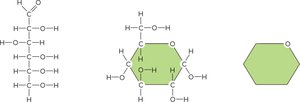
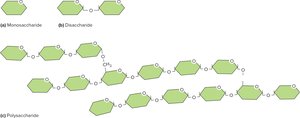
Carbohydrates are the main source of cellular energy and are classified by size:
Monosaccharides: Simple sugars (e.g., glucose, fructose).
Disaccharides: Two monosaccharides joined (e.g., sucrose, lactose).
Polysaccharides: Many monosaccharides linked (e.g., glycogen, starch, cellulose).
Organic Substances: Lipids
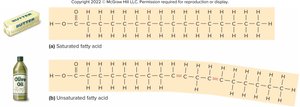
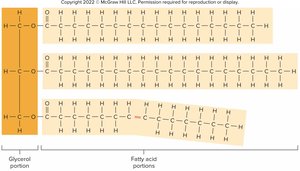
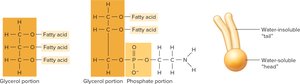
Lipids are insoluble in water and include triglycerides (fats), phospholipids, and steroids. They store energy, form cell membranes, and serve as hormones.
Triglycerides: Glycerol + 3 fatty acids; main energy storage.
Phospholipids: Glycerol + 2 fatty acids + phosphate; main component of cell membranes.
Steroids: Four fused carbon rings; include cholesterol and hormones.
Organic Substances: Proteins
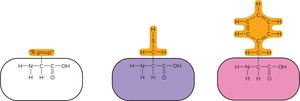
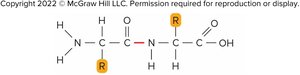
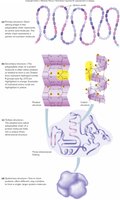
Proteins serve as structural materials, enzymes, hormones, receptors, and antibodies. They are made of amino acids linked by peptide bonds. Protein structure has four levels: primary, secondary, tertiary, and quaternary.
Amino acid: Contains amino group (–NH2), carboxyl group (–COOH), and unique R group.
Peptide bond: Covalent bond between amino acids.
Denaturation: Loss of protein structure and function due to heat, pH, or chemicals.
Organic Substances: Nucleic Acids
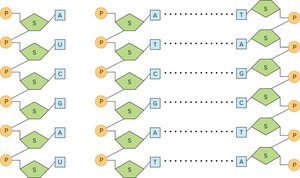
Nucleic acids store genetic information (DNA) and participate in protein synthesis (RNA). They are polymers of nucleotides, each containing a sugar, phosphate, and nitrogenous base.
DNA: Double helix, stores genetic code, contains deoxyribose.
RNA: Single strand, involved in protein synthesis, contains ribose.