 뒤로
뒤로Chapter 2: Chemistry Comes Alive – Foundations for Anatomy & Physiology
스터디 가이드 - 스마트 노트
 자료에 맞춘 맞춤형 노트, 핵심 정의, 예시, 맥락을 확장해 제공합니다.
Part 1: Basic Chemistry
Matter and Its States
Matter is defined as anything that has mass and occupies space. In the context of anatomy and physiology, understanding matter is essential because all living and nonliving things are composed of matter.
Solid: Definite shape and volume (e.g., bones).
Liquid: Changeable shape, definite volume (e.g., blood plasma).
Gas: Changeable shape and volume (e.g., oxygen in the lungs).
Energy and Its Forms
Energy is the capacity to do work or put matter into motion. In biological systems, energy transformations are fundamental to all physiological processes.
Kinetic Energy: Energy in action (e.g., muscle contraction).
Potential Energy: Stored energy (e.g., energy stored in chemical bonds).
Chemical Energy: Stored in bonds of chemical substances (e.g., ATP).
Electrical Energy: Movement of charged particles (e.g., nerve impulses).
Mechanical Energy: Directly involved in moving matter (e.g., movement of limbs).
Radiant/Electromagnetic Energy: Travels in waves (e.g., visible light for vision).
Atoms and Elements
All matter is composed of elements, which are substances that cannot be broken down into simpler substances by ordinary chemical methods. Four elements—carbon, oxygen, hydrogen, and nitrogen—make up 96% of the human body.
Atoms: Smallest particles of an element with properties of that element.
Atomic Symbol: One- or two-letter chemical shorthand (e.g., O for oxygen).
Structure of Atoms
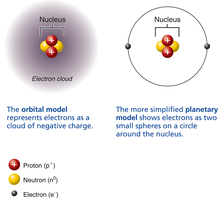
Atoms are composed of three subatomic particles: protons (positive charge), neutrons (no charge), and electrons (negative charge). The arrangement of these particles determines the chemical properties of an element.
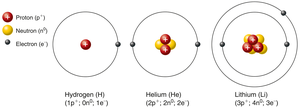
Atomic Structure of the Three Smallest Atoms
Hydrogen, helium, and lithium are the three smallest atoms, each with a unique arrangement of protons, neutrons, and electrons.
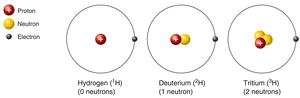
Isotopes and Atomic Weight
Isotopes are structural variations of the same element, differing in the number of neutrons. Atomic weight is the average of mass numbers of all isotope forms of an atom.
Radioisotopes
Radioisotopes are unstable isotopes that decompose to more stable forms, emitting radiation. They are used in medical diagnostics and treatments but can also be harmful to living tissue.
Mixtures vs. Compounds
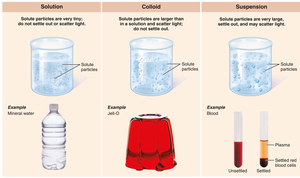
Mixtures are physical combinations of two or more substances, while compounds are chemical combinations. Mixtures can be separated by physical means, whereas compounds require chemical reactions to separate.
Solutions: Homogeneous mixtures (e.g., saline solution).
Colloids: Heterogeneous mixtures with larger particles (e.g., cytosol).
Suspensions: Heterogeneous mixtures with large, often visible solutes (e.g., blood).
Role of Electrons in Chemical Bonding
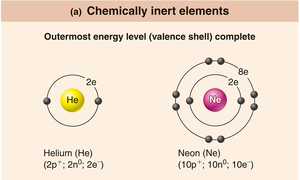
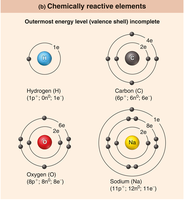
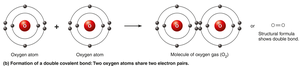
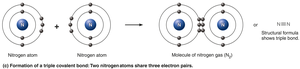
The octet rule states that atoms tend to have eight electrons in their valence shell. Atoms will gain, lose, or share electrons to achieve stability, leading to the formation of chemical bonds.
Chemically Inert and Reactive Elements
Noble gases are chemically inert because their valence shells are full. Most other elements are chemically reactive because their valence shells are incomplete.
Types of Chemical Bonds
There are three major types of chemical bonds:
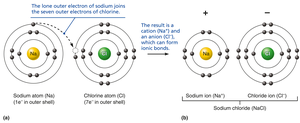
Ionic Bonds: Formed by the transfer of electrons from one atom to another, resulting in ions (e.g., NaCl).
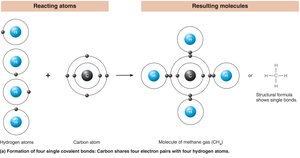
Covalent Bonds: Formed by sharing electrons between atoms (e.g., H2O, O2).
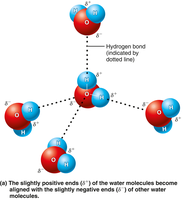
Hydrogen Bonds: Weak attractions between a hydrogen atom and an electronegative atom (e.g., between water molecules).
Part 2: Biochemistry
Inorganic Compounds
Inorganic compounds do not contain carbon (with some exceptions) and include water, salts, acids, and bases. They are essential for physiological processes.
Water: Most abundant inorganic compound in the body; vital for temperature regulation, transport, and protection.
Salts: Ionic compounds that dissociate in water to form electrolytes, which are crucial for nerve and muscle function.
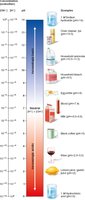
Acids and Bases: Acids release H+ ions, while bases accept H+ ions. The pH scale measures the concentration of hydrogen ions in a solution.
Acid-Base Homeostasis
Maintaining a stable pH is critical for cellular function. The body regulates pH through the kidneys, lungs, and chemical buffers.
Organic Compounds
Organic compounds contain carbon and include carbohydrates, lipids, proteins, and nucleic acids. They are the building blocks of life and are involved in all physiological processes.
Carbohydrates
Carbohydrates are sugars and starches composed of carbon, hydrogen, and oxygen. They are classified as monosaccharides (single sugars), disaccharides (two sugars), and polysaccharides (many sugars).
Lipids
Lipids are hydrophobic molecules that include triglycerides, phospholipids, steroids, and eicosanoids. They function in energy storage, membrane structure, and signaling.
Proteins
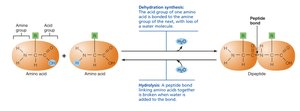
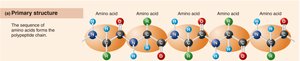
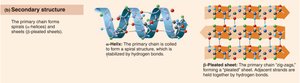
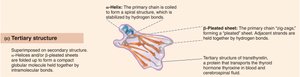
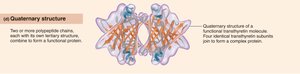
Proteins are polymers of amino acids joined by peptide bonds. They contain carbon, hydrogen, oxygen, nitrogen, and sometimes sulfur and phosphorus. Proteins have four levels of structure: primary, secondary, tertiary, and quaternary.
Fibrous and Globular Proteins
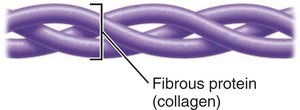
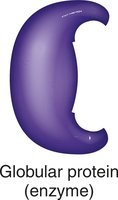
Proteins are classified by shape and function:
Fibrous Proteins: Structural, strandlike, and stable (e.g., collagen, elastin).
Globular Proteins: Functional, compact, and sensitive to environmental changes (e.g., enzymes, antibodies).
Nucleic Acids
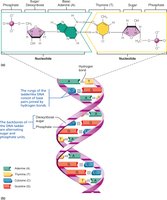
Nucleic acids are the largest molecules in the body, composed of nucleotides (nitrogen base, pentose sugar, phosphate group). Two major classes are DNA and RNA.
DNA: Double-stranded, stores genetic information, located in the nucleus. Bases: adenine, guanine, cytosine, thymine.
RNA: Single-stranded, involved in protein synthesis, contains uracil instead of thymine.
Summary Table: Major Chemical Bond Types
Bond Type | Description | Example |
|---|---|---|
Ionic | Transfer of electrons from one atom to another | NaCl (sodium chloride) |
Covalent | Sharing of electrons between atoms | H2O (water), O2 (oxygen gas) |
Hydrogen | Attraction between a hydrogen atom and an electronegative atom | Between water molecules |
Summary Table: Comparison of DNA and RNA
Feature | DNA | RNA |
|---|---|---|
Strands | Double-stranded | Single-stranded |
Sugar | Deoxyribose | Ribose |
Bases | A, T, C, G | A, U, C, G |
Location | Nucleus | Mostly cytoplasm |
Function | Genetic blueprint | Protein synthesis |
Additional info: This chapter provides foundational chemistry concepts essential for understanding the structure and function of the human body, as covered in Anatomy & Physiology courses.
