 뒤로
뒤로Chapter 2: Chemistry Comes Alive – Study Notes for Anatomy & Physiology
스터디 가이드 - 스마트 노트
 자료에 맞춘 맞춤형 노트, 핵심 정의, 예시, 맥락을 확장해 제공합니다.
Chemistry Comes Alive
Matter and Its States
Matter is anything that occupies space and has mass. In the human body, matter exists in three states: solid, liquid, and gas. Mass is the actual amount of matter in an object, while weight varies with gravity. For example, your mass remains constant whether you are at sea level or on a mountaintop, but your weight is slightly less at higher altitudes due to reduced gravity.
Solid: Bones and teeth
Liquid: Blood, plasma
Gas: Oxygen, carbon dioxide in lungs
Energy: Forms and Properties
Energy is less tangible than matter; it has no mass and does not occupy space. It is defined as the capacity to do work or put matter into motion. Energy is measured by its effect on matter. The greater the work, the more energy is used.
Kinetic Energy: Energy in action (e.g., movement of atoms, muscle contraction)
Potential Energy: Stored energy (e.g., energy in a battery, water behind a dam)
Example: A baseball player hitting a ball uses more energy than one bunting.

Forms of Energy
Chemical: Stored in food, fuel, batteries; released during chemical changes (most important in the body)
Electrical: Movement of charged particles (e.g., nerve impulses)
Mechanical: Directly involved in moving matter (e.g., muscle movement)
Electromagnetic Radiation: Energy traveling in waves (e.g., visible light, X-rays)
Chemical Elements and Atomic Structure
All matter is composed of elements, which cannot be broken down into simpler substances easily. The human body is primarily composed of four elements: carbon, hydrogen, oxygen, and nitrogen. Each element is represented by an atomic symbol, often derived from its English or Latin name.
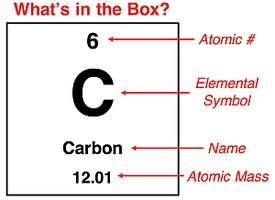
Atomic Number: Number of protons in the nucleus
Mass Number: Total number of protons and neutrons
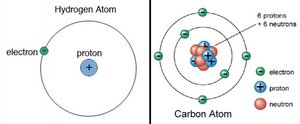
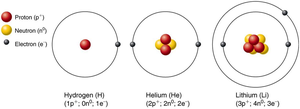
Atomic Structure of Smallest Atoms
Hydrogen: 1 proton, 0 neutrons
Helium: 2 protons, 2 neutrons
Lithium: 3 protons, 4 neutrons
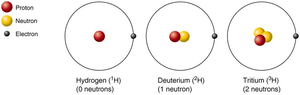
Isotopes and Radioisotopes
Isotopes are variants of the same element with different atomic masses due to varying numbers of neutrons. Radioisotopes are unstable isotopes that decay and release radiation, which is useful in diagnostic imaging, research, and radiation therapy.
Molecules, Compounds, and Mixtures
Atoms combine to form molecules and compounds. A molecule is two or more atoms bonded together, while a compound is a molecule with two or more different kinds of atoms. Most matter exists as mixtures, which are physically intermixed components.
Solutions: Homogeneous mixtures (e.g., blood plasma)
Colloids: Heterogeneous mixtures with larger particles (e.g., cytosol, Jell-O)
Suspensions: Heterogeneous mixtures with large particles that settle out (e.g., blood)
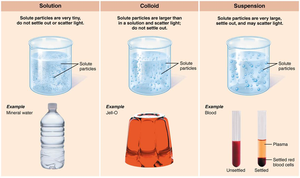
Mixtures vs. Compounds
Property | Mixtures | Compounds |
|---|---|---|
Chemical Bonding | No | Yes |
Separation | Physical means | Chemical bonds must be broken |
Homogeneity | Can be heterogeneous or homogeneous | Always homogeneous |
Bonding of Atoms and the Octet Rule
Electrons occupy electron shells around the nucleus. The outermost shell, called the valence shell, is involved in chemical reactions. Atoms strive for eight electrons in their valence shell (octet rule) by gaining, losing, or sharing electrons.
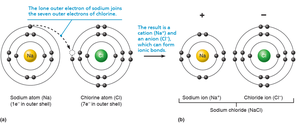
Types of Chemical Bonds
Ionic Bonds: Transfer of electrons, forming charged ions (cations and anions)
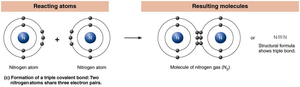
Covalent Bonds: Sharing of electrons; can be single, double, or triple bonds
Hydrogen Bonds: Weak attractions between a hydrogen atom and a negative atom in another molecule
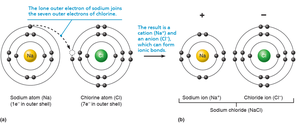
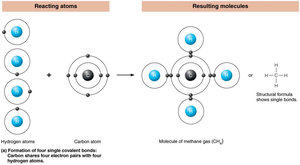
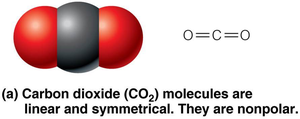
Nonpolar Covalent Bonds
Electrons are shared equally, resulting in balanced molecules with no partial charges. Examples include O2, CH4, and CO2.
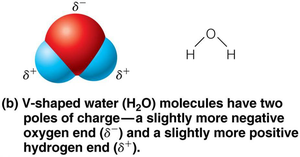
Polar Covalent Bonds
Electrons are shared unequally, creating partial positive and negative charges (dipoles). Water (H2O) is a classic example.
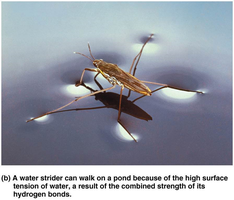
Hydrogen Bonds
Hydrogen bonds are weak individually but strong collectively. They provide stability and are crucial for water properties, DNA structure, and protein folding.
Chemical Reactions
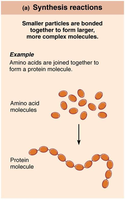
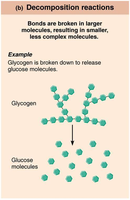
Chemical reactions involve the formation, rearrangement, or breaking of chemical bonds. They are represented by chemical equations, showing reactants and products.
Synthesis (Combination): Building larger molecules from smaller ones (anabolic)
Decomposition: Breaking down molecules into smaller units (catabolic)
Exchange: Both synthesis and decomposition occur; atoms are exchanged
Redox Reactions
Reduction-oxidation (redox) reactions involve electron transfer. Atoms are reduced when they gain electrons and oxidized when they lose electrons. These reactions are central to metabolism, such as cellular respiration:
Energy Flow in Chemical Reactions
Exergonic: Release energy (catabolic, oxidative)
Endergonic: Absorb energy (anabolic)
Rate of Chemical Reactions
Temperature: Higher temperature increases rate
Concentration: Higher concentration increases rate
Particle Size: Smaller particles increase rate
Catalysts: Speed up reactions without being consumed; enzymes are biological catalysts
Biochemistry: Organic and Inorganic Compounds
Inorganic Compounds
Water: Most abundant; high heat capacity, solvent properties, reactivity, cushioning
Salts: Ionic compounds; dissociate into electrolytes (e.g., NaCl, CaCO3, KCl)
Acids: Proton donors; release H+ ions (e.g., HCl, H2CO3)
Bases: Proton acceptors; release OH– ions (e.g., HCO3–, NH3)
pH Scale
Acidic: pH 0–6.99
Neutral: pH 7
Alkaline (Basic): pH 7.01–14
Buffers
Buffers resist changes in pH by releasing or binding H+ ions.
Organic Compounds
Carbohydrates
Monosaccharides: Simple sugars (e.g., glucose, ribose)
Disaccharides: Double sugars (e.g., sucrose, lactose)
Polysaccharides: Many sugars (e.g., starch, glycogen)
Lipids
Triglycerides: Energy storage, insulation, protection
Phospholipids: Cell membrane structure
Steroids: Cholesterol, hormones, vitamin D
Eicosanoids: Prostaglandins, inflammation, blood clotting
Proteins
Amino Acids: Building blocks; joined by peptide bonds
Structural Levels: Primary, secondary (α helix, β sheet), tertiary, quaternary
Fibrous Proteins: Structural (e.g., collagen, keratin)
Globular Proteins: Functional (e.g., enzymes, antibodies)
Enzymes
Enzymes are biological catalysts that lower activation energy and speed up reactions. They are specific to substrates and often require cofactors or coenzymes.
Nucleic Acids
DNA: Genetic blueprint; double helix; base pairing (A-T, G-C)
RNA: Protein synthesis; single-stranded; base pairing (A-U, G-C)
ATP
ATP (adenosine triphosphate) is the cell's energy currency. Energy released from glucose breakdown is stored in ATP, which powers cellular processes.
(loss of phosphate group releases energy)
Example: Terminal phosphate group transfer enables work in cells.
----------------------------------------
