 뒤로
뒤로Chapter 2: Chemistry Comes Alive – Study Notes for Anatomy & Physiology
스터디 가이드 - 스마트 노트
 자료에 맞춘 맞춤형 노트, 핵심 정의, 예시, 맥락을 확장해 제공합니다.
Chapter Overview: Chemistry Comes Alive
Chemical reactions underlie all physiological processes in the human body. Understanding basic chemistry and biochemistry is essential for grasping the structure and function of living systems.
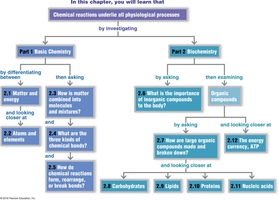
Basic Chemistry
Matter and Energy
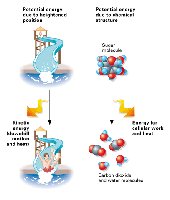
Matter is the physical material that occupies space and has mass. Mass remains constant regardless of gravity. Energy is the capacity to do work or put matter into motion, and it exists in two forms: kinetic (in action) and potential (stored).
States of Matter: Solid (definite shape and volume), Liquid (definite volume, changeable shape), Gas (changeable shape and volume).
Example: Water exists as ice (solid), liquid water, and steam (gas).
Composition of Matter: Atoms and Elements
Atoms are the most basic chemical substances and cannot be broken down by ordinary means. Different types of atoms are called elements, each with unique properties.
Atomic Symbol: One- or two-letter shorthand for each element (e.g., C for carbon, O for oxygen).
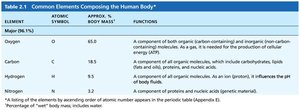
Major Elements of the Human Body: Oxygen, Carbon, Hydrogen, and Nitrogen make up about 96% of body mass.
Atomic Structure
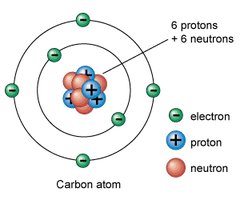
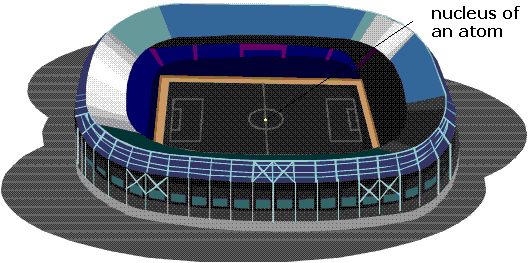
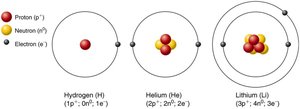
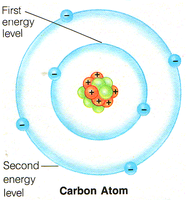
The structure of an atom is determined by its subatomic particles: protons, neutrons, and electrons. The nucleus contains protons (positive charge) and neutrons (no charge), while electrons (negative charge) orbit in energy levels or shells.
Protons: Mass = 1 amu, positive charge.
Neutrons: Mass = 1 amu, no charge.
Electrons: Weightless (0 amu), negative charge, equal in number to protons in a neutral atom.
Isotopes and Radioisotopes
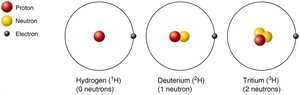
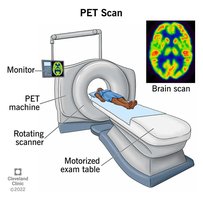
Isotopes are atoms of the same element with different numbers of neutrons. Some isotopes are radioactive (radioisotopes) and emit energy, which is useful in medical diagnostics and therapy.
Mass Number: Number of protons + number of neutrons.
Example: Hydrogen has three isotopes: protium, deuterium, and tritium.
Energy in Biological Systems
Energy is essential for physiological processes. Chemical energy is stored in bonds and released during reactions, such as those involving ATP.
Kinetic Energy: Energy in motion.
Potential Energy: Stored energy.
Chemical Bonds and Reactions
Electron Shells and the Octet Rule
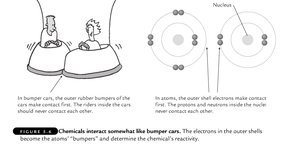
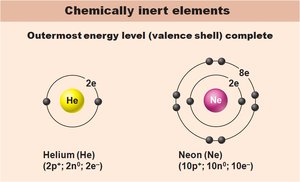
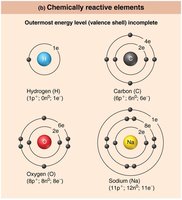
Electrons occupy shells around the nucleus. The valence shell (outermost) determines chemical reactivity. Atoms are most stable with 8 electrons in their valence shell (octet rule).
Valence Electrons: Involved in bonding.
Stable Atoms: Full valence shell; unreactive.
Reactive Atoms: Incomplete valence shell; tend to gain, lose, or share electrons.
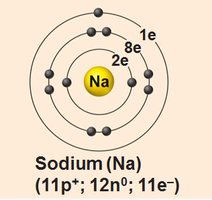
Ionic Bonds
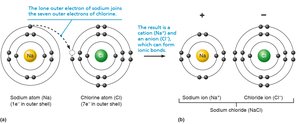
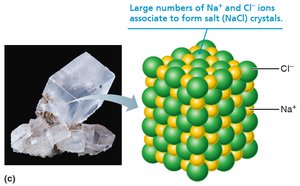
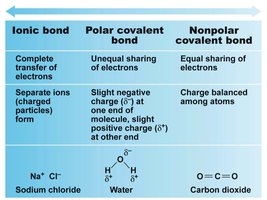
Ionic bonds form when electrons are transferred from one atom to another, resulting in charged ions (cations and anions) that attract each other.
Example: Sodium (Na) gives an electron to chlorine (Cl), forming NaCl (table salt).
Covalent Bonds
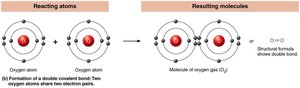
Covalent bonds are formed by sharing electrons between atoms. These bonds are strong and can be single, double, or triple, depending on the number of shared electron pairs.
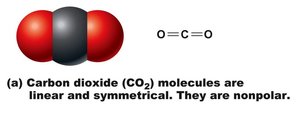
Nonpolar Covalent Bonds: Equal sharing of electrons (e.g., CO2).
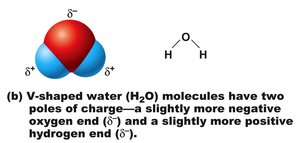
Polar Covalent Bonds: Unequal sharing, resulting in partial charges (e.g., H2O).
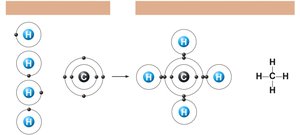
Hydrogen Bonds
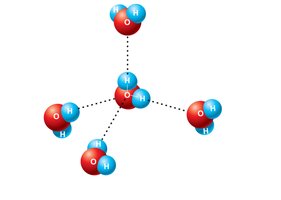
Hydrogen bonds are weak attractions between a hydrogen atom (electropositive) and an electronegative atom (usually O or N) in another molecule. They are crucial for the stability of biological molecules and properties of water.
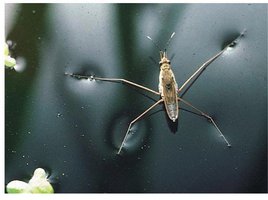
Example: Water molecules form hydrogen bonds, leading to high surface tension.
Summary Table: Types of Chemical Bonds
Bond Type | Electron Behavior | Example |
|---|---|---|
Ionic | Complete transfer | NaCl |
Polar Covalent | Unequal sharing | H2O |
Nonpolar Covalent | Equal sharing | CO2 |
Chemical Reactions
Chemical reactions involve the formation, rearrangement, or breaking of chemical bonds. They are represented by chemical equations, which must balance reactants and products.
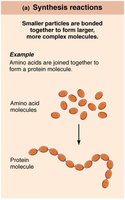
Synthesis (Anabolic): A + B → AB (bond formation)
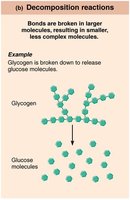
Decomposition (Catabolic): AB → A + B (bond breaking)
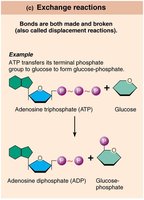
Exchange: AB + C → AC + B (bonds made and broken)
Energy Flow in Chemical Reactions
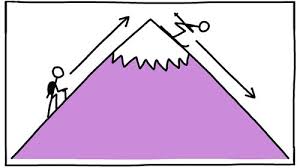
Reactions can be exergonic (release energy) or endergonic (absorb energy). Catabolic reactions are typically exergonic, while anabolic reactions are endergonic.
Mixtures vs. Compounds
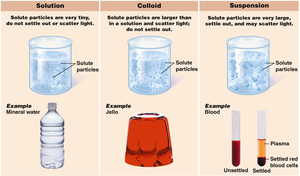
Mixtures are physical combinations of substances without chemical bonding. Compounds are formed by chemical bonds and can only be separated by breaking those bonds.
Types of Mixtures: Solutions (homogeneous), Colloids, Suspensions (heterogeneous).
Biochemistry: Organic and Inorganic Compounds
Inorganic Compounds
Inorganic compounds do not contain carbon-hydrogen bonds. Examples include water, salts, acids, and bases. Water is the most important inorganic compound in living organisms due to its unique properties.
Properties of Water: High heat capacity, high heat of vaporization, reactivity, cushioning, polar solvent properties.
Acids, Bases, and pH
Acids release H+ ions in solution, while bases release OH– ions. The pH scale measures the concentration of H+ ions, ranging from 0 (acidic) to 14 (alkaline).
pH Formula:
Buffers: Mixtures that resist changes in pH, such as the carbonic acid-bicarbonate system in blood.
Organic Compounds
Organic compounds contain carbon-hydrogen bonds and include carbohydrates, lipids, proteins, and nucleic acids. Many are polymers made of monomers, synthesized by dehydration synthesis and broken down by hydrolysis.
Carbohydrates
Carbohydrates are sugars and starches that provide cellular fuel and structural molecules. They are classified as monosaccharides, disaccharides, and polysaccharides.
Monosaccharides: Simple sugars (e.g., glucose, fructose).
Disaccharides: Double sugars (e.g., sucrose, lactose).
Polysaccharides: Long chains (e.g., glycogen, starch).
Lipids
Lipids are hydrophobic molecules that include triglycerides, phospholipids, and steroids. They function in energy storage, insulation, and cell membrane structure.
Proteins
Proteins are polymers of amino acids joined by peptide bonds. They serve structural, functional, and regulatory roles in the body. Protein structure is organized into four levels: primary, secondary, tertiary, and quaternary.
Nucleic Acids
Nucleic acids (DNA and RNA) store and transmit genetic information. Their building blocks are nucleotides, each consisting of a nitrogenous base, a pentose sugar, and a phosphate group.
Adenosine Triphosphate (ATP)
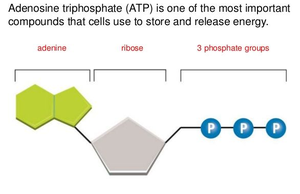
ATP is the energy currency of the cell, consisting of adenine, ribose, and three phosphate groups. Breaking its high-energy bonds releases energy for cellular work.
Summary Table: Major Elements of the Human Body
Element | Atomic Symbol | Approx. % Body Mass | Functions |
|---|---|---|---|
Oxygen | O | 65.0 | Component of organic/inorganic molecules; needed for cellular energy (ATP) |
Carbon | C | 18.5 | Component of all organic molecules |
Hydrogen | H | 9.5 | Component of organic molecules; influences pH |
Nitrogen | N | 3.2 | Component of proteins and nucleic acids |
Additional info: These notes expand on brief points with academic context, definitions, and examples to ensure completeness and clarity for exam preparation.
