 뒤로
뒤로Chapter 2: The Chemistry of Life – Structured Study Notes for Anatomy & Physiology
스터디 가이드 - 스마트 노트
 자료에 맞춘 맞춤형 노트, 핵심 정의, 예시, 맥락을 확장해 제공합니다.
Chemistry of Life
Introduction to Biochemistry
Biochemistry is the study of the molecules that compose living organisms, including carbohydrates, lipids, proteins, and nucleic acids. Understanding biochemistry is essential for grasping cellular structures, basic physiology, nutrition, and health.
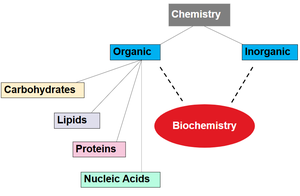
Biochemistry bridges organic and inorganic chemistry, focusing on molecules relevant to life.
Organic molecules include carbohydrates, lipids, proteins, and nucleic acids.
Inorganic molecules are also important, such as salts and water.
Salts & Electrolytes
Role and Types of Electrolytes
Salts, such as sodium chloride (NaCl), are crucial ions in the body. They dissociate in water to become electrolytes, which are substances that carry an electrical current.
Functions of salts/electrolytes: Fluid balance, nerve impulse transmission, muscle contraction, metabolism, acid-base balance.
Types of electrolytes: Sodium, potassium, calcium, magnesium, chloride, bicarbonate, phosphate.
Electrolytes are vital for heart health and overall physiological function.
Free Radicals & Antioxidants
Definition and Biological Impact
Free radicals are unstable, highly reactive particles with an unusual number of electrons. They are produced by normal metabolic reactions, radiation, and certain chemicals, and can damage molecules, leading to cancer, tissue death, and aging.
Examples: Superoxide anion, hydrogen peroxide, nitric oxide.
Antioxidants neutralize free radicals. Dietary sources include selenium, vitamin E, vitamin C, and carotenoids.
Water
Properties and Functions
Water is the universal solvent in biological systems, making up 50–75% of body weight. It is essential for metabolism, lubrication, and temperature regulation.
Functions: Plasma component, metabolic reactions, joint lubrication, temperature stabilization.
Calorie definition: The amount of heat required to raise the temperature of 1g of water by 1°C.
Mixtures: Solutions, Colloids, and Suspensions
Classification and Properties
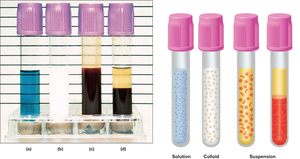
Mixtures in the body are classified as solutions, colloids, or suspensions based on particle size and behavior.
Solution: Solute particles < 1 nm, do not scatter light, pass through membranes, do not separate on standing.
Colloid: Particles 1–100 nm, scatter light, cloudy, do not pass through membranes, remain mixed.
Suspension: Particles > 100 nm, cloudy/opaque, do not pass through membranes, separate on standing.
Emulsion: Suspension of one liquid in another (e.g., fat in breast milk).
Acids, Bases, and pH
pH Scale and Physiological Importance
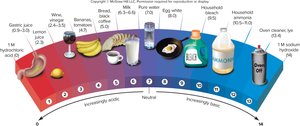
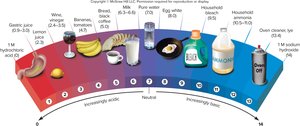
The pH scale measures acidity and alkalinity. Acids release hydrogen ions, while bases consume them. Maintaining a slightly basic blood pH (7.35–7.45) is crucial for physiological functions.
pH 7.0: Neutral
pH < 7: Acidic
pH > 7: Basic
Energy and Work
Types of Energy and Biological Relevance
Energy is the capacity to do work, such as moving muscles or molecules. It exists as potential (stored) or kinetic (active) energy. ATP is the main form of potential energy in cells.
Potential energy: Stored energy (e.g., ATP).
Kinetic energy: Energy of motion (e.g., muscle movement, blood flow).
Heat: Byproduct of kinetic energy.
Metabolism
Anabolism and Catabolism
Metabolism encompasses all chemical reactions in the body, including anabolism (building molecules) and catabolism (breaking down molecules).
Cellular respiration: Using glucose to make ATP.
Digestion: Breaking down food.
DNA replication: Making DNA for new cells.
Fat breakdown: Generating heat.
Monomers and Polymers
Macromolecules and Their Structure
Macromolecules are large organic molecules, often polymers made of repeating monomers. Catabolism breaks polymers, while anabolism builds them.
Proteins: Polymers of amino acids.
Nucleic acids: Polymers of nucleotides.
Carbohydrates: Monomers (monosaccharides) or polymers (polysaccharides).
Lipids: Can be polymers or monomers.
Carbon Compounds and Functional Groups
Categories of Organic Molecules
Organic chemistry studies carbon-containing compounds. The four main categories are carbohydrates, lipids, proteins, and nucleic acids.
Carbohydrates: Sugars for quick energy (e.g., glucose, fructose, lactose, starch).
Lipids: Fats for long-term energy storage and insulation.
Proteins: Structural macromolecules (enzymes, hormones, antibodies).
Nucleic acids: ATP, DNA, RNA for genetic information and energy transfer.
Carbohydrates
Structure and Function
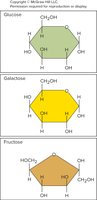
Carbohydrates are hydrophilic organic molecules with a general formula and a 2:1 ratio of hydrogen to oxygen atoms. Glucose is the most important monosaccharide in the human body.
Monosaccharides: Simple sugars (e.g., glucose, galactose, fructose).
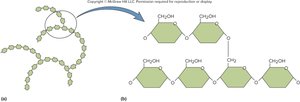
Polysaccharides: Chains of glucose (e.g., glycogen, starch, cellulose).
Lipids
Types and Functions
Lipids are hydrophobic molecules with a high ratio of hydrogen to oxygen. They provide more calories per gram than carbohydrates and serve as energy storage, insulation, and structural components.
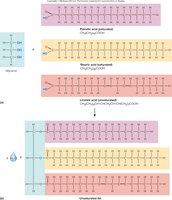
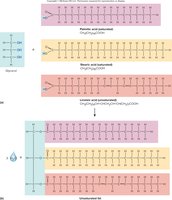
Fatty acids: Building blocks of triglycerides; classified as saturated (single bonds, solid fats) or unsaturated (double bonds, liquid fats).
Triglycerides: Three fatty acids linked to glycerol; formed by dehydration synthesis, broken down by hydrolysis.
Phospholipids: Major component of cell membranes.
Eicosanoids: Signaling molecules involved in inflammation and blood clotting.
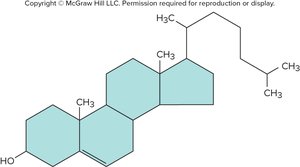
Steroids: Structural and signaling molecules (e.g., cholesterol, hormones).
Proteins
Structure and Diversity
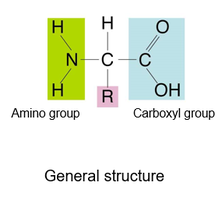
Proteins are polymers of amino acids, each with a central carbon, amino group, carboxyl group, and R group. The properties of each amino acid are determined by the R group.
Functional diversity: Enzymes, hormones, antibodies, structural components.
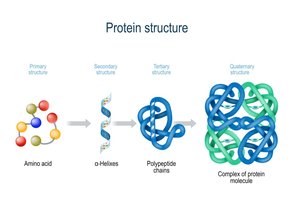
Protein structure: Primary (sequence), secondary (folding), tertiary (3D shape), quaternary (complexes).
Denaturation: Extreme heat or pH can permanently change protein structure and function.
Enzymes
Function and Mechanism
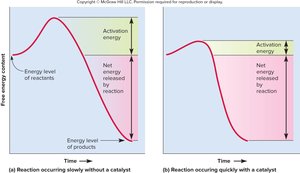
Enzymes are biological catalysts, usually proteins, that speed up chemical reactions by lowering activation energy. They are reusable and often named for their substrate with the suffix -ase.
Examples: Amylase (acts on amylose), lactase (acts on lactose).
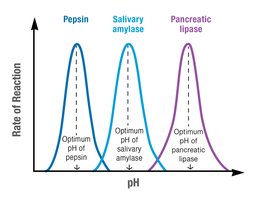
Enzyme activity: Affected by temperature and pH; denaturation can impair function.
Nucleotides and Nucleic Acids
ATP, DNA, and RNA
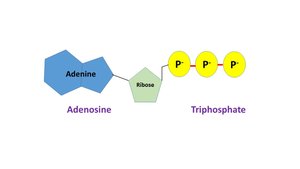
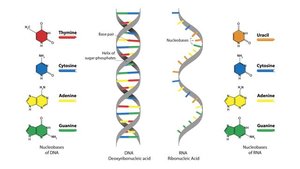
Nucleotides are the monomers of nucleic acids. ATP is the energy currency of the cell, composed of adenine, ribose, and three phosphate groups. DNA and RNA are polymers of nucleotides, carrying genetic information and facilitating protein synthesis.
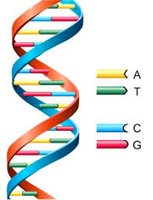
DNA: Double-stranded, contains adenine, thymine, cytosine, guanine.
RNA: Single-stranded, contains adenine, uracil, cytosine, guanine; types include mRNA, tRNA, rRNA.
Genes: Sections of DNA with instructions for protein synthesis.
Type | Structure | Function |
|---|---|---|
Carbohydrates | Monosaccharides, polysaccharides | Quick energy, structural support |
Lipids | Fatty acids, triglycerides, phospholipids, steroids | Energy storage, insulation, cell membranes |
Proteins | Amino acid polymers | Enzymes, structure, signaling |
Nucleic Acids | Nucleotide polymers | Genetic information, energy transfer |
Additional info: Academic context was added to clarify definitions, examples, and the importance of each macromolecule and their biological roles. Table summarizes main biomolecule types for comparison.
