 뒤로
뒤로Chapter 2: The Chemistry of Life – Study Notes for Anatomy & Physiology
스터디 가이드 - 스마트 노트
 자료에 맞춘 맞춤형 노트, 핵심 정의, 예시, 맥락을 확장해 제공합니다.
Chapter 2: The Chemistry of Life
2.1 Atoms and Elements
The study of chemistry is fundamental to understanding anatomy and physiology, as all biological processes are based on chemical interactions. Matter is anything that has mass and occupies space, and it is composed of atoms, the smallest units that retain the properties of an element.
Atom: The smallest unit of matter that retains the properties of an element.
Element: A substance composed of one or more identical atoms; cannot be broken down by chemical means.
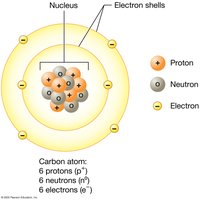
Subatomic Particles: Atoms are made of protons (positive charge), neutrons (no charge), and electrons (negative charge).
Atomic Nucleus: The central core containing protons and neutrons; electrons orbit in shells around the nucleus.
2.1 Elements in the Human Body
Elements are defined by their atomic number (number of protons). The human body is primarily composed of four major elements, with several others present in smaller amounts.
Major Elements: Oxygen (65%), Carbon (18%), Hydrogen (10%), Nitrogen (3%)
Mineral Elements: Sodium, Potassium, Calcium, Chlorine, Magnesium, Phosphorus, Sulfur (less than 4% of body mass)
2.1 Isotopes and Radioactivity
Isotopes are atoms of the same element with different numbers of neutrons. Some isotopes are unstable and emit radiation, which is useful in medical applications.
Isotope: Same number of protons, different number of neutrons.
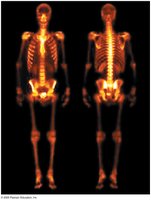
Radioisotope: Unstable isotope that emits radiation; used in nuclear medicine.
Example: Hydrogen has three isotopes: protium (no neutrons), deuterium (1 neutron), tritium (2 neutrons).
2.2 Chemical Bonds
Chemical bonds are energy relationships between atoms that form molecules and compounds. The type of bond depends on how atoms interact with their valence electrons.
Valence Electrons: Electrons in the outermost shell; involved in bonding.
Octet Rule: Atoms are most stable with 8 electrons in their valence shell.
Ionic Bonds
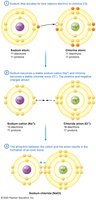
Ionic bonds form when electrons are transferred from one atom (usually a metal) to another (usually a nonmetal), resulting in charged ions.
Cation: Positively charged ion (loses electrons).
Anion: Negatively charged ion (gains electrons).
Example: Sodium chloride (NaCl) forms when sodium donates an electron to chlorine.
Covalent Bonds
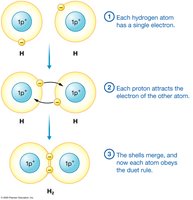
Covalent bonds involve the sharing of electrons between two or more nonmetal atoms. These are the strongest types of chemical bonds.
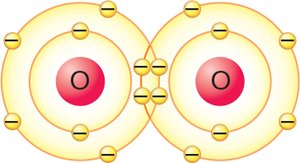
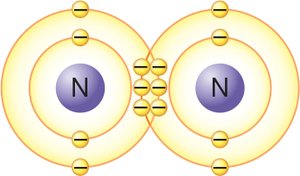
Single, Double, Triple Bonds: Atoms can share one, two, or three pairs of electrons.
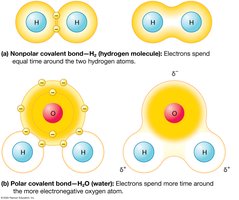
Nonpolar Covalent Bond: Electrons are shared equally (e.g., H2, O2).
Polar Covalent Bond: Electrons are shared unequally, creating partial charges (e.g., H2O).
Hydrogen Bonds
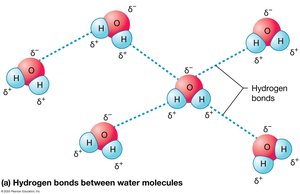
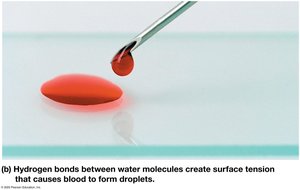
Hydrogen bonds are weak attractions between the partially positive hydrogen atom of one polar molecule and the partially negative atom of another. They are crucial for the properties of water and the structure of biological molecules.
Surface Tension: Hydrogen bonds between water molecules create surface tension.
2.3 Chemical Notation and Reactions
Chemical reactions involve the formation, breaking, or rearrangement of chemical bonds. Chemical equations use symbols to represent reactants and products.
Reactants: Substances that undergo change (left side of equation).
Products: Substances produced by the reaction (right side of equation).
Reversible Reactions: Can proceed in both directions (⇌).
Irreversible Reactions: Proceed in one direction (→).
Reaction Rates and Enzymes
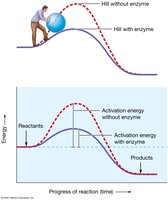
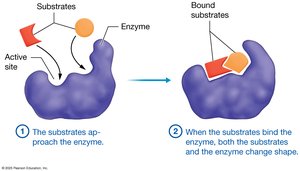
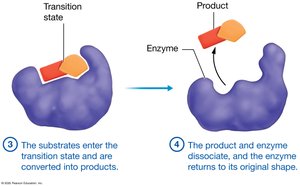
The rate of a chemical reaction is influenced by concentration, temperature, properties of reactants, and the presence of catalysts. Enzymes are biological catalysts that speed up reactions by lowering activation energy.
Enzyme: Protein that increases reaction rate without being consumed.
Active Site: Region on the enzyme where the substrate binds.
Induced Fit Mechanism: Enzyme changes shape to fit the substrate during the reaction.
2.4 Inorganic Compounds: Water, Acids, Bases, and Salts
Inorganic compounds do not contain carbon bonded to hydrogen. Water, acids, bases, and salts are essential inorganic compounds in the body.
Water
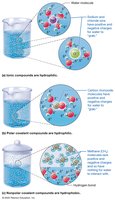
Water is the body's primary solvent, dissolving hydrophilic (water-loving) substances but not hydrophobic (water-hating) ones.
Acids and Bases
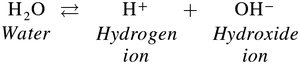
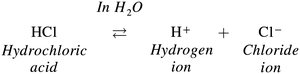
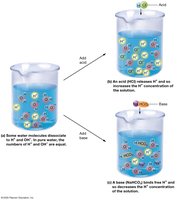
Acids are proton donors that increase hydrogen ion concentration in solution, while bases are proton acceptors that decrease it. The pH scale measures hydrogen ion concentration, with 7 being neutral, below 7 acidic, and above 7 basic.
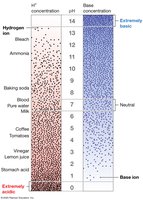
Buffers: Chemical systems that resist changes in pH, such as the carbonic acid–bicarbonate buffer system in blood.

2.5 Organic Compounds: Monomers and Polymers
The body contains four major classes of organic compounds: carbohydrates, lipids, proteins, and nucleic acids. These are built from monomers (single subunits) that form polymers (chains of monomers).
Carbohydrates
Carbohydrates are polar, hydrophilic molecules made of carbon, hydrogen, and oxygen, usually in a 1:2:1 ratio. They serve as fuel and have structural roles.
Example: Glucose is a primary energy source.
Glycoproteins and Glycolipids: Carbohydrates covalently bonded to proteins or lipids, important for cell recognition and communication.
Lipids
Lipids are nonpolar, hydrophobic molecules that include fats, oils, phospholipids, and steroids. They function as energy storage, membrane components, and hormones.
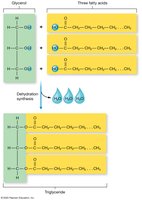
Fatty Acid: Monomer of lipids.
Triglyceride: Three fatty acids linked to glycerol; main storage form of fat.
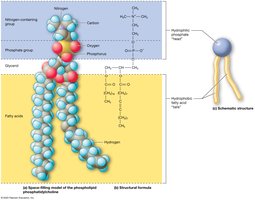
Phospholipid: Glycerol backbone, two fatty acids, and a phosphate group; amphiphilic and main component of cell membranes.
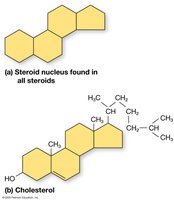
Steroid: Four-ring structure; includes cholesterol, bile acids, and sex hormones.
Proteins
Proteins are made of amino acids and have diverse functions, including structural support, catalysis (enzymes), defense, communication, and movement. Protein structure is sensitive to temperature and pH.
Denaturation: Loss of protein shape and function due to heat, pH changes, or chemicals.
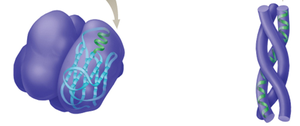
Nucleic Acids
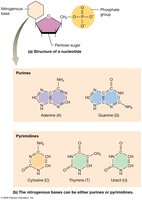
Nucleic acids (DNA and RNA) store and transmit genetic information. They are polymers of nucleotides, each consisting of a nitrogenous base, a five-carbon sugar, and a phosphate group.
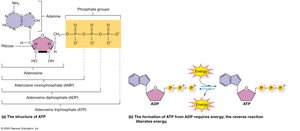
Adenosine Triphosphate (ATP): The main energy currency of the cell, produced from ADP and phosphate using energy from food.
2.5 Organic Compound Summary
The four classes of organic compounds—carbohydrates, lipids, proteins, and nucleic acids—are essential for life, each with unique structures and functions that support the physiology of the human body.
