 뒤로
뒤로Chapter 2: The Chemistry of Life – Study Notes for Anatomy & Physiology
스터디 가이드 - 스마트 노트
 자료에 맞춘 맞춤형 노트, 핵심 정의, 예시, 맥락을 확장해 제공합니다.
The Chemistry of Life
Introduction
The study of chemistry is fundamental to understanding human anatomy and physiology because all biological structures and functions are based on chemical principles. The chemical level of organization is the most basic, forming the foundation for all higher levels of biological organization.
Atoms and Elements
Basic Definitions
Matter: Anything that has mass and occupies space.
Chemistry: The study of matter and its interactions.
Atom: The smallest unit of matter that retains the properties of an element.
Element: A substance composed of one type of atom; cannot be broken down by chemical means.
Atomic Structure
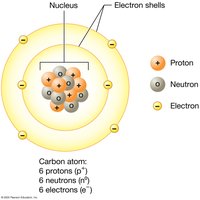
Atoms are made of three subatomic particles:
Protons: Positively charged, located in the nucleus.
Neutrons: Uncharged, slightly larger than protons, also in the nucleus.
Electrons: Negatively charged, orbit the nucleus in electron shells.
Atoms are electrically neutral when the number of protons equals the number of electrons.
Electron shells:
1st shell: holds 2 electrons
2nd shell: holds 8 electrons
3rd shell: holds up to 18 electrons (satisfied with 8 for most biological atoms)
Elements in the Human Body
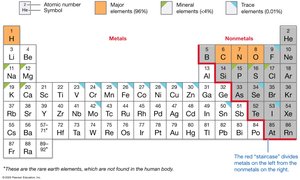
Elements are defined by their atomic number (number of protons).
The Periodic Table organizes elements by atomic number and recurring properties.
Four major elements make up 96% of body mass:
Oxygen (O) – 65%
Carbon (C) – 18%
Hydrogen (H) – 10%
Nitrogen (N) – 3%
Mineral elements (e.g., Na, K, Ca, Cl, Mg, P, S) and trace elements (e.g., Fe, Cu, I, Zn) are also essential.
Isotopes and Radioactivity
Isotopes: Atoms of the same element with different numbers of neutrons (different mass numbers).
Radioisotopes: Unstable isotopes that emit radiation; used in medical imaging and cancer therapy.
Example: Hydrogen has three isotopes—protium (no neutrons), deuterium (1 neutron), tritium (2 neutrons).
Matter Combined: Mixtures and Chemical Bonds
Mixtures
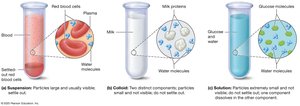
Mixture: Physical combination of two or more substances; components retain their properties and can be separated physically.
Types of mixtures:
Suspensions: Large particles, settle out (e.g., blood).
Colloids: Small particles, do not settle, opaque (e.g., milk).
Solutions: Very small particles, do not settle, translucent (e.g., salt water).
Chemical Bonds
Chemical bond: An energy relationship between atoms, formed by interactions of valence electrons.
Molecule: Two or more atoms chemically bonded.
Compound: Molecule with atoms of different elements.
Macromolecule: Very large molecule (e.g., proteins, DNA).
Ionic Bonds
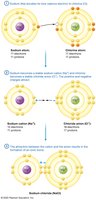
Formed by transfer of electrons from a metal to a nonmetal.
Results in charged ions:
Cation: Positively charged (lost electron).
Anion: Negatively charged (gained electron).
Attraction between cations and anions forms ionic compounds (salts).
Covalent Bonds
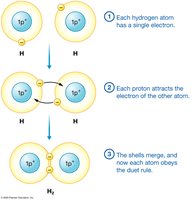
Formed by sharing electrons between two or more nonmetals.
Types:
Single bond: One pair shared
Double bond: Two pairs shared
Triple bond: Three pairs shared
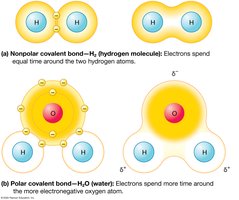
Nonpolar covalent bond: Electrons shared equally (e.g., O2, H2).
Polar covalent bond: Electrons shared unequally, creating partial charges (e.g., H2O).
Hydrogen Bonds
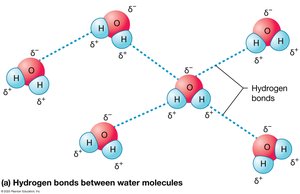
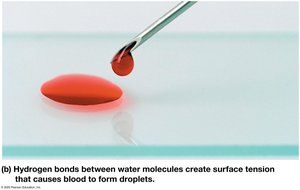
Weak attractions between partially positive hydrogen atoms and partially negative atoms in polar molecules.
Important in water, DNA, and protein structure.
Chemical Notation and Reactions
Chemical Equations
Chemical reaction: Bonds are formed, broken, or rearranged; electrons may be transferred.
Reactants: Starting substances (left side).
Products: Substances formed (right side).
Reversible reactions: Can proceed in both directions (⇌).
Irreversible reactions: Proceed in one direction (→).
Energy in Chemical Reactions
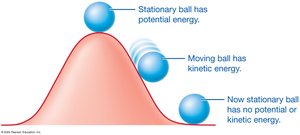
Energy: Capacity to do work.
Potential energy: Stored energy.
Kinetic energy: Energy of motion.
Chemical energy: Stored in bonds; Electrical energy: Movement of ions; Mechanical energy: Direct transfer between objects.
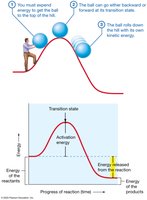
Endergonic reactions: Require energy input; products have more energy than reactants.
Exergonic reactions: Release energy; products have less energy than reactants.
Types of Chemical Reactions in the Body
Catabolic reactions: Break down large molecules; generally exergonic.
Exchange reactions: Atoms/electrons are exchanged; includes oxidation-reduction (redox) reactions.
Anabolic reactions: Build new molecules; generally endergonic.
Enzymes and Reaction Rates
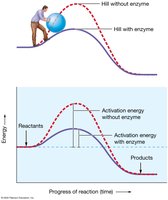
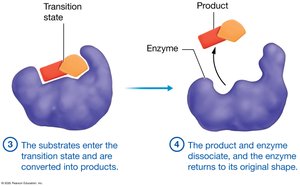
Activation energy: Minimum energy required for a reaction to occur.
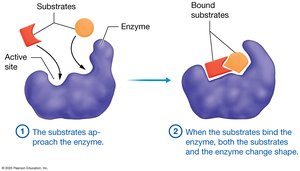
Enzymes: Biological catalysts (mostly proteins) that lower activation energy and increase reaction rates.
Enzymes are highly specific, not consumed in reactions, and do not alter the nature of the reaction.
Enzyme deficiencies can lead to diseases (e.g., Tay-Sachs, SCIDS, Phenylketonuria).
Inorganic Compounds: Water, Acids, Bases, and Salts
Water
Makes up 50-65% of body mass; vital for life.
Properties:
Absorbs heat without significant temperature change.
Carries heat when evaporating.
Cushions and lubricates body structures.
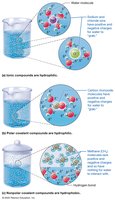
Primary solvent for hydrophilic substances.
Hydrophilic: Dissolves in water; Hydrophobic: Does not dissolve in water.
Acids, Bases, and pH
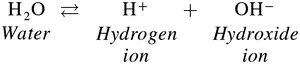
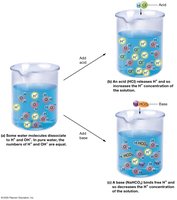
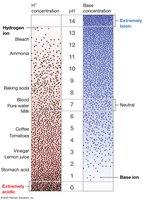
Acid: Proton (H+) donor; increases H+ in solution.
Base: Proton acceptor; decreases H+ in solution.
pH scale: Measures hydrogen ion concentration; 7 is neutral, below 7 is acidic, above 7 is basic.
Buffers resist changes in pH; major buffer in blood is the carbonic acid–bicarbonate system.
Blood pH must remain between 7.35 and 7.45; deviations cause acidosis or alkalosis.

Salts and Electrolytes
Salt: Compound formed by ionic bonding of a metal cation and nonmetal anion.
Electrolytes: Ions in solution that conduct electricity; essential for nerve and muscle function.
Organic Compounds
Hydrocarbons
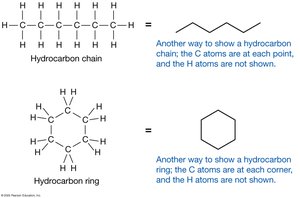
Organic compounds containing only carbon and hydrogen; form chains and rings that are the backbone of all organic molecules.
Monomers and Polymers
Four main organic compounds in the body: Carbohydrates, Lipids, Proteins, Nucleic Acids.
Monomer: Single subunit.
Polymer: Many monomers linked together.
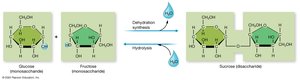
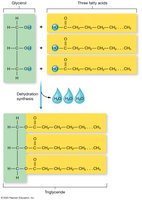
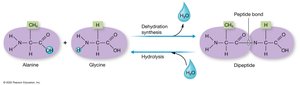
Dehydration synthesis: Links monomers by removing water.
Hydrolysis: Breaks polymers by adding water.
Carbohydrates
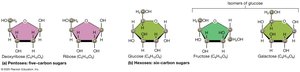
Composed of C, H, O (1:2:1 ratio); polar and hydrophilic.
Function as fuel and structural molecules.
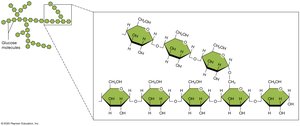
Monosaccharides: Simple sugars (glucose, fructose, galactose, ribose, deoxyribose).
Disaccharides: Two monosaccharides (sucrose, lactose).
Polysaccharides: Long chains (starch in plants, glycogen in animals).
Glycoproteins/glycolipids: Carbohydrates covalently bonded to proteins/lipids; important for cell recognition.
Lipids
Composed of C, H, and some O; nonpolar and hydrophobic.
Functions: energy storage, cell membranes, hormones.
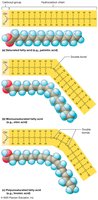
Fatty acids: Hydrocarbon chains with carboxylic acid group; can be saturated (no double bonds), monounsaturated (one double bond), or polyunsaturated (multiple double bonds).
Triglycerides: Three fatty acids linked to glycerol; main storage form of fat.
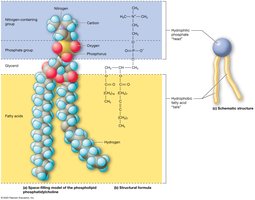
Phospholipids: Glycerol backbone, two fatty acids, phosphate group; amphiphilic; main component of cell membranes.
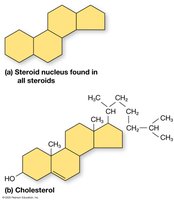
Steroids: Four-ring structure; includes cholesterol, bile acids, sex hormones.
Proteins
Composed of C, H, O, N, and sometimes S; can be polar or nonpolar.
Functions: structure, enzymes, defense, communication, movement, fuel.
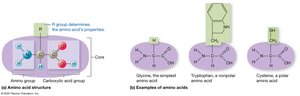
Amino acids: 21 types; central carbon, amino group, carboxyl group, R group.
Peptide bonds: Link amino acids via dehydration synthesis.
Protein structure:
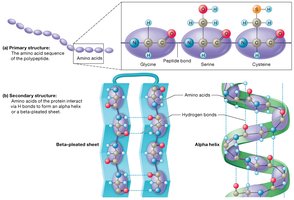
Primary: amino acid sequence
Secondary: alpha helix, beta-pleated sheet (hydrogen bonds)
Tertiary: 3D folding (R group interactions)
Quaternary: multiple polypeptide chains
Denaturation: Loss of structure and function due to heat, pH, or chemicals.
Nucleic Acids
Composed of C, H, O, N, P; include DNA and RNA.
Nucleotides: Monomers with nitrogenous base, five-carbon sugar, phosphate group.
ATP: Main energy currency of the cell; produced from ADP and phosphate.
DNA: Double helix, deoxyribose sugar, bases A, T, G, C; stores genetic information.
RNA: Single strand, ribose sugar, bases A, U, G, C; involved in protein synthesis.
