 뒤로
뒤로Chemistry Comes Alive: Foundations for Anatomy & Physiology
스터디 가이드 - 스마트 노트
 자료에 맞춘 맞춤형 노트, 핵심 정의, 예시, 맥락을 확장해 제공합니다.
Chemistry and Physiological Reactions
Introduction to Chemistry in Anatomy & Physiology
Chemistry is fundamental to understanding physiological processes in the human body. All bodily functions, from movement to digestion and neural activity, are governed by chemical reactions. The study of chemistry in anatomy and physiology is divided into basic chemistry and biochemistry, both essential for comprehending how the body functions at the molecular level.
Matter and Energy
Matter
Matter is anything that has mass and occupies space. It can be seen, smelled, or felt.
States of matter include:
Solid: Definite shape and volume.
Liquid: Changeable shape, definite volume.
Gas: Changeable shape and volume.
Energy
Energy is the capacity to do work or put matter into motion. It does not have mass or occupy space.
Forms of energy include:
Chemical energy: Stored in bonds of chemical substances.
Electrical energy: Results from movement of charged particles.
Mechanical energy: Directly involved in moving matter.
Radiant (electromagnetic) energy: Travels in waves (e.g., heat, light, X-rays).
Energy can be kinetic (in action) or potential (stored).
Energy conversions are inefficient; some energy is always lost as heat.
Atoms and Elements
Elements and Atoms
Elements are substances that cannot be broken down into simpler substances by ordinary chemical methods.
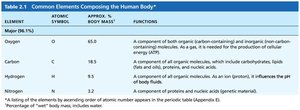
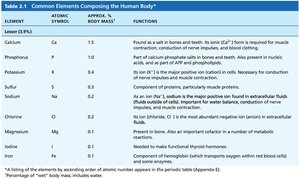
Four elements (carbon, oxygen, hydrogen, nitrogen) make up 96% of the human body.
Atoms are the smallest particles of an element that retain its properties.
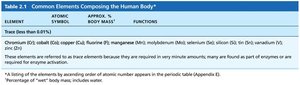
Each element is represented by a unique atomic symbol (e.g., O for oxygen, C for carbon).
Atomic Structure
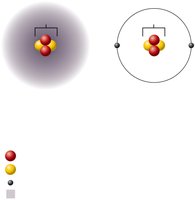
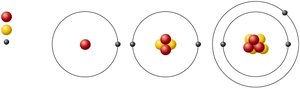
Atoms consist of a nucleus (protons and neutrons) and electrons orbiting the nucleus.
Atoms are electrically neutral when the number of protons equals the number of electrons.
Models of atomic structure include the planetary model (electrons in fixed orbits) and the orbital model (electrons in electron clouds).
Identifying Elements
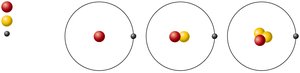
Atomic number: Number of protons in the nucleus.
Mass number: Total number of protons and neutrons.
Isotopes: Atoms of the same element with different numbers of neutrons.
Atomic weight: Average of mass numbers of all isotope forms of an atom.
Radioisotopes
Radioisotopes are unstable isotopes that decompose to more stable forms, releasing energy (radioactivity).
They are used in medical diagnosis and treatment but can also damage living tissue.
Combining Matter: Molecules, Compounds, and Mixtures
Molecules and Compounds
Molecule: Two or more atoms bonded together.
Compound: Molecule with two or more different kinds of atoms (e.g., H2O, CO2).
Mixtures
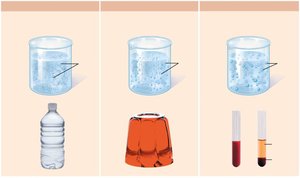
Mixtures are physical combinations of two or more substances.
Three types of mixtures:
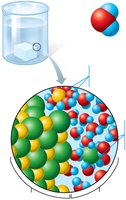
Solutions: Homogeneous mixtures; solute particles do not settle out.
Colloids: Heterogeneous mixtures; particles do not settle out and scatter light.
Suspensions: Heterogeneous mixtures; large particles settle out.
Differences Between Mixtures and Compounds
Mixtures do not involve chemical bonding; compounds do.
Mixtures can be separated by physical means; compounds require chemical means.
Mixtures can be heterogeneous or homogeneous; compounds are always homogeneous.
Chemical Bonds
Role of Electrons in Chemical Bonding
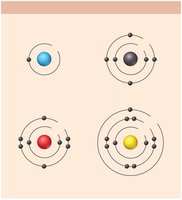
Electrons occupy energy levels called electron shells.
The valence shell is the outermost shell and determines chemical reactivity.
The octet rule: Atoms tend to gain, lose, or share electrons to achieve eight electrons in their valence shell (except H and He, which seek two).
Types of Chemical Bonds
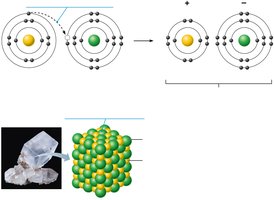
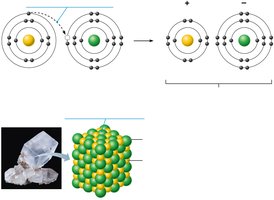
Ionic bonds: Formed by transfer of electrons from one atom to another, creating ions (cations and anions).
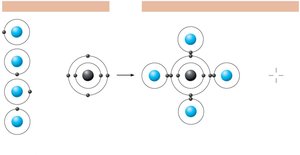
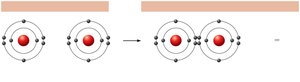
Covalent bonds: Formed by sharing electrons between atoms. Can be single, double, or triple bonds.
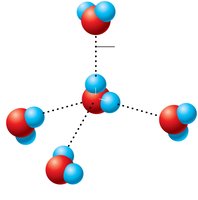
Hydrogen bonds: Weak attractions between a hydrogen atom and an electronegative atom (e.g., between water molecules).
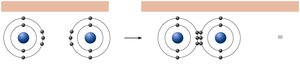
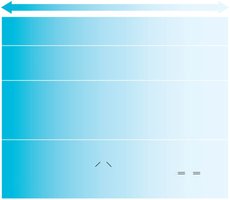
Polar and Nonpolar Covalent Bonds
Nonpolar covalent bonds: Equal sharing of electrons (e.g., O2, CO2).
Polar covalent bonds: Unequal sharing of electrons, resulting in partial charges (e.g., H2O).
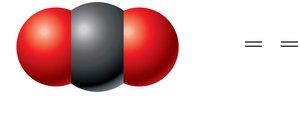
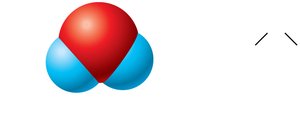
Hydrogen Bonds
Hydrogen bonds are important in maintaining the structure of water, proteins, and DNA.
Chemical Reactions
Types of Chemical Reactions
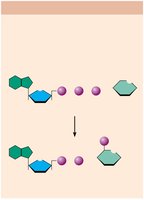
Synthesis (combination) reactions: Atoms or molecules combine to form larger molecules. Used in anabolic processes.
Decomposition reactions: Molecules are broken down into smaller molecules or atoms. Used in catabolic processes.
Exchange (displacement) reactions: Bonds are both made and broken; atoms are exchanged between molecules.
Redox Reactions
Reduction-oxidation (redox) reactions involve the transfer of electrons between atoms.
Oxidation: Loss of electrons; Reduction: Gain of electrons.
Energy Flow in Chemical Reactions
Exergonic reactions: Release energy (products have less energy than reactants).
Endergonic reactions: Absorb energy (products have more energy than reactants).
Reversibility and Rate of Chemical Reactions
All chemical reactions are theoretically reversible, but many biological reactions are not due to energy requirements or removal of products.
Reaction rates are influenced by temperature, concentration, particle size, and catalysts (enzymes).
Biochemistry: Inorganic and Organic Compounds
Inorganic Compounds
Include water, salts, acids, and bases. Do not contain carbon (except CO2 and CO).
Water: Most abundant inorganic compound; high heat capacity, polar solvent, reactive, and provides cushioning.
Salts: Ionic compounds that dissociate in water to form electrolytes (conduct electrical currents).
Acids and Bases
Acids: Proton donors; release H+ in solution.
Bases: Proton acceptors; release OH− in solution.
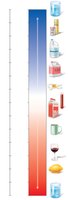
pH scale: Measures hydrogen ion concentration; ranges from 0 (acidic) to 14 (basic), with 7 as neutral.
Buffers
Buffers resist changes in pH by releasing or binding H+ as needed.
The carbonic acid–bicarbonate system is an important buffer in blood.
Organic Compounds
Carbohydrates
Include sugars and starches; contain C, H, and O in a 1:2:1 ratio.
Three classes:
Monosaccharides: Simple sugars (e.g., glucose, ribose).
Disaccharides: Two monosaccharides joined by dehydration synthesis (e.g., sucrose, lactose).
Polysaccharides: Long chains of monosaccharides (e.g., starch, glycogen).
Lipids
Contain C, H, O (less O than carbohydrates), sometimes P. Insoluble in water.
Main types:
Triglycerides: Energy storage, insulation, protection.
Phospholipids: Major component of cell membranes.
Steroids: Four interlocking rings; cholesterol is the most important steroid.
Eicosanoids: Derived from arachidonic acid; important in inflammation and other processes.
Proteins
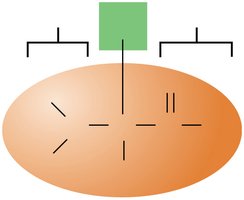
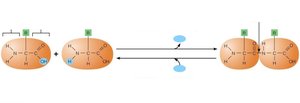
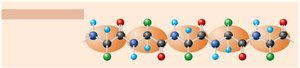
Composed of amino acids joined by peptide bonds; contain C, H, O, N, sometimes S and P.
Functions include structural support, catalysis (enzymes), transport, movement, communication, and defense.
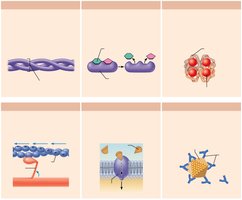
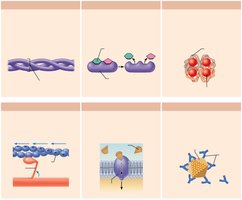
Protein Structure
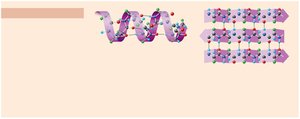
Four levels of structure:
Primary: Sequence of amino acids.
Secondary: Alpha helices and beta sheets formed by hydrogen bonding.
Tertiary: 3D folding of the polypeptide.
Quaternary: Association of multiple polypeptides.
Enzymes
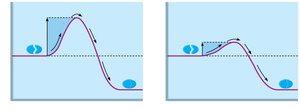
Enzymes are globular proteins that act as biological catalysts, lowering activation energy and increasing reaction rates.
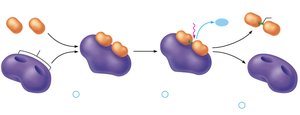
Enzyme action involves substrate binding, rearrangement, and product release.
Nucleic Acids
DNA and RNA
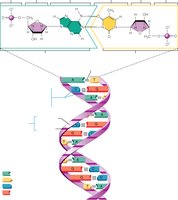
DNA: Double-stranded helix; stores genetic information; composed of nucleotides (adenine, thymine, cytosine, guanine).
RNA: Single-stranded; involved in protein synthesis; contains uracil instead of thymine.
ATP: Cellular Energy Currency
Structure and Function of ATP
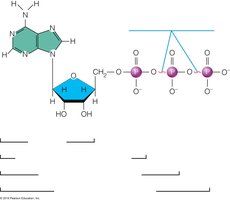
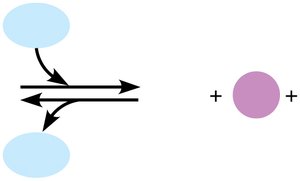
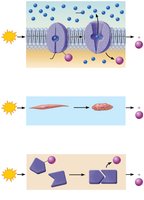
ATP (adenosine triphosphate) stores and releases energy for cellular processes.
ATP is composed of adenine, ribose, and three phosphate groups.
Energy is released when phosphate bonds are broken, converting ATP to ADP or AMP.
Additional info: This guide covers foundational chemistry concepts essential for understanding anatomy and physiology, including atomic structure, chemical bonding, types of reactions, and the roles of major biomolecules in the human body.
