 뒤로
뒤로Chemistry Comes Alive: Foundations for Anatomy & Physiology
스터디 가이드 - 스마트 노트
 자료에 맞춘 맞춤형 노트, 핵심 정의, 예시, 맥락을 확장해 제공합니다.
Chemistry and Physiological Reactions
Introduction to Chemistry in Anatomy & Physiology
Chemistry is fundamental to understanding physiological processes such as movement, digestion, heart function, and nervous system activity. The body is composed of chemicals, and their interactions underpin all biological functions.
Basic Chemistry: Covers the nature of matter and energy.
Biochemistry: Focuses on the chemical processes within living organisms.
Matter and Energy
States of Matter
Matter is anything that has mass and occupies space. It exists in three states:
Solid: Definite shape and volume.
Liquid: Changeable shape, definite volume.
Gas: Changeable shape and volume.
Forms of Energy
Energy is the capacity to do work or put matter into motion. It exists as:
Kinetic Energy: Energy in action.
Potential Energy: Stored energy.
Chemical Energy: Stored in chemical bonds.
Electrical Energy: Movement of charged particles.
Mechanical Energy: Directly moves matter.
Radiant Energy: Travels in waves (e.g., light, X-rays).
Atoms and Elements
Elements and Their Importance
Elements are substances that cannot be broken down by ordinary chemical methods. The human body is primarily composed of four elements:
Oxygen (O)
Carbon (C)
Hydrogen (H)
Nitrogen (N)
These elements make up 96% of body mass.
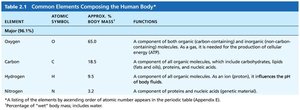
Common Elements Composing the Human Body
Element | Atomic Symbol | Approx. % Body Mass | Functions |
|---|---|---|---|
Oxygen | O | 65.0 | Component of organic and inorganic molecules; needed for cellular energy (ATP) production. |
Carbon | C | 18.5 | Component of all organic molecules; includes carbohydrates, lipids, proteins, nucleic acids. |
Hydrogen | H | 9.5 | Component of organic molecules; as ion (H+), influences pH of body fluids. |
Nitrogen | N | 3.2 | Component of proteins and nucleic acids (genetic material). |
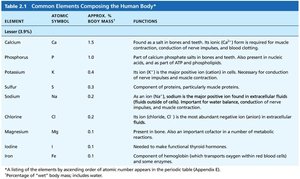
Lesser and Trace Elements
Element | Atomic Symbol | Approx. % Body Mass | Functions |
|---|---|---|---|
Calcium | Ca | 1.5 | Salt in bones and teeth; required for muscle contraction, nerve impulse, blood clotting. |
Phosphorus | P | 1.0 | Part of calcium phosphate in bones and teeth; nucleic acids, ATP, phospholipids. |
Potassium | K | 0.4 | Major positive ion inside cells; necessary for conduction of nerve impulses, muscle contraction. |
Sulfur | S | 0.3 | Component of proteins, especially muscle proteins. |
Sodium | Na | 0.2 | Major positive ion outside cells; water balance, nerve conduction, muscle contraction. |
Chlorine | Cl | 0.2 | Major negative ion outside cells. |
Magnesium | Mg | 0.1 | Needed for metabolic reactions. |
Iodine | I | 0.1 | Component of thyroid hormones. |
Iron | Fe | 0.1 | Component of hemoglobin; transports oxygen in blood. |
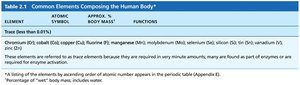
Element | Functions |
|---|---|
Chromium, Cobalt, Copper, Fluorine, Manganese, Molybdenum, Selenium, Silicon, Tin, Vanadium, Zinc | Required in minute amounts; often part of enzymes or required for enzyme activation. |
Atomic Structure
Atoms are the smallest units of elements, consisting of protons, neutrons, and electrons.
Protons: Positive charge, found in nucleus.
Neutrons: No charge, found in nucleus.
Electrons: Negative charge, orbit nucleus.
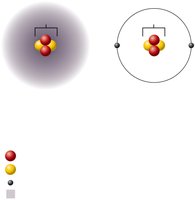
Models of Atomic Structure
Planetary Model: Electrons orbit nucleus in fixed paths (outdated).
Orbital Model: Electrons are found in regions of probability, forming an electron cloud.
Identifying Elements
Elements are identified by their atomic number (number of protons), mass number (protons + neutrons), isotopes (same protons, different neutrons), and atomic weight (average mass of isotopes).
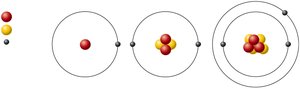
Atomic Structure of Smallest Atoms
Hydrogen: 1 proton, 0 neutrons, 1 electron
Helium: 2 protons, 2 neutrons, 2 electrons
Lithium: 3 protons, 4 neutrons, 3 electrons
Isotopes and Radioisotopes
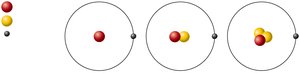
Isotopes: Atoms of the same element with different numbers of neutrons.
Radioisotopes: Unstable isotopes that decay, emitting radioactivity. Used in medical diagnostics and treatments.
Combining Matter: Molecules, Compounds, and Mixtures
Molecules and Compounds
Molecule: Two or more atoms bonded together.
Compound: Molecule with two or more different atoms bonded together (e.g., C6H12O6).
Types of Mixtures
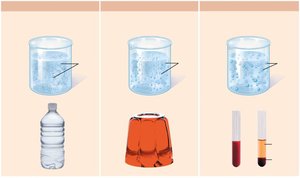
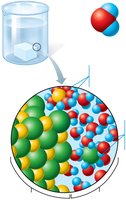
Solutions: Homogeneous mixtures; solute particles are tiny and do not settle out.
Colloids: Heterogeneous mixtures; larger particles, do not settle out, scatter light.
Suspensions: Heterogeneous mixtures; large particles settle out.
Chemical Bonds and Reactions
Role of Electrons in Chemical Bonding
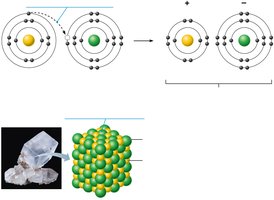
Electrons occupy energy levels called shells. The outermost shell (valence shell) determines chemical reactivity. Atoms seek stability by achieving a full valence shell (usually 8 electrons, known as the octet rule).
Types of Chemical Bonds
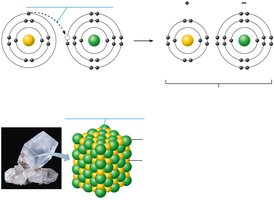
Ionic Bonds: Transfer of electrons between atoms, forming charged ions (cations and anions).
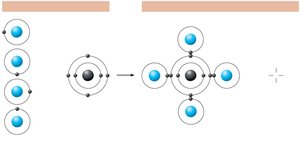
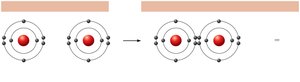
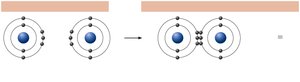
Covalent Bonds: Sharing of electrons between atoms. Can be single, double, or triple bonds.
Hydrogen Bonds: Weak attractions between electropositive hydrogen and electronegative atoms (e.g., in water).
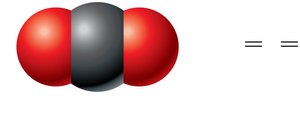
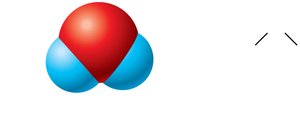
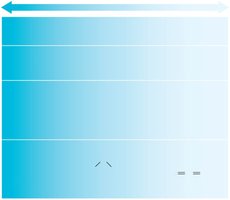
Polar and Nonpolar Covalent Bonds
Nonpolar: Equal sharing of electrons (e.g., CO2).
Polar: Unequal sharing, creating dipoles (e.g., H2O).
Hydrogen Bonds
Hydrogen bonds are essential for maintaining the structure of water and biological molecules. 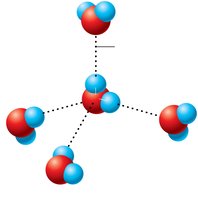
Chemical Reactions
Types of Chemical Reactions
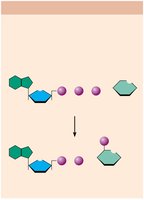
Synthesis (Anabolic): Building larger molecules from smaller ones.
Decomposition (Catabolic): Breaking down molecules into smaller units.
Exchange (Displacement): Bonds are both made and broken.
Redox Reactions
Oxidation: Loss of electrons.
Reduction: Gain of electrons.
Energy Flow in Reactions
Exergonic: Release energy.
Endergonic: Absorb energy.
Rate of Chemical Reactions
Influenced by temperature, concentration, particle size, and catalysts (enzymes).
Biochemistry: Inorganic and Organic Compounds
Inorganic Compounds
Water: Most abundant; high heat capacity, solvent properties, reactivity, cushioning.
Salts: Ionic compounds; dissociate into electrolytes.
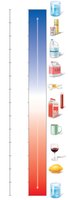
Acids and Bases: Acids release H+; bases accept H+. pH measures [H+] concentration.
Buffers
Buffers resist changes in pH, maintaining homeostasis.
Organic Compounds
Carbohydrates: Sugars and starches; monosaccharides, disaccharides, polysaccharides.
Lipids: Triglycerides, phospholipids, steroids, eicosanoids.
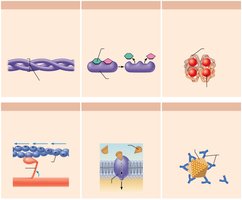
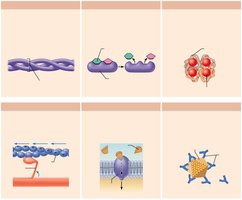
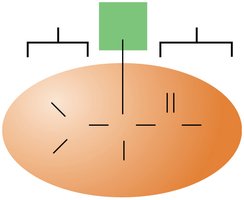
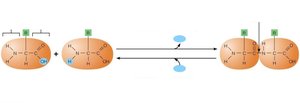
Proteins: Polymers of amino acids; structural, enzymatic, transport, contractile, communication, defensive functions.
Nucleic Acids: DNA and RNA; store and transmit genetic information.
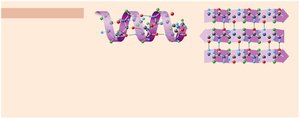
Protein Structure and Function
Levels of Protein Structure
Primary: Sequence of amino acids.
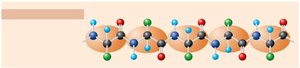
Secondary: Alpha helices and beta sheets.
Tertiary: Folding of secondary structures.
Quaternary: Multiple polypeptides forming a functional protein.
Enzymes and Enzyme Activity
Enzyme Function
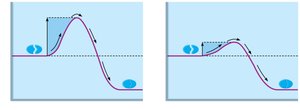
Enzymes are biological catalysts that lower activation energy and increase reaction speed.
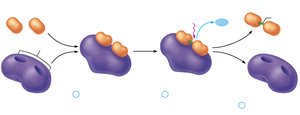
Specificity: Each enzyme acts on a specific substrate.
Mechanism: Substrate binds to active site, forms enzyme-substrate complex, product is released.
Nucleic Acids: DNA and RNA
Structure and Function
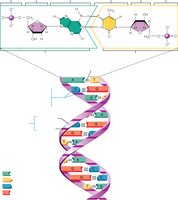
DNA: Double helix; stores genetic blueprint.
RNA: Single-stranded; involved in protein synthesis.
ATP: Cellular Energy Currency
Structure and Function
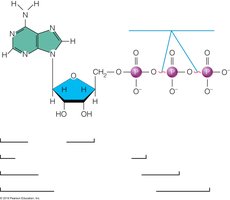
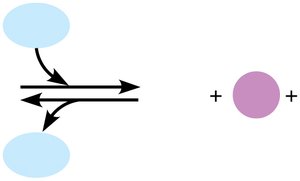
ATP (adenosine triphosphate) stores and transfers energy for cellular work.
Structure: Adenine, ribose, three phosphate groups.
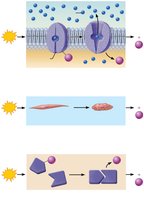
Function: Phosphate group transfer powers transport, mechanical, and chemical work.
Summary Table: Major Chemical Concepts in Anatomy & Physiology
Concept | Definition | Example/Application |
|---|---|---|
Matter | Anything with mass and occupies space | Body tissues, blood |
Energy | Capacity to do work | Muscle contraction, nerve impulses |
Element | Pure substance, cannot be broken down | Oxygen, carbon |
Atom | Smallest unit of an element | Hydrogen atom |
Molecule | Two or more atoms bonded | H2O, O2 |
Compound | Molecule with different atoms | NaCl, C6H12O6 |
Ionic Bond | Transfer of electrons | NaCl |
Covalent Bond | Sharing of electrons | H2O, O2 |
Hydrogen Bond | Weak attraction between molecules | Water cohesion |
Enzyme | Biological catalyst | Amylase, DNA polymerase |
ATP | Cellular energy molecule | Muscle contraction, active transport |
Additional info: This guide expands brief points into full academic explanations, adds definitions, examples, and tables for clarity, and includes only images directly relevant to the content.
