 뒤로
뒤로Chemistry Comes Alive: Foundations for Anatomy & Physiology
스터디 가이드 - 스마트 노트
 자료에 맞춘 맞춤형 노트, 핵심 정의, 예시, 맥락을 확장해 제공합니다.
Chemistry Comes Alive: Part A
Introduction to Matter and Energy
Chemistry is fundamental to understanding the structure and function of the human body. All physiological processes depend on chemical reactions occurring at the molecular level.
Matter: Anything that has mass and occupies space. It exists in three states: solid (definite shape and volume), liquid (changeable shape, definite volume), and gas (changeable shape and volume).
Weight: The pull of gravity on mass.
Energy: The capacity to do work or put matter into motion. It exists as kinetic (energy in action) or potential (stored) energy. Energy can be converted from one form to another, but some is always lost as heat.
Forms of Energy:
Chemical energy: Stored in bonds of chemical substances.
Electrical energy: Results from movement of charged particles.
Mechanical energy: Directly involved in moving matter.
Radiant (electromagnetic) energy: Travels in waves (e.g., visible light, ultraviolet light, x-rays).
Composition of Matter: Elements and Atoms
All matter is composed of elements, which are substances that cannot be broken down by ordinary chemical means. Each element is made of unique atoms, which are the smallest units retaining the properties of the element.
Elements: Each has unique physical (detectable/measurable) and chemical (how atoms interact) properties.
Atoms: Composed of subatomic particles—protons (positive, in nucleus), neutrons (neutral, in nucleus), and electrons (negative, orbit nucleus).
Atomic symbol: One- or two-letter shorthand for each element (e.g., C for carbon).
Major, Lesser, and Trace Elements of the Human Body
Major elements (96.1% of body mass): Oxygen (O), Carbon (C), Hydrogen (H), Nitrogen (N).
Lesser elements (3.9%): Calcium (Ca), Phosphorus (P), Potassium (K), Sulfur (S), Sodium (Na), Chlorine (Cl), Magnesium (Mg), Iodine (I), Iron (Fe).
Trace elements (<0.01%): Chromium (Cr), Copper (Cu), Fluorine (F), Manganese (Mn), Silicon (Si), Zinc (Zn), etc. Many are enzyme cofactors.
Atomic Structure
Atoms consist of a nucleus (protons and neutrons) and an electron cloud. The number of protons defines the element, while electrons determine chemical behavior.
Protons: Positive charge, 1 atomic mass unit (amu).
Neutrons: No charge, 1 amu.
Electrons: Negative charge, 1/2000 the mass of a proton (0 amu).
Number of protons = number of electrons in a neutral atom.
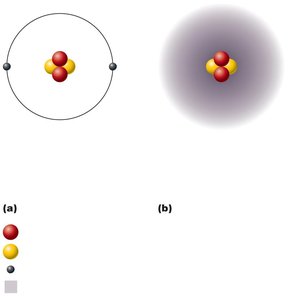
Models of the Atom
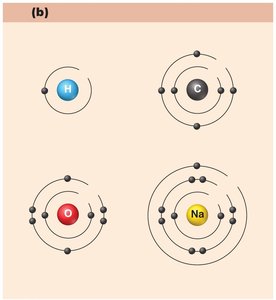
Planetary model: Electrons orbit nucleus in fixed paths (useful for illustrations).
Orbital model: Electrons are found in regions of probability (electron cloud), more accurate for predicting chemical behavior.
Identifying Elements: Atomic Number, Mass Number, Isotopes
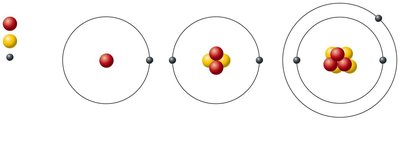
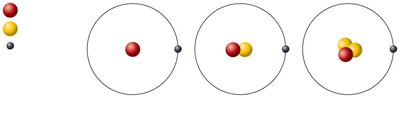
Atomic number: Number of protons in the nucleus (e.g., Hydrogen = 1, Lithium = 3).
Mass number: Total number of protons and neutrons.
Isotopes: Atoms of the same element with different numbers of neutrons (same atomic number, different mass number).
Atomic weight: Average of mass numbers of all isotopes of an element.
Radioisotopes
Unstable isotopes that decay to more stable forms, emitting radiation (radioactivity).
Used in medical diagnosis and treatment, but can damage living tissue.
Combining Matter: Molecules, Compounds, and Mixtures
Molecule: Two or more atoms bonded together (e.g., H2, O2).
Compound: Two or more different atoms bonded together (e.g., H2O, C6H12O6).
Mixtures: Physical combinations of substances. Three types:
Solutions: Homogeneous, solute particles do not settle out (e.g., saline).
Colloids: Heterogeneous, larger particles that do not settle out (e.g., cytosol, Jello).
Suspensions: Heterogeneous, large particles settle out (e.g., blood).
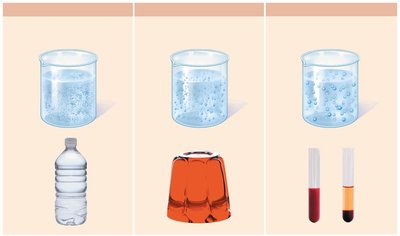
Mixtures vs. Compounds
Mixtures: No chemical bonding, can be separated physically, can be heterogeneous or homogeneous.
Compounds: Chemical bonding, separated only by breaking bonds, always homogeneous.
Chemical Bonds
Chemical bonds are energy relationships between electrons of reacting atoms. The outermost electrons (valence electrons) determine reactivity. Atoms tend to achieve a full valence shell (octet rule).
Chemically inert elements: Valence shell full (e.g., noble gases), do not react.
Chemically reactive elements: Valence shell not full, tend to gain, lose, or share electrons to achieve stability.
Types of Chemical Bonds
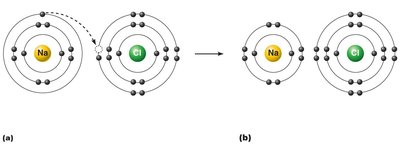
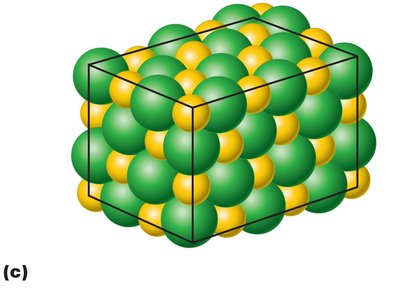
Ionic bonds: Transfer of electrons from one atom to another, forming ions (cations and anions). Attraction between oppositely charged ions forms the bond. Most ionic compounds are salts (e.g., NaCl).
Covalent bonds: Sharing of two or more valence electrons. Can be single, double, or triple bonds depending on the number of shared electron pairs.
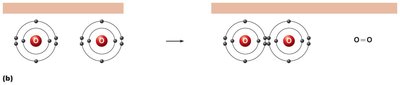
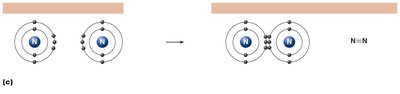
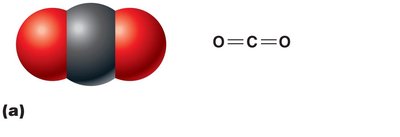
Nonpolar covalent bonds: Electrons shared equally, resulting in electrically balanced molecules (e.g., CO2).
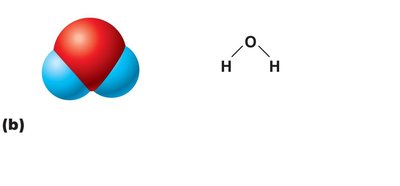
Polar covalent bonds: Unequal sharing of electrons, resulting in molecules with partial charges (dipoles), e.g., H2O. Atoms with high electron-attracting ability are electronegative (e.g., oxygen), while those with low ability are electropositive (e.g., sodium).
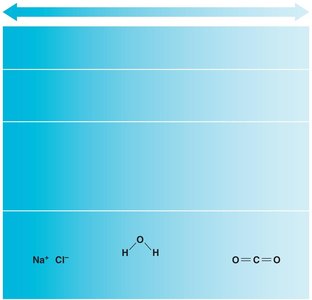
Bond continuum: Ionic → Polar covalent → Nonpolar covalent (increasing electron sharing).
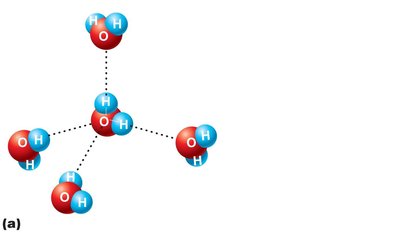
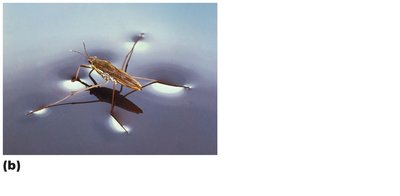
Hydrogen bonds: Attractive force between a hydrogen atom (already covalently bonded to an electronegative atom) and another electronegative atom. Not true bonds, but important for the structure of water and biological molecules.
Chemical Reactions
Chemical reactions occur when chemical bonds are formed, rearranged, or broken. They are represented by chemical equations showing reactants and products.
Synthesis (combination) reactions: Atoms or molecules combine to form larger, more complex molecules. Always involve bond formation. Anabolic (building up).
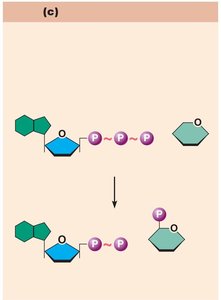
Decomposition reactions: Molecule is broken down into smaller molecules or atoms. Involve breaking of bonds. Catabolic (breaking down).
Exchange (displacement) reactions: Involve both synthesis and decomposition; bonds are both made and broken.
Oxidation-Reduction (Redox) reactions: Decomposition reactions where electrons are exchanged. Electron donors are oxidized, electron acceptors are reduced. Example: Cellular respiration.
Energy flow: Reactions are exergonic (release energy) or endergonic (absorb energy).
Reversibility: Most reactions are reversible, but many biological reactions are essentially irreversible due to energy requirements or removal of products.
Rate of reactions: Increased by higher temperature, higher concentration of reactants, smaller particle size, and catalysts (enzymes in biology).
Summary Table: Types of Chemical Bonds
Bond Type | Electron Behavior | Example | Biological Importance |
|---|---|---|---|
Ionic | Transfer of electrons | NaCl | Electrolyte balance, nerve impulses |
Covalent (Nonpolar) | Equal sharing | O2, CO2 | Structural molecules, gases |
Covalent (Polar) | Unequal sharing | H2O | Solvent properties, reactivity |
Hydrogen | Attraction between dipoles | Between H2O molecules | Protein structure, DNA stability |
Additional info: This summary provides foundational chemistry concepts essential for understanding later topics in Anatomy & Physiology, such as cellular structure, metabolism, and physiological regulation.
