 뒤로
뒤로Chemistry of Life: Macromolecules and Chemical Bonds in Anatomy & Physiology
스터디 가이드 - 스마트 노트
 자료에 맞춘 맞춤형 노트, 핵심 정의, 예시, 맥락을 확장해 제공합니다.
Chemistry of Life and Macromolecules
Introduction
This section explores the foundational chemistry concepts essential for understanding Anatomy & Physiology, focusing on chemical bonds, chemical reactions, and the structure and function of organic macromolecules such as carbohydrates, lipids, proteins, and nucleic acids.
Chemical Bonds and Reactions
Types of Chemical Bonds
Ionic Bonds: Formed when electrons are transferred from a metal to a non-metal, resulting in oppositely charged ions that attract each other. Example: NaCl (table salt).
Covalent Bonds: Formed when atoms share electrons. These are stronger than ionic bonds and can be:
Non-polar Covalent Bonds: Electrons are shared equally (e.g., O2, CO2).
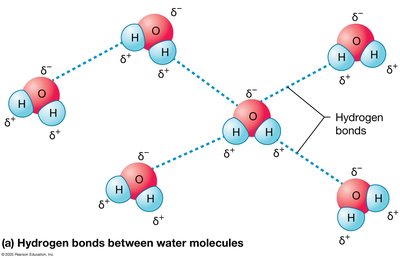
Polar Covalent Bonds: Electrons are shared unequally, creating partial charges (e.g., H2O).
Hydrogen Bonds: Weak attractions between a partially positive hydrogen atom and a partially negative atom (usually oxygen or nitrogen) in another molecule. These are not true bonds but are crucial for the properties of water and biological molecules.
Chemical Reactions
Reactants: Substances that enter into a chemical reaction.
Products: Substances produced by a chemical reaction.
Synthesis (Anabolic) Reactions: Two or more reactants combine to form a larger product. Example:
Decomposition (Catabolic) Reactions: A reactant breaks down into smaller products. Example:
Enzymes
Enzymes: Biological catalysts, mostly proteins, that speed up chemical reactions by lowering activation energy. They are essential for metabolism and cellular function.
Organic Macromolecules
Monomers and Polymers
Monomers: Small, single subunits that can join together to form larger molecules.
Polymers: Large molecules made by linking monomers together.
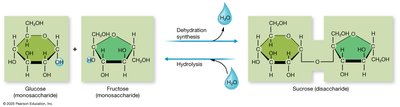
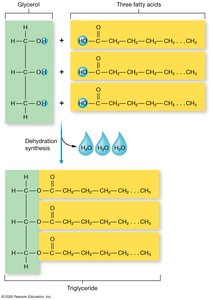
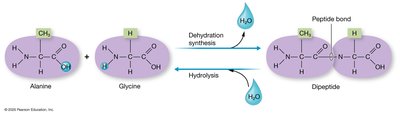
Dehydration Synthesis: Chemical reaction that joins monomers by removing a water molecule. Products: polymer + H2O
Hydrolysis: Chemical reaction that breaks polymers into monomers using water as a reactant. Products: monomers
Carbohydrates
Structure and Function
Main source of energy for cells (glucose is converted to ATP).
Form glycoproteins and glycolipids in cell membranes.
Types of Carbohydrates
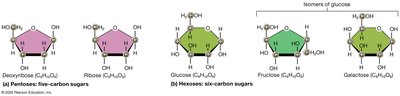
Monosaccharides: Simple sugars (e.g., glucose, fructose, galactose).
Disaccharides: Two monosaccharides joined by a glycosidic bond (e.g., sucrose, maltose, lactose).
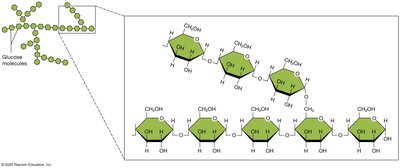
Polysaccharides: Long chains of monosaccharides (e.g., starch in plants, glycogen in animals).
Lipids
Structure and Function
Composed mainly of nonpolar hydrocarbons; hydrophobic (insoluble in water).
Major types: triglycerides, phospholipids, steroids.
Fatty Acids
Saturated Fatty Acids: No double bonds; solid at room temperature.
Unsaturated Fatty Acids: One or more double bonds; liquid at room temperature.
Monounsaturated: One double bond.
Polyunsaturated: Two or more double bonds (e.g., omega-3 fatty acids).
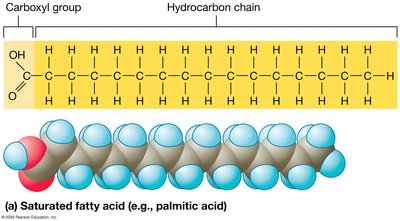
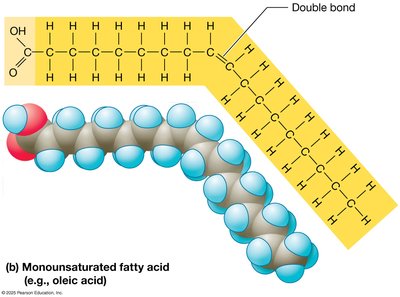
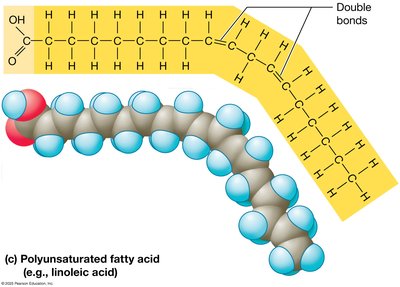
Triglycerides
Formed by joining three fatty acids to a glycerol molecule via dehydration synthesis.
Functions: energy storage, insulation, protection of organs, absorption of fat-soluble vitamins.
Phospholipids
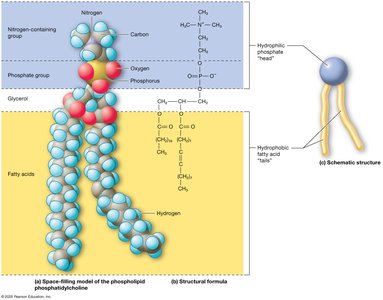
Composed of a glycerol backbone, two fatty acids (hydrophobic), and a phosphate group (hydrophilic).
Main component of cell membranes; act as emulsifiers.
Steroids
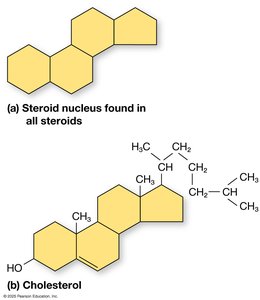
Structure: Four fused hydrocarbon rings.
Functions: Components of cell membranes (cholesterol), hormones, bile acids.
Proteins
Structure and Function
Functions: Enzymes, structural support, transport, signaling, immune response, acid-base balance.
Amino Acids
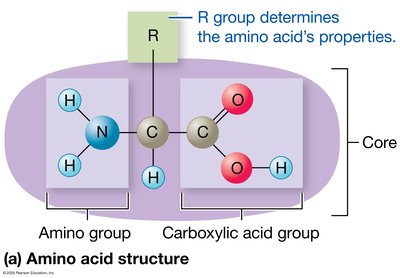
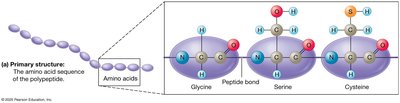
Monomers of proteins; each contains a central carbon, hydrogen, amino group, carboxyl group, and variable R group.
Peptide Bonds and Protein Structure
Peptide bonds form between amino acids via dehydration synthesis.
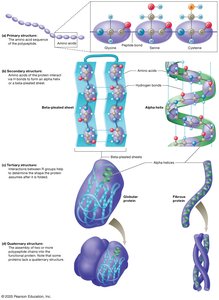
Proteins have four levels of structure:
Primary: Sequence of amino acids.
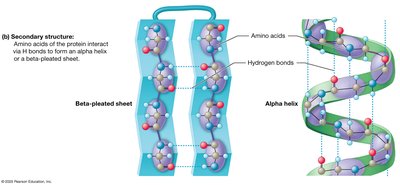
Secondary: Alpha helices and beta sheets formed by hydrogen bonding.
Tertiary: Overall 3D shape of a single polypeptide.
Quaternary: Assembly of multiple polypeptide chains.
Nucleic Acids and Nucleotides
Nucleotides
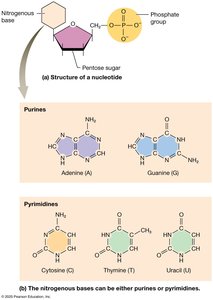
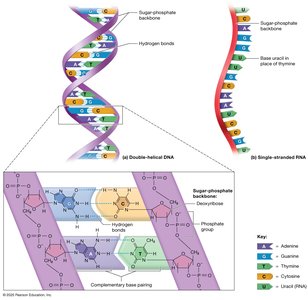
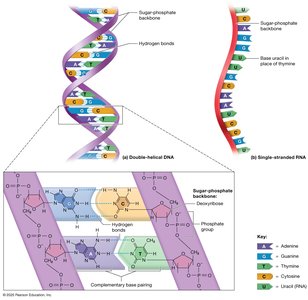
Monomers of nucleic acids; each consists of a phosphate group, a pentose sugar (ribose or deoxyribose), and a nitrogenous base (adenine, guanine, cytosine, thymine, or uracil).
DNA and RNA
DNA: Double-stranded, stores genetic information, uses complementary base pairing, held together by phosphodiester and hydrogen bonds.
RNA: Single-stranded, involved in protein synthesis and gene regulation, contains uracil instead of thymine.
Adenosine Triphosphate (ATP)
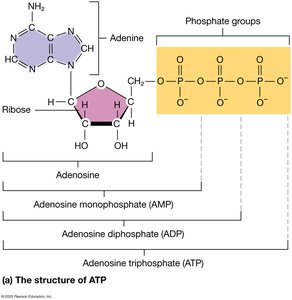
Structure: Ribose sugar, adenine base, and three phosphate groups.
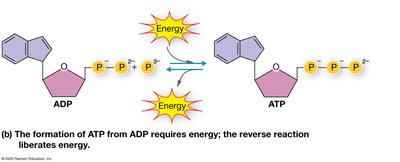
Function: Main energy currency of the cell; energy is stored in the high-energy phosphate bonds and released during hydrolysis.
Summary Table: Major Macromolecules
Macromolecule | Monomer | Bond Type | Main Functions |
|---|---|---|---|
Carbohydrates | Monosaccharides | Glycosidic | Energy, cell recognition |
Lipids | Fatty acids, glycerol | Ester | Energy storage, membranes, hormones |
Proteins | Amino acids | Peptide | Enzymes, structure, signaling |
Nucleic Acids | Nucleotides | Phosphodiester | Genetic information, energy (ATP) |
