 뒤로
뒤로Endocrine Glands, Hormonal Regulation, and Metabolic Control: Study Guide
스터디 가이드 - 스마트 노트
 자료에 맞춘 맞춤형 노트, 핵심 정의, 예시, 맥락을 확장해 제공합니다.
Endocrine System Overview
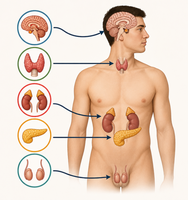
Major Endocrine Glands and Their Hormones
The endocrine system consists of glands that secrete hormones directly into the bloodstream, regulating diverse physiological processes. These glands communicate across distant tissues to synchronize metabolism and maintain homeostasis.
Hypothalamus: Releases regulatory hormones controlling pituitary function.
Pituitary Gland: Secretes tropic and direct hormones affecting growth, metabolism, and reproduction.
Thyroid Gland: Produces T3 and T4, regulating basal metabolic rate (BMR).
Parathyroid Glands: Release parathyroid hormone (PTH) for calcium homeostasis.
Adrenal Glands: Cortex produces steroid hormones; medulla releases catecholamines.
Pancreas: Islets secrete insulin and glucagon for glucose regulation.
Gonads: Produce sex steroids and regulate gametogenesis.
Hypothalamic–Pituitary Axes
Anterior and Posterior Pituitary Pathways
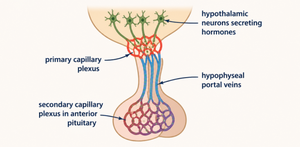
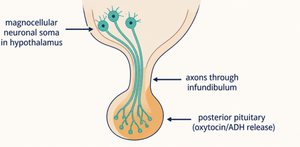
The hypothalamus links the nervous and endocrine systems, regulating the pituitary gland via two distinct pathways:
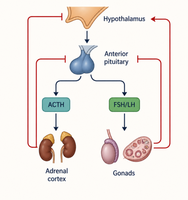
Anterior Pituitary: Uses the hypophyseal portal system to deliver releasing hormones from the hypothalamus.
Posterior Pituitary: Hormones are transported along axons and released directly into circulation.
Anterior Pituitary Hormones
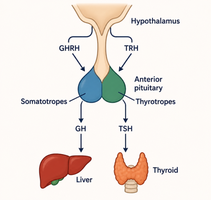
The anterior pituitary releases both tropic and direct hormones under hypothalamic control:
Growth Hormone (GH): Stimulates tissue growth, protein synthesis, and lipid mobilization. Antagonizes insulin, raising blood glucose via glycogenolysis.
Thyroid-Stimulating Hormone (TSH): Triggers thyroid hormone synthesis and secretion.
Adrenocorticotropic Hormone (ACTH): Stimulates glucocorticoid release from the adrenal cortex.
Follicle-Stimulating Hormone (FSH) & Luteinizing Hormone (LH): Regulate gametogenesis and sex steroid secretion.
Prolactin (PRL): Promotes milk production; primarily inhibited by hypothalamic dopamine.
Thyroid Gland and Metabolic Regulation
Thyroid Hormone Synthesis and Effects
Thyroid follicular cells synthesize thyroglobulin and trap iodine to produce triiodothyronine (T3) and thyroxine (T4). These hormones cross cell membranes and bind nuclear receptors, increasing ATP consumption and heat production (calorigenic effect).
Na+/K+ ATPase Upregulation: Increases metabolic rate and heat production.
Metabolic Turnover: Enhances glucose oxidation, lipolysis, and protein synthesis.
Permissive Action: Upregulates beta-adrenergic receptors, amplifying catecholamine response.
Calcium Homeostasis
Parathyroid Hormone (PTH) vs. Calcitonin
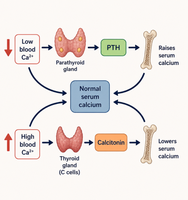
Blood calcium balance is maintained by antagonistic actions of PTH and calcitonin:
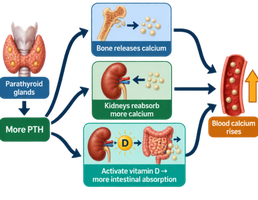
PTH: Released by parathyroid chief cells when blood Ca2+ is low. Stimulates osteoclasts, increases renal Ca2+ reabsorption, and activates vitamin D.
Calcitonin: Secreted by thyroid parafollicular (C) cells when Ca2+ is high. Inhibits osteoclasts to reduce bone resorption.
Adrenal Gland Function
Adrenal Cortex: Layered Steroidogenesis
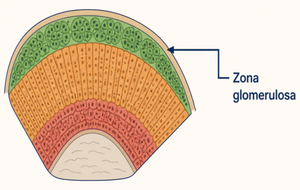
The adrenal cortex is organized into three layers, each producing distinct steroid hormones:
Zona Glomerulosa: Secretes aldosterone, regulating Na+/K+ balance and blood pressure via the renin-angiotensin-aldosterone system (RAAS).
Zona Fasciculata: Secretes cortisol, promoting gluconeogenesis, lipolysis, and immune suppression; regulated by ACTH.
Zona Reticularis: Secretes DHEA (androgens), supporting secondary sex traits.
Adrenal Medulla: Emergency Stress Response
The adrenal medulla contains chromaffin cells, which are modified postganglionic sympathetic neurons. Direct neural stimulation triggers rapid catecholamine release:
Epinephrine (80%) and Norepinephrine (20%): Mediate immediate stress adaptations, including increased heart rate, airway dilation, glycogen breakdown, and selective vasoconstriction.
Pancreatic Islets and Glucose Regulation
Insulin and Glucagon: Dual Metabolic Controls
The pancreas contains alpha and beta cells that regulate blood glucose:
Alpha Cells (Glucagon): Triggered by low blood glucose; stimulate glycogenolysis and gluconeogenesis in hepatocytes to raise blood glucose.
Beta Cells (Insulin): Triggered by high blood glucose; promote GLUT4-mediated glucose uptake, glycogenesis, and lower blood glucose.
Metabolic States
Absorptive (Fed) State
After a meal, insulin dominates, promoting anabolic processes:
Glucose Utilization: Main cellular fuel source.
Glycogenesis: Excess glucose stored as glycogen in muscle and liver.
Lipogenesis: Fatty acids and carbohydrates converted to triglycerides in adipose tissue.
Protein Synthesis: Active amino acid uptake and translation in cells.
Postabsorptive (Fasting) State
During fasting, catabolic hormones mobilize energy reserves:
Glucose Sparing: Non-neural tissues use fatty acids, reserving glucose for the brain.
Hepatic Glycogenolysis: Rapid breakdown of liver glycogen stores.
Gluconeogenesis: Synthesis of new glucose from glycerol, lactate, and amino acids.
Comparative Pathways of Glucose Homeostasis
Metabolic pathways shift with nutrient availability, coordinated by insulin and glucagon:
Insulin: Lowers blood glucose by promoting uptake and storage.
Glucagon, Epinephrine, GH, Cortisol: Raise blood glucose by mobilizing reserves.
Clinical Pathology: Diabetes Mellitus
Type 1 Diabetes (IDDM)
Caused by autoimmune destruction of beta cells, resulting in absolute insulin deficiency. Characterized by hyperglycemia, ketoacidosis, and glucosuria. Treated with exogenous insulin.
Type 2 Diabetes (NIDDM)
Involves insulin resistance and eventual secretory failure. Risk factors include obesity, genetics, and inactivity. Managed with lifestyle changes, metformin, and insulin sensitizers.
Endocrine Pathologies
Growth Hormone Disorders
Pituitary Gigantism: GH hypersecretion before epiphyseal plate closure causes excessive long bone growth.
Acromegaly: GH hypersecretion after plate fusion leads to thickening of facial bones, hands, and feet.
Pituitary Dwarfism: GH deficiency in childhood results in short stature with normal proportions.
Thyroid Dysfunction
Graves' Disease (Hyperthyroidism): Antibodies mimic TSH, overstimulating the gland. Symptoms: heat intolerance, weight loss, exophthalmos, tachycardia.
Myxedema / Hashimoto's (Hypothyroidism): Hormone deficiency. Symptoms: low BMR, cold intolerance, weight gain, mental sluggishness, goiter from TSH.
Feedback Regulation and Integration
Negative Feedback Mechanisms
Hormones inhibit their own production by acting on higher levels of the axis, preventing hypersecretion and maintaining homeostasis.
Example: Low T4 and high TSH suggest primary thyroid dysfunction; negative feedback fails to suppress TSH.
Summary of Endocrine Integration
The hypothalamus and pituitary coordinate central control via portal and axonal pathways. Endocrine glands regulate critical parameters: BMR (Thyroid), Ca2+ (PTH/Calcitonin), Stress (Adrenals), and Glucose (Pancreas). Metabolic states shift dynamically between insulin-driven storage and glucagon-driven mobilization. Pathologies emerge when feedback mechanisms fail or cellular receptor responsiveness is compromised.
