뒤로
뒤로Essential Study Notes: Chemistry of Life and Cell Biology for Anatomy & Physiology
스터디 가이드 - 스마트 노트
 자료에 맞춘 맞춤형 노트, 핵심 정의, 예시, 맥락을 확장해 제공합니다.
Chemistry of Life
Polar and Nonpolar Covalent Bonds
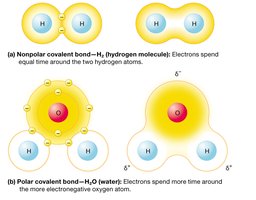
Chemical bonds are essential for the structure and function of biological molecules. Covalent bonds can be classified as polar or nonpolar based on the distribution of electrons between atoms.
Nonpolar Covalent Bond: Electrons are shared equally between atoms, as seen in a hydrogen molecule (H2).
Polar Covalent Bond: Electrons are shared unequally, resulting in partial charges on atoms. Water (H2O) is a classic example, where electrons spend more time around the oxygen atom, making it partially negative and the hydrogens partially positive.
Importance: The polarity of water molecules contributes to its solvent properties and its role in biological systems.
The pH Scale and Hydrogen Ions
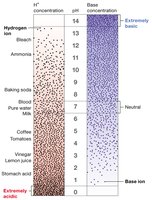
The pH scale measures the concentration of hydrogen ions (H+) in a solution, indicating its acidity or basicity.
pH Scale: Ranges from 0 (most acidic) to 14 (most basic), with 7 being neutral.
Effect of Hydrogen Ions: Adding H+ ions lowers the pH, making the solution more acidic. Removing H+ ions raises the pH, making it more basic.
Biological Relevance: Enzyme activity and cellular processes are highly sensitive to pH changes.
Classes of Organic Molecules: Nucleic Acids
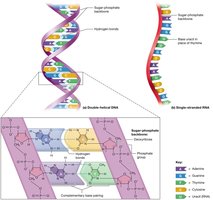
Nucleic acids are one of the four major classes of organic molecules, essential for storing and transmitting genetic information.
DNA (Deoxyribonucleic Acid): Double-helical structure, stores genetic information.
RNA (Ribonucleic Acid): Single-stranded, involved in protein synthesis.
Monomers: Both are polymers of nucleotides, which consist of a sugar, phosphate group, and nitrogenous base.
Cell Biology
Levels of Structural Organization
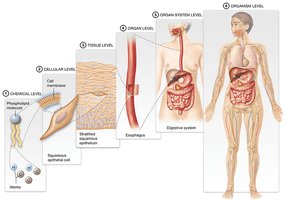
The human body is organized into hierarchical levels, from the smallest chemical components to the entire organism.
Chemical Level: Atoms and molecules
Cellular Level: Cells and their organelles
Tissue Level: Groups of similar cells performing a common function
Organ Level: Structures composed of two or more tissue types
Organ System Level: Organs working together for a common purpose
Organism Level: The living human being
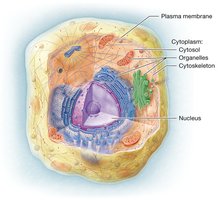
Animal Cell Structure
Animal cells are complex structures with specialized components that perform distinct functions necessary for life.
Plasma Membrane: Encloses the cell, regulates entry and exit of substances.
Cytoplasm: Contains cytosol, organelles, and cytoskeleton.
Nucleus: Houses genetic material and controls cellular activities.
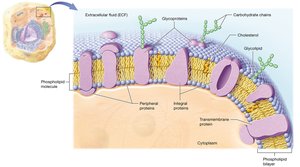
Plasma Membrane and the Fluid Mosaic Model
The plasma membrane is a dynamic structure that separates the cell from its environment and regulates molecular traffic.
Phospholipid Bilayer: Composed of hydrophilic heads and hydrophobic tails, forming a selective barrier.
Fluid Mosaic Model: Describes the membrane as a mosaic of proteins floating in or on the fluid lipid bilayer.
Membrane Proteins: Integral (span the membrane) and peripheral (attached to one side) proteins serve various functions such as transport, signaling, and structural support.
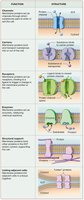
Functions of Membrane Proteins
Membrane proteins are critical for the diverse functions of the plasma membrane.
Transport: Channels and carriers move substances across the membrane.
Receptors: Bind signaling molecules and initiate cellular responses.
Enzymes: Catalyze chemical reactions at the membrane surface.
Structural Support: Maintain cell shape and stabilize membrane structure.
Cell Recognition: Glycoproteins serve as identification tags.
Enzymes
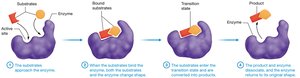
Enzymes are biological catalysts that speed up chemical reactions without being consumed.
Substrate: The reactant on which an enzyme acts.
Product: The result of the enzymatic reaction.
Mechanism: Enzymes lower the activation energy required for reactions.
Selective Permeability and Transport Mechanisms
The plasma membrane's selective permeability allows the cell to control its internal environment by regulating the movement of substances.
Passive Transport: Does not require energy; includes diffusion and osmosis.
Active Transport: Requires energy (usually ATP) to move substances against their concentration gradients.
Diffusion
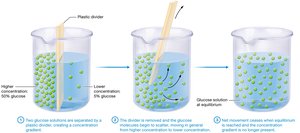
Diffusion is the movement of molecules from an area of higher concentration to an area of lower concentration until equilibrium is reached.
Simple and Facilitated Diffusion
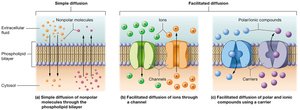
Simple diffusion involves nonpolar molecules passing directly through the lipid bilayer, while facilitated diffusion requires membrane proteins for polar or charged molecules.
Osmosis
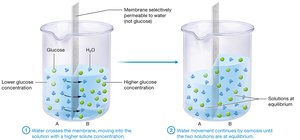
Osmosis is the diffusion of water across a selectively permeable membrane from a region of lower solute concentration to higher solute concentration.
Tonicity
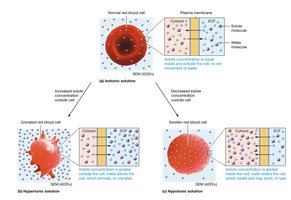
Tonicity describes the ability of a solution to cause a cell to gain or lose water.
Isotonic: No net water movement; cell volume remains stable.
Hypertonic: Water leaves the cell; cell shrinks (crenates).
Hypotonic: Water enters the cell; cell swells and may burst (lyse).
Active Transport
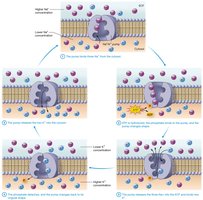
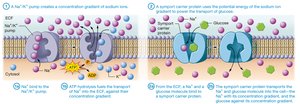
Active transport uses energy to move substances against their concentration gradients via membrane proteins called pumps.
Primary Active Transport: Direct use of ATP, e.g., sodium-potassium pump.
Secondary Active Transport: Uses the gradient established by primary active transport to move other substances.
Vesicular Transport
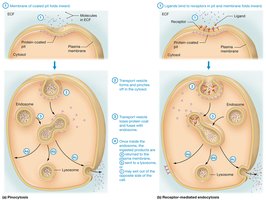
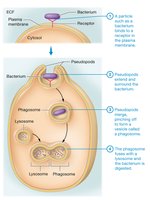
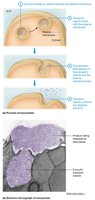
Large molecules are transported via vesicles in processes such as endocytosis (into the cell) and exocytosis (out of the cell).
Endocytosis: Includes phagocytosis (cell eating) and pinocytosis (cell drinking).
Exocytosis: Release of substances from the cell.
Cytoplasm and Organelles
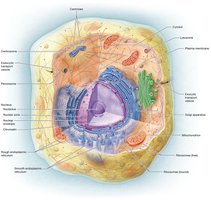
The cytoplasm contains the cytosol, organelles, and cytoskeleton, each with specialized functions.
Cytosol: Gel-like fluid where metabolic reactions occur.
Organelles: Specialized structures such as mitochondria, ribosomes, endoplasmic reticulum, and Golgi apparatus.
Cytoskeleton: Network of protein filaments providing structural support and facilitating movement.
Mitochondria
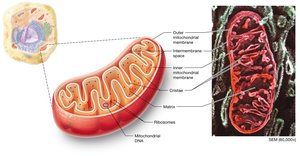
Mitochondria are the powerhouses of the cell, generating ATP through cellular respiration. They have a double membrane, with the inner membrane folded into cristae to increase surface area for energy production.
Ribosomes
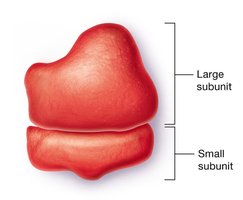
Ribosomes are the sites of protein synthesis, composed of two subunits. They can be free in the cytosol or bound to the endoplasmic reticulum.
Endoplasmic Reticulum (ER)
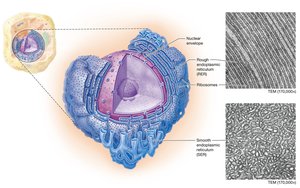
The ER is a network of membranes involved in protein and lipid synthesis. The rough ER (RER) is studded with ribosomes and folds proteins, while the smooth ER (SER) synthesizes lipids and stores calcium ions.
Golgi Apparatus
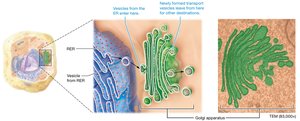
The Golgi apparatus modifies, sorts, and packages proteins and lipids for export or delivery to other organelles.
The Cytoskeleton and Cellular Extensions
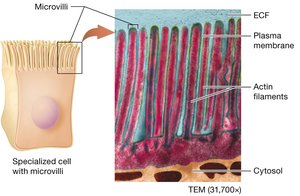
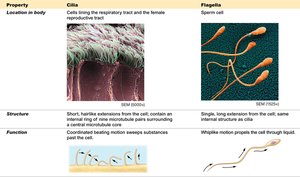
The cytoskeleton provides structural support, facilitates intracellular transport, and enables cellular movement. Cellular extensions such as microvilli, cilia, and flagella increase surface area or aid in movement.
The Nucleus, Chromatin, and Chromosomes
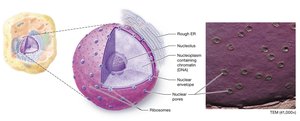
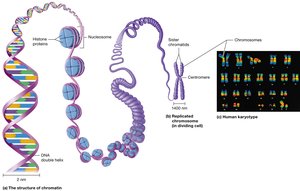
The nucleus is the control center of the cell, containing DNA organized as chromatin or chromosomes. The nuclear envelope surrounds the nucleus, and the nucleolus is the site of ribosome assembly.
Protein Synthesis
Protein synthesis involves two main processes: transcription and translation.
Transcription: DNA is used as a template to synthesize messenger RNA (mRNA).
Translation: Ribosomes read the mRNA sequence to assemble amino acids into a polypeptide chain (protein).

The Cell Cycle
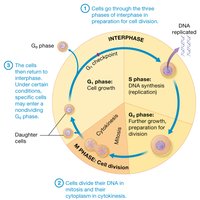
The cell cycle is the series of events that cells go through as they grow and divide. It consists of interphase (G1, S, G2 phases) and the M phase (mitosis and cytokinesis).
G1 Phase: Cell growth and normal functions.
S Phase: DNA replication.
G2 Phase: Preparation for cell division.
M Phase: Division of the nucleus (mitosis) and cytoplasm (cytokinesis).