 뒤로
뒤로Biochem A&P
스터디 가이드 - 스마트 노트
 자료에 맞춘 맞춤형 노트, 핵심 정의, 예시, 맥락을 확장해 제공합니다.
Q1. Distinguish organic from inorganic compounds.
Background
Topic: Classification of Chemical Compounds
This question tests your understanding of the difference between organic and inorganic compounds, which is foundational for studying cell chemistry in Anatomy & Physiology.
Key Terms:
Organic compounds: Contain both carbon and hydrogen (e.g., carbohydrates, lipids, proteins, nucleic acids).
Inorganic compounds: Do not contain both carbon and hydrogen (e.g., water, salts, oxygen, carbon dioxide).
Step-by-Step Guidance
Recall the definition of organic compounds: They must contain both carbon and hydrogen atoms.
Identify examples of organic compounds found in cells (such as proteins, lipids, carbohydrates, nucleic acids).
Recall the definition of inorganic compounds: These lack either carbon or hydrogen, or both.
Identify examples of inorganic compounds (such as water, salts, oxygen, carbon dioxide).
Try solving on your own before revealing the answer!
Final Answer:
Organic compounds contain both carbon and hydrogen, while inorganic compounds do not. Examples of organic compounds include carbohydrates, lipids, proteins, and nucleic acids. Examples of inorganic compounds include water, salts, oxygen, and carbon dioxide.
Q2. Explain the importance of water to body homeostasis, then provide examples of the roles of water for each property (High Heat Capacity, Solvent, Chemical Reactivity, Cushioning).
Background
Topic: Properties and Functions of Water in the Human Body
This question tests your understanding of how water's unique properties contribute to maintaining stable internal conditions (homeostasis) in the body.
Key Terms and Properties:
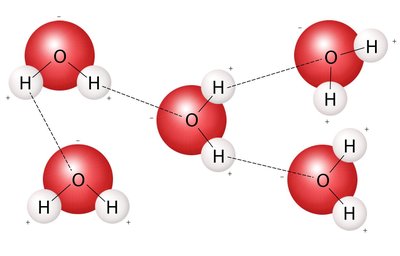
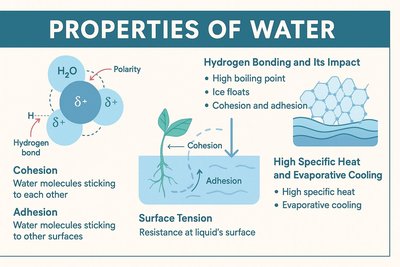
High Heat Capacity: Water can absorb and release heat with little temperature change.
Solvent: Water dissolves many substances, enabling metabolic reactions.
Chemical Reactivity: Water participates in chemical reactions, such as hydrolysis.
Cushioning: Water protects organs by providing a fluid cushion.
Step-by-Step Guidance
Review each property of water and consider how it helps maintain homeostasis.
For High Heat Capacity, think about how water stabilizes body temperature during exercise or fever.
For Solvent, consider how water enables transport of nutrients and waste in blood.
For Chemical Reactivity, recall that water is involved in breaking down molecules during digestion.
For Cushioning, think about how cerebrospinal fluid protects the brain and spinal cord.
Try solving on your own before revealing the answer!
Final Answer:
Water's high heat capacity helps regulate body temperature, its solvent property allows for transport and reactions of substances, its chemical reactivity enables metabolic processes like hydrolysis, and its cushioning property protects organs such as the brain. Each property is essential for maintaining homeostasis.
Q3. List some salts and explain their roles in body functioning.
Background
Topic: Electrolytes and Their Functions
This question tests your knowledge of inorganic salts (electrolytes) and their importance in physiological processes.
Key Terms:
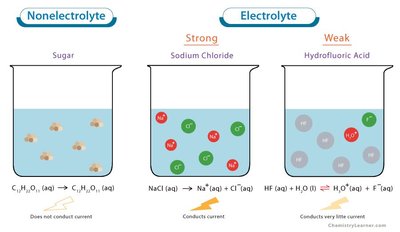
Electrolytes: Substances that dissociate into ions in solution and conduct electricity.
Common salts: Sodium chloride (NaCl), potassium chloride (KCl), calcium phosphate (Ca3(PO4)2), magnesium sulfate (MgSO4).
Step-by-Step Guidance
Identify the main salts found in the body (e.g., NaCl, KCl, Ca3(PO4)2, MgSO4).
Recall the role of sodium ions in nerve impulse transmission and fluid balance.
Consider the role of potassium ions in muscle contraction and heart function.
Think about calcium's importance in bone structure and blood clotting.
Reflect on magnesium's role in enzyme activity and phosphate's role in energy transfer.
Try solving on your own before revealing the answer!
Final Answer:
Salts such as sodium chloride, potassium chloride, calcium phosphate, and magnesium sulfate are vital for nerve transmission, muscle contraction, bone health, enzyme function, and energy transfer. These electrolytes help maintain fluid balance and support metabolic processes.
Q4. Define and describe an acid, a base, and a salt.
Background
Topic: Chemical Properties of Inorganic Compounds
This question tests your understanding of acids, bases, and salts, which are important for maintaining pH and electrolyte balance in the body.
Key Terms and Formulas:
Acid: A substance that releases hydrogen ions () in solution.
Base: A substance that releases hydroxide ions () or accepts hydrogen ions.
Salt: A compound formed from the reaction of an acid and a base, consisting of anions and cations other than and .
Step-by-Step Guidance
Recall the definition of an acid and its behavior in water (releases ions).
Recall the definition of a base and its behavior in water (releases ions or accepts ).
Recall the definition of a salt and how it forms from the neutralization reaction between an acid and a base.
Think of examples for each: hydrochloric acid (), sodium hydroxide (), sodium chloride ().
Try solving on your own before revealing the answer!
Final Answer:
An acid releases ions in solution, a base releases ions or accepts $H^+$, and a salt is formed from the reaction of an acid and a base. Examples: (acid), (base), (salt).
Q5. Explain the concept of pH, and state the pH of blood.
Background
Topic: Acid-Base Balance and pH
This question tests your understanding of pH, which is crucial for maintaining proper physiological function.
Key Terms and Formulas:
pH: A measure of hydrogen ion concentration; calculated as .
Normal blood pH: Slightly alkaline, tightly regulated.
Step-by-Step Guidance
Recall the formula for pH: .
Understand that a lower pH means higher acidity, and a higher pH means more basic.
Remember that normal blood pH is slightly above neutral (7.0).
Think about why maintaining blood pH is important for enzyme function and metabolic processes.
Try solving on your own before revealing the answer!
Final Answer:
pH measures the concentration of hydrogen ions in a solution. The normal pH of blood is about 7.35–7.45, which is slightly alkaline. This range is essential for proper physiological function.
