 뒤로
뒤로Introduction to Endocrinology: Hormones, Behavior, and Bioregulation
스터디 가이드 - 스마트 노트
 자료에 맞춘 맞춤형 노트, 핵심 정의, 예시, 맥락을 확장해 제공합니다.
Endocrinology: Foundations and Historical Context
What is Endocrinology?
Endocrinology is the scientific study of hormones, the glands that secrete them, and their effects on physiology and behavior. Hormones are chemical messengers that travel through the bloodstream to regulate various bodily functions, including growth, metabolism, reproduction, and behavior.
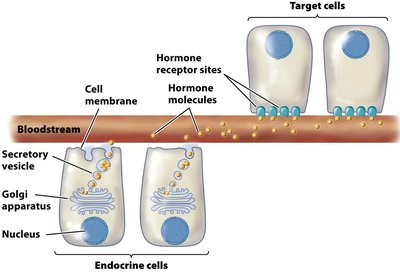
Hormones: Organic chemical messengers produced by endocrine glands, affecting distant target cells with specific receptors.
Endocrine System: A network of glands that secrete hormones directly into the circulatory system.
Behavioral Endocrinology: The study of the interaction between hormones and behavior, including bidirectional effects.
Historical Origins of Endocrinology
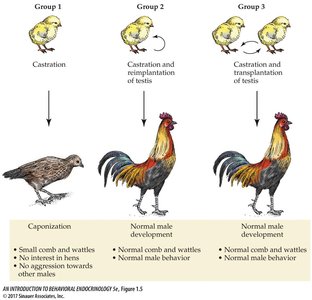
The field of endocrinology has roots in ancient practices and observations, such as castration in animals and humans for various purposes. The scientific foundation was established through experiments demonstrating that glands secrete chemical signals influencing physiology and behavior.
Eunuchs: Castrated males historically used in royal courts for specific social roles.
Berthold's Experiment (1849): Demonstrated that testes secrete a substance necessary for male development, independent of neural connections.
Discovery of Hormones: Bayliss and Starling (1902) identified secretin, the first hormone, and defined the concept of hormones as blood-borne chemical messengers.
Hormones and Their Mechanisms
Definition and Function of Hormones
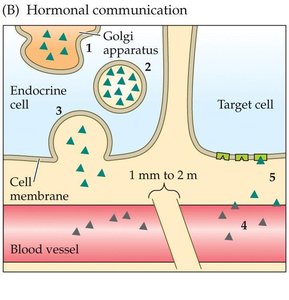
Hormones are organic chemical messengers produced by endocrine glands, traveling through the blood to interact with target cells. They regulate gene expression, protein synthesis, and coordinate physiological and behavioral responses.
Target Cells: Cells with specific receptors for a hormone.
Gene Expression: Hormones can activate or repress genes, influencing protein synthesis.
Coordination: Hormones integrate physiological processes and behaviors, such as growth, metabolism, and reproduction.
Neural vs. Hormonal Communication
The nervous and endocrine systems both regulate body functions but differ in their mechanisms and effects.
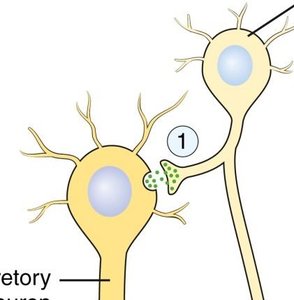
Neural Communication: Fast, short-lived, and specific; neurons release neurotransmitters at synapses to trigger immediate responses.
Hormonal Communication: Slower, longer-lasting, and widespread; hormones are released into the bloodstream and affect distant targets.
Types of Bioregulators
Bioregulators are chemical agents that mediate communication within and between cells. They include neurotransmitters, neuromodulators, neurohormones, hormones, and cytocrines.
Agent | Description | Examples |
|---|---|---|
Neurotransmitter | Secreted by neurons into synaptic space | Acetylcholine, dopamine, GABA |
Neuromodulator | Secreted by neurons into extracellular space | Endorphins, neuropeptides |
Neurohormone | Secreted by neurons into blood or CSF | TRH, CRH, oxytocin, dopamine |
Hormone | Secreted by non-neuronal cells into blood | Thyroxine, growth hormone, insulin |
Cytocrine | Secreted by cells into surrounding fluid | Somatostatin, norepinephrine |
Regulation of Hormone Secretion
Homeostasis and Feedback Mechanisms
Homeostasis is the maintenance of a stable internal environment. Hormone secretion is regulated by feedback mechanisms to ensure balance.
Negative Feedback: Increased hormone levels inhibit further secretion (e.g., thyroid hormones).
Complex Negative Feedback: Multiple levels of regulation, such as the hypothalamic-pituitary-adrenal (HPA) axis.
Feed-forward Mechanisms: Anticipatory regulation, such as the release of insulin before glucose rises after a meal.
Endocrine System Organization
Major Endocrine Glands and Their Hormones
The endocrine system consists of glands that secrete hormones with specific physiological and behavioral effects.
Hypothalamus: Produces releasing and inhibiting hormones; controls the pituitary gland.
Anterior Pituitary: Secretes tropic hormones (e.g., FSH, LH, prolactin) that regulate other endocrine glands.
Posterior Pituitary: Releases oxytocin and vasopressin (ADH).
Pineal Gland: Secretes melatonin, regulating circadian rhythms.
Adrenal Glands: Medulla releases adrenaline/noradrenaline; cortex releases cortisol.
Gonads: Testes produce testosterone; ovaries produce estrogen and progesterone.
Hormones and Behavior
Bidirectional Effects of Hormones and Behavior
Hormones can influence behavior, and behaviors can also affect hormone levels. This interaction is central to behavioral endocrinology.
Examples: Testosterone increases aggression and sexual behavior; stress elevates cortisol levels.
Performance Enhancers: Substances like erythropoietin, testosterone, and growth hormone are used (illegally) to enhance athletic performance.
Neural vs. Hormonal Mediation of Behavior
Neural Mediation: Fast, direct, and short-lived (e.g., reflexes, movement).
Hormonal Mediation: Slow, indirect, and long-lasting (e.g., growth, reproduction, metabolism).
Endocrine Disruption and Environmental Impact
Endocrine Disrupting Chemicals (EDCs)
EDCs are substances that interfere with hormone function, leading to medical disorders, altered tissue responses, and ecological consequences.
Medical Disorders: Overproduction or underproduction of hormones, tumors, or altered tissue sensitivity.
Environmental Impact: EDCs in water can cause intersex conditions in fish and amphibians; microplastics may disrupt marine food webs.
Summary Table: Major Hormones and Their Functions
Gland | Hormone | Main Function |
|---|---|---|
Anterior Pituitary | FSH, LH, Prolactin | Gametogenesis, ovulation, milk production |
Posterior Pituitary | Oxytocin, Vasopressin | Uterine contraction, milk letdown, water balance |
Pineal Gland | Melatonin | Circadian rhythms |
Adrenal Cortex | Cortisol | Stress response, metabolism |
Testis | Testosterone | Male secondary sex characteristics, spermatogenesis |
Ovary | Estrogen | Female secondary sex characteristics, sexual behavior |
Key Equations and Concepts
Hormone-Receptor Interaction:
Negative Feedback:
Additional info: This guide integrates foundational concepts in endocrinology, including historical experiments, mechanisms of hormone action, feedback regulation, and the impact of environmental chemicals on endocrine function. It is suitable for introductory Anatomy & Physiology students preparing for exams on the endocrine system and its role in physiology and behavior.
