 뒤로
뒤로Membrane Transport, Diffusion, and Osmosis: Study Notes for Anatomy & Physiology
스터디 가이드 - 스마트 노트
 자료에 맞춘 맞춤형 노트, 핵심 정의, 예시, 맥락을 확장해 제공합니다.
Membrane Transport
Overview of Membrane Transport
The plasma membrane regulates the movement of substances into and out of the cell, maintaining homeostasis. Transport mechanisms are classified as passive (no energy required) or active (requiring energy).
Passive processes: Do not require cellular energy (ATP). Examples include diffusion and osmosis.
Active processes: Require energy input from the cell. Examples include active transport and vesicular transport.
Carrier-mediated transport: Can be passive or active, depending on whether energy is used to move substances across the membrane.
Vesicular transport: Always active, involving the movement of large particles via vesicles.
Selective Permeability of the Plasma Membrane
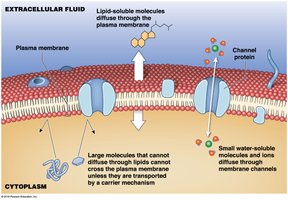
The plasma membrane is selectively permeable, allowing some substances to pass while restricting others. This selectivity is based on:
Size: Smaller molecules pass more easily.
Electrical charge: Ions may be attracted or repelled based on charge.
Molecular shape: Only molecules with compatible shapes can pass through specific channels or carriers.
Lipid solubility: Lipid-soluble substances diffuse through the lipid bilayer, while water-soluble substances require channels or carriers.
Forms of Vesicular Transport
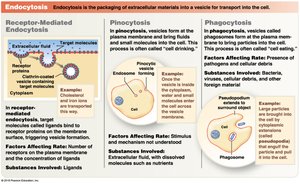
Vesicular transport involves the movement of large particles or fluids via vesicles. Major forms include endocytosis and exocytosis:
Endocytosis: The cell engulfs material from the extracellular environment. Includes pinocytosis (cell drinking) and phagocytosis (cell eating).
Exocytosis: Vesicles fuse with the plasma membrane to release contents outside the cell.
Diffusion and Osmosis
Solutions and Concentration
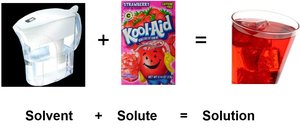
A solution is a homogeneous mixture of two or more substances. The solvent is the substance that dissolves the solute, and the solute is the substance being dissolved. Concentration refers to the amount of solute in a given volume of solution.
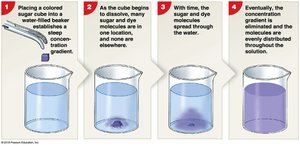
Concentration gradient: Exists when there is a difference in solute concentration between two regions.
Diffusion
Diffusion is the net movement of molecules from an area of higher concentration to an area of lower concentration, driven by the random motion of particles. Diffusion continues until equilibrium is reached.
Factors affecting diffusion rate:
Distance (shorter distance = faster diffusion)
Molecule size (smaller = faster)
Temperature (higher = faster)
Steepness of concentration gradient (steeper = faster)
Electrical forces (opposite charges attract, like charges repel)
Osmosis and Tonicity
Osmosis
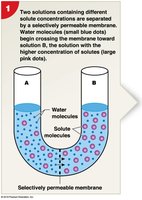
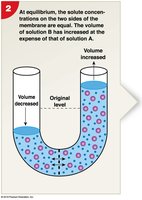
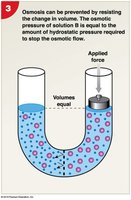
Osmosis is the diffusion of water across a selectively permeable membrane from an area of higher water concentration (lower solute concentration) to an area of lower water concentration (higher solute concentration). Water moves to balance solute concentrations on both sides of the membrane.
Osmolarity and Tonicity
Osmolarity is the total solute concentration of a solution. Tonicity describes how a solution affects cell volume:
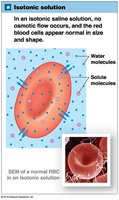
Isotonic solution: Same solute concentration as the cell; no net water movement; cell remains normal.
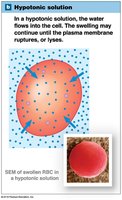
Hypotonic solution: Lower solute concentration than the cell; water enters the cell; cell may swell and burst (hemolysis).
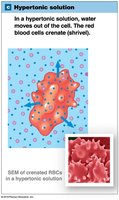
Hypertonic solution: Higher solute concentration than the cell; water leaves the cell; cell shrinks (crenation).
Scientific Method in Biological Investigation
Steps of the Scientific Method
The scientific method is a systematic approach to inquiry used in science and everyday problem-solving. The steps include:
Observation: Noticing phenomena or problems.
Hypothesis: Formulating an educated guess or explanation.
Experiment: Testing the hypothesis through controlled investigation.
Results: Collecting and recording data.
Analysis: Interpreting the data to draw conclusions.
Data types: Qualitative (descriptive) and quantitative (numerical).
Example: If a car does not start, one might observe the issue, hypothesize that the battery is dead, test by replacing the battery, and analyze whether the car starts.
Summary Table: Types of Membrane Transport
Type | Energy Required? | Direction | Example |
|---|---|---|---|
Simple Diffusion | No | High to Low | Oxygen entering cells |
Facilitated Diffusion | No | High to Low | Glucose transport via carrier proteins |
Osmosis | No | High to Low (water) | Water movement in kidneys |
Active Transport | Yes | Low to High | Sodium-potassium pump |
Endocytosis/Exocytosis | Yes | Varies | Phagocytosis, neurotransmitter release |
Key Equations
Fick's Law of Diffusion:
Where J is the rate of diffusion, D is the diffusion coefficient, and \frac{dC}{dx} is the concentration gradient.
Osmotic Pressure Equation:
Where \Pi is osmotic pressure, i is the van 't Hoff factor, M is molarity, R is the gas constant, and T is temperature in Kelvin.
Additional info: These notes cover core concepts from "Cell Chemistry & Cell Components" and "Energy & Cell Processes" relevant to membrane transport, diffusion, and osmosis, as outlined in standard Anatomy & Physiology curricula.
