 뒤로
뒤로The Chemical Level of Organization: Foundations for Anatomy & Physiology
스터디 가이드 - 스마트 노트
 자료에 맞춘 맞춤형 노트, 핵심 정의, 예시, 맥락을 확장해 제공합니다.
The Chemical Level of Organization
Chemistry and Matter
Chemistry is the science that studies the structure of matter, which is anything that occupies space and has mass. Matter is composed of atoms, the smallest stable units, which combine to form chemicals with unique characteristics. These chemical properties are fundamental to physiological processes at the molecular and cellular levels.
Atoms and Atomic Structure
Subatomic Particles
Protons: Positively charged, 1 mass unit, located in the nucleus.
Neutrons: Neutral, 1 mass unit, located in the nucleus.
Electrons: Negatively charged, very low mass, found in the electron cloud surrounding the nucleus.
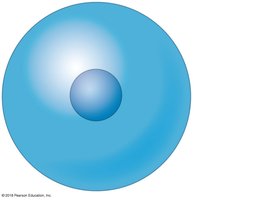
Atomic Structure and Elements
Atomic Number: Number of protons; determines the element and is found as a whole number on the Periodic Table.
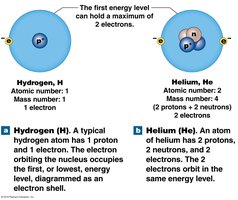
Nucleus: Central region containing protons and neutrons.
Electron Cloud: Spherical area containing electrons, organized into shells (energy levels).
Element: Pure substance of one type of atom, defined by atomic number, with uniform properties.
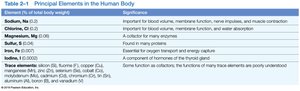
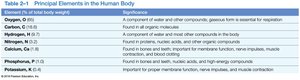
Principal Elements in the Human Body
The human body is composed of several key elements, each with specific physiological roles.
Element (% body weight) | Significance |
|---|---|
Oxygen (O, 65) | Component of water and other compounds; essential for respiration. |
Carbon (C, 18.6) | Found in all organic molecules. |
Hydrogen (H, 9.7) | Component of water and most other compounds in the body. |
Nitrogen (N, 3.2) | Found in proteins, nucleic acids, and other organic compounds. |
Calcium (Ca, 1.8) | Found in bones and teeth; important for membrane function, nerve impulses, muscle contraction, and blood clotting. |
Phosphorus (P, 1.0) | Found in bones and teeth, nucleic acids, and high-energy compounds. |
Potassium (K, 0.4) | Important for proper membrane function, nerve impulses, and muscle contraction. |
Isotopes and Radioisotopes
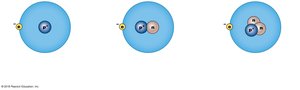
Isotopes: Atoms of the same element with different numbers of neutrons; mass number = protons + neutrons.
Radioisotopes: Unstable isotopes that emit radiation; used in medical diagnostics and treatments.
Atomic Weight (Atomic Mass)
Average mass of all isotopes of an element, weighted by their abundance; found as a decimal on the Periodic Table.
Electrons and Energy Levels
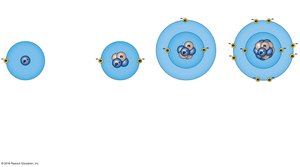
Electrons occupy shells (energy levels) around the nucleus.
First shell holds 2 electrons; second and third shells hold up to 8 electrons each.
The outermost shell (valence shell) determines chemical bonding and reactivity.
Molecules, Compounds, and Chemical Bonds
Chemical Bonds
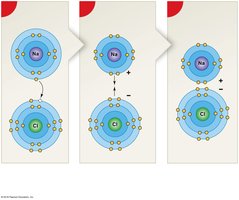
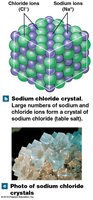
Ionic Bonds: Formed by the transfer of electrons from one atom to another, creating charged ions (cations and anions) that attract each other.
Covalent Bonds: Formed by sharing electrons between atoms; can be single, double, or triple bonds.
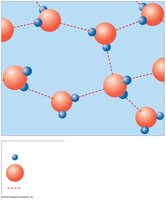
Hydrogen Bonds: Weak attractions between a hydrogen atom (with a slight positive charge) and an electronegative atom (like oxygen or nitrogen).
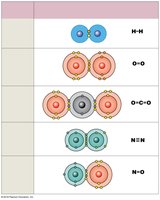
Polar and Nonpolar Covalent Bonds
Nonpolar: Equal sharing of electrons (e.g., O2).
Polar: Unequal sharing, resulting in partial charges (e.g., H2O).
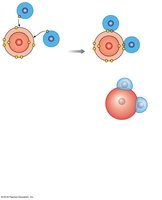
Hydrogen Bonds and Water Properties
Hydrogen bonds between water molecules create surface tension and contribute to water's unique properties.
Chemical Reactions
Types of Chemical Reactions
Decomposition (Catabolism): AB → A + B; breaks chemical bonds (e.g., hydrolysis).
Synthesis (Anabolism): A + B → AB; forms chemical bonds (e.g., dehydration synthesis).
Reversible Reactions: A + B ↔ AB; can proceed in both directions to reach equilibrium.
Enzymes and Activation Energy
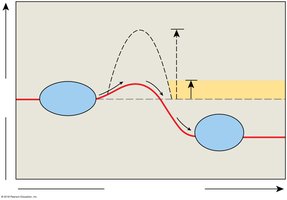
Enzymes are protein catalysts that lower the activation energy required for biochemical reactions, enabling life-sustaining processes to occur efficiently.
Inorganic and Organic Compounds
Inorganic Compounds
Do not contain both carbon and hydrogen as primary components (e.g., water, oxygen, carbon dioxide, acids, bases).
Organic Compounds
Contain carbon and hydrogen; include carbohydrates, proteins, lipids, and nucleic acids.
Properties of Water
Biological Importance of Water
Accounts for up to two-thirds of body weight.
High heat capacity stabilizes body temperature.
Acts as a lubricant, reactant, and universal solvent.
Solutions and Hydration Spheres
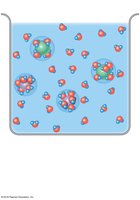
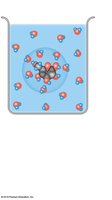
Water dissolves many substances by forming hydration spheres around ions and polar molecules, keeping them in solution.
Electrolytes
Soluble inorganic substances that dissociate into ions in body fluids, essential for nerve impulses and muscle contraction.
pH and Homeostasis
pH Scale
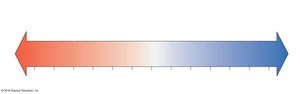
pH is the negative logarithm of hydrogen ion concentration; scale ranges from 0 (acidic) to 14 (basic).
Human blood pH is tightly regulated between 7.35 and 7.45.
Acids, Bases, and Buffers
Acids: Release H+ ions in solution (e.g., HCl).
Bases: Remove H+ ions from solution (e.g., NaOH).
Salts: Ionic compounds that do not affect H+ or OH– directly.
Buffers: Compounds that stabilize pH by removing or replacing H+; important in maintaining homeostasis (e.g., carbonic acid–bicarbonate system).
Macromolecules: Carbohydrates, Lipids, Proteins, and Nucleic Acids
Carbohydrates
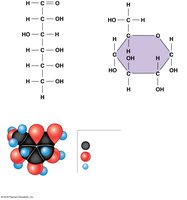
Organic molecules composed of C, H, and O; primary energy source for cells.
Monosaccharides: Simple sugars (e.g., glucose).
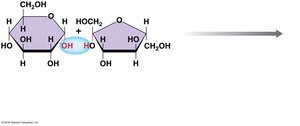
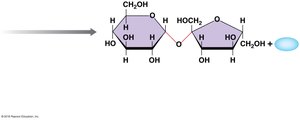
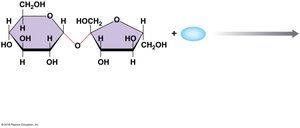
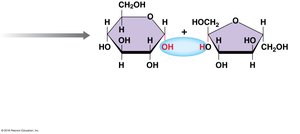
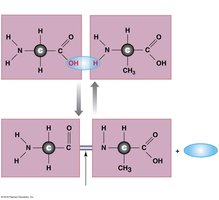
Disaccharides: Two monosaccharides joined by dehydration synthesis (e.g., sucrose).
Polysaccharides: Long chains of monosaccharides (e.g., glycogen).
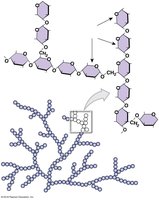
Lipids
Mainly hydrophobic molecules such as fats, oils, and waxes.
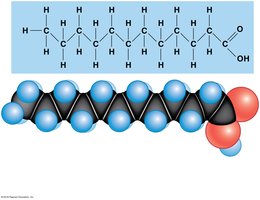
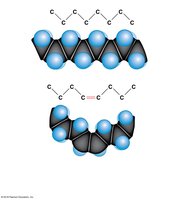
Fatty Acids: Long hydrocarbon chains with a carboxyl group; can be saturated or unsaturated.
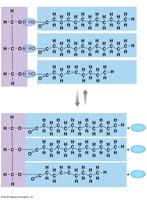
Glycerides: Fatty acids attached to glycerol (mono-, di-, triglycerides).
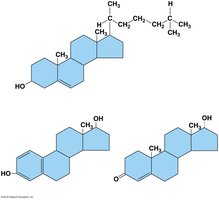
Steroids: Four-ring structures (e.g., cholesterol, hormones).
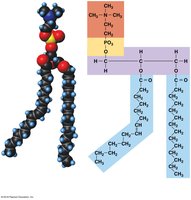
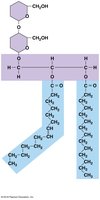
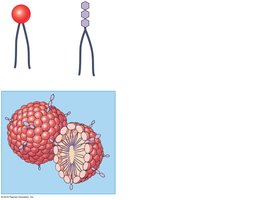
Phospholipids and Glycolipids: Structural components of cell membranes, forming bilayers and micelles.
Proteins
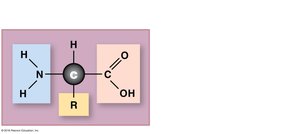
Most abundant organic molecules; composed of 20 amino acids.
Functions: support, movement, transport, buffering, metabolic regulation, coordination/control, defense.
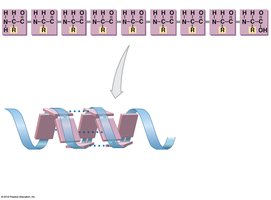
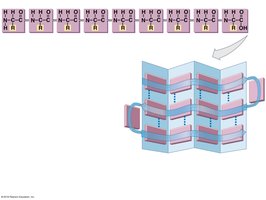
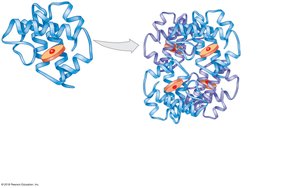
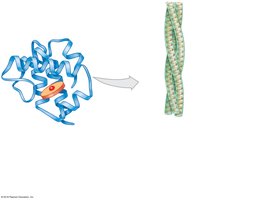
Structure: Primary (amino acid sequence), secondary (α-helix, β-sheet), tertiary (3D folding), quaternary (multiple polypeptides).
Enzymes
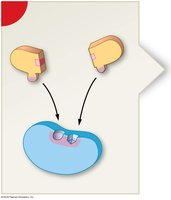
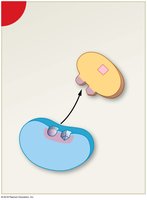
Proteins that catalyze specific biochemical reactions by lowering activation energy.
Exhibit specificity, saturation limits, and regulation.
Nucleic Acids
Store and process genetic information (DNA and RNA).
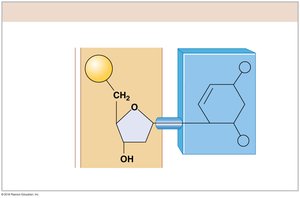
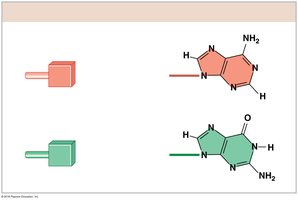
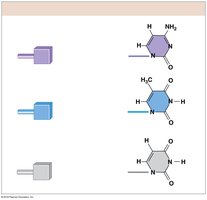
Composed of nucleotides (sugar, phosphate, nitrogenous base).
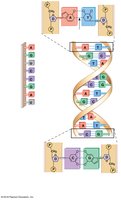
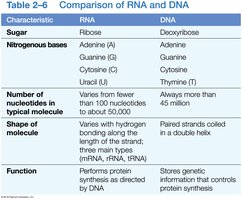
DNA: Double helix, complementary base pairing (A-T, C-G).
RNA: Single strand, uracil replaces thymine.
Characteristic | RNA | DNA |
|---|---|---|
Sugar | Ribose | Deoxyribose |
Nitrogenous Bases | A, G, C, U | A, G, C, T |
Number of Nucleotides | Fewer than 100 to about 50,000 | Always more than 45 million |
Shape | Single strand | Double helix |
Function | Protein synthesis | Genetic information storage |
High-Energy Compounds
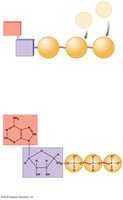
ATP (adenosine triphosphate) is the primary energy carrier in cells.
Energy is stored by adding a phosphate group to ADP (phosphorylation) and released by breaking ATP to ADP.
Additional info: This summary integrates foundational chemical concepts essential for understanding anatomy and physiology, focusing on the molecular and cellular basis of life.
